Training Workshop: Strengthening Youth Understanding of Climate Change and Social Accountability in Climate Governance
Training Workshop: Strengthening Youth Understanding of Climate Change and Social Accountability in Climate Governance
Venue: Bahria University, Karachi Campus
Date: Friday, January 30th, 2025
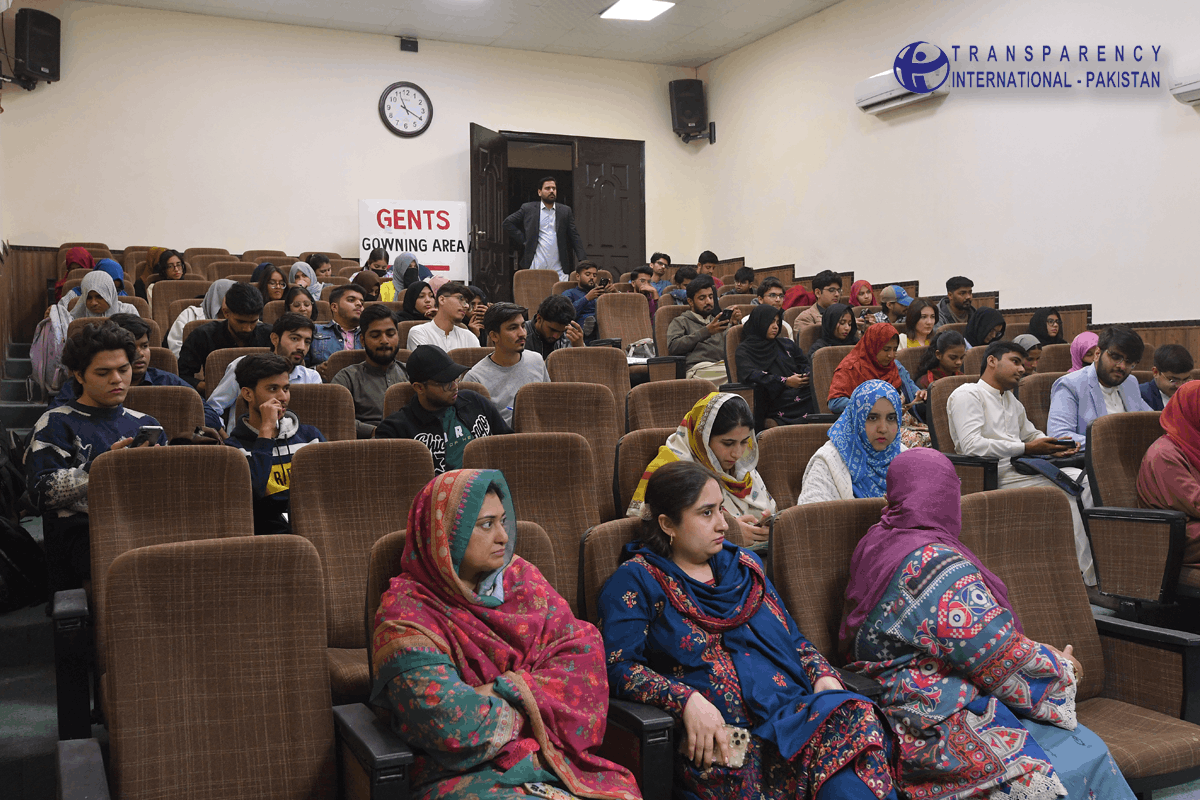
Transparency International Pakistan, in collaboration with Climate Action Centre, and Bahria University, Karachi, organized an engaging and awareness raising session titled “Strengthening Youth Understanding of Climate Change and Social Accountability in Climate Governance” on January 30th, 2026, at Bahria University, Karachi Campus.
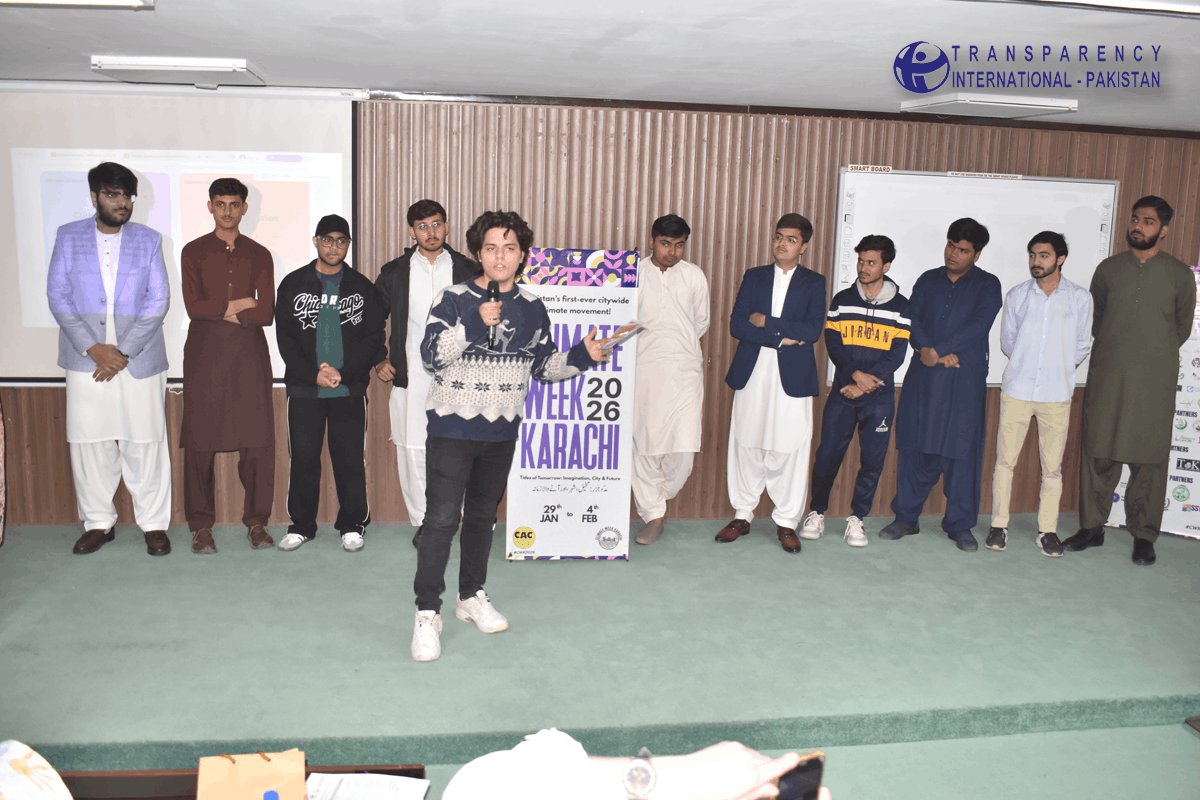
The workshop was part of first-ever Climate Week Karachi 2026, which is initiated by Climate Action Centre. The week brought together experts, activists, and citizens for a crucial conversation on environmental action.
The workshop aimed at enhancing students’ understanding of climate change science, policy responses, and the importance of social accountability in climate governance. A total of 61 students, including 32 females from Department of Earth and Environmental Sciences participated in the workshop. The session was designed to equip youth with the knowledge and tools needed to meaningfully participate in climate action and promote transparency and accountability in climate-related decision-making.
The program commenced with welcome address by Ms. Warda Mumtaz, Researcher, Climate Action Centre. She warmly welcomed the participants and highlighted the critical role of youth in addressing the climate crisis. Ms. Warda emphasized that young people are not only future leaders but also present-day change-makers whose engagement is essential for building transparent, inclusive, and effective climate governance systems in Pakistan.
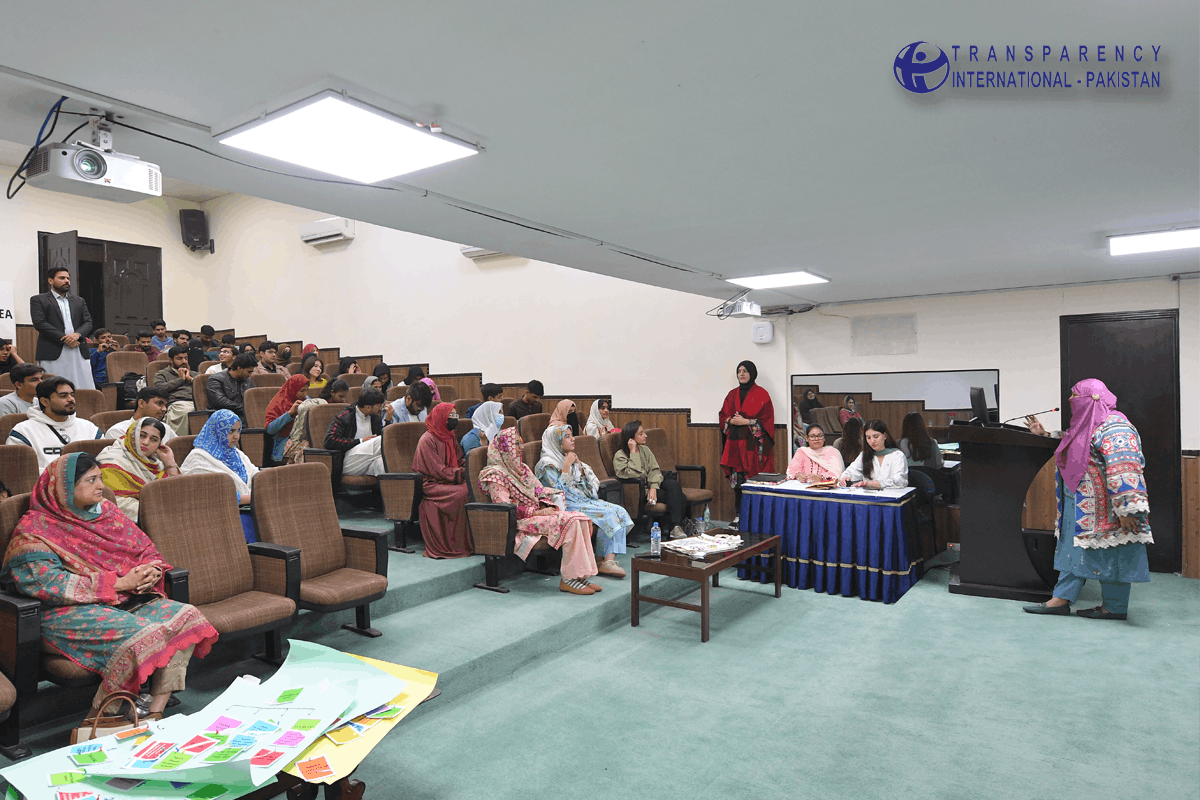
Next, Ms. Fariha Fatima, Programme Associate, Transparency International Pakistan, presented an overview of Transparency International Pakistan’s work on climate governance integrity. The session then moved into an interactive reading-based activity, where participants explored key climate change terms to build and strengthen their climate vocabulary.
These terms included Carbon Credits and Offsets, Benefit-Sharing Mechanism, Climate Budget Tagging, Climate Justice, Greenwashing, Net Zero, REDD+ (Reducing Emissions from Deforestation and Forest Degradation). Through this activity, participants enhanced their understanding of key concepts commonly used in climate policy and governance discussions, enabling them to better engage in informed dialogue and advocacy around climate action and accountability.
Next, Ms. Madeeha Jabeen, Lecturer, Department of Earth and Environmental Sciences, Bahria University, delivered a comprehensive session on policy responses to climate change, covering mitigation, adaptation, and climate justice. She discussed how national and international climate policies, including frameworks such as the Paris Agreement, guide countries in reducing emissions and building climate resilience. Ms. Jabeen highlighted the importance of equitable and inclusive policy design, emphasizing that vulnerable and marginalized communities are often disproportionately affected by climate impacts.
Moving on Ms. Fariha Fatima, delivered a session on climate governance structures and promoting social accountability in climate action. Participants were introduced to Pakistan’s climate governance framework, including the roles of various institutions and stakeholders at federal and provincial levels. The discussion emphasized the importance of citizen oversight, transparency, and accountability in ensuring that climate policies translate into meaningful action on the ground.
To reinforce learning through participation, students took part in a group activity titled “Solve the Climate Governance Puzzle.” During this hands-on exercise, participants were divided into groups and tasked with mapping the hierarchy of relevant departments, institutions, and policies involved in climate governance in Pakistan. By organizing different actors and policy elements into a structured framework, the activity helped participants better understand how climate-related decisions are made and implemented, while highlighting the importance of coordination and accountability across different levels of governance.
Lastly, the session continued with a fun and reflective activity, “Bounce Your Role: Keep Your Climate Commitment in the Air.” During the activity, participants inflated balloons and wrote their personal climate commitments on them, reflecting their individual roles in addressing climate change. The balloons symbolized their pledges, and the exercise highlighted the importance of keeping these commitments alive through sustained action.
The workshop concluded with closing remarks by Prof. Dr. Salma Hamza, Professor, Department of Earth and Environmental Sciences, Bahria University. She emphasized the importance of climate education and social accountability in empowering youth to become informed advocates for climate action. Prof. Dr. Hamza encouraged students to apply the knowledge gained during the session in their academic pursuits, communities, and future professional roles.