Monthly Session Summary Report
Youth Climate Education & Fellowship Program 2025
Theme: Empowering Youth: Social Accountability and the Right to Information
Monthly Session Summary Report
Youth Climate Education & Fellowship Program 2025
Theme: Empowering Youth: Social Accountability and the Right to Information
Date: Tuesday, December 09, 2025
Venue: University of Engineering and Technology (UET), Lahore
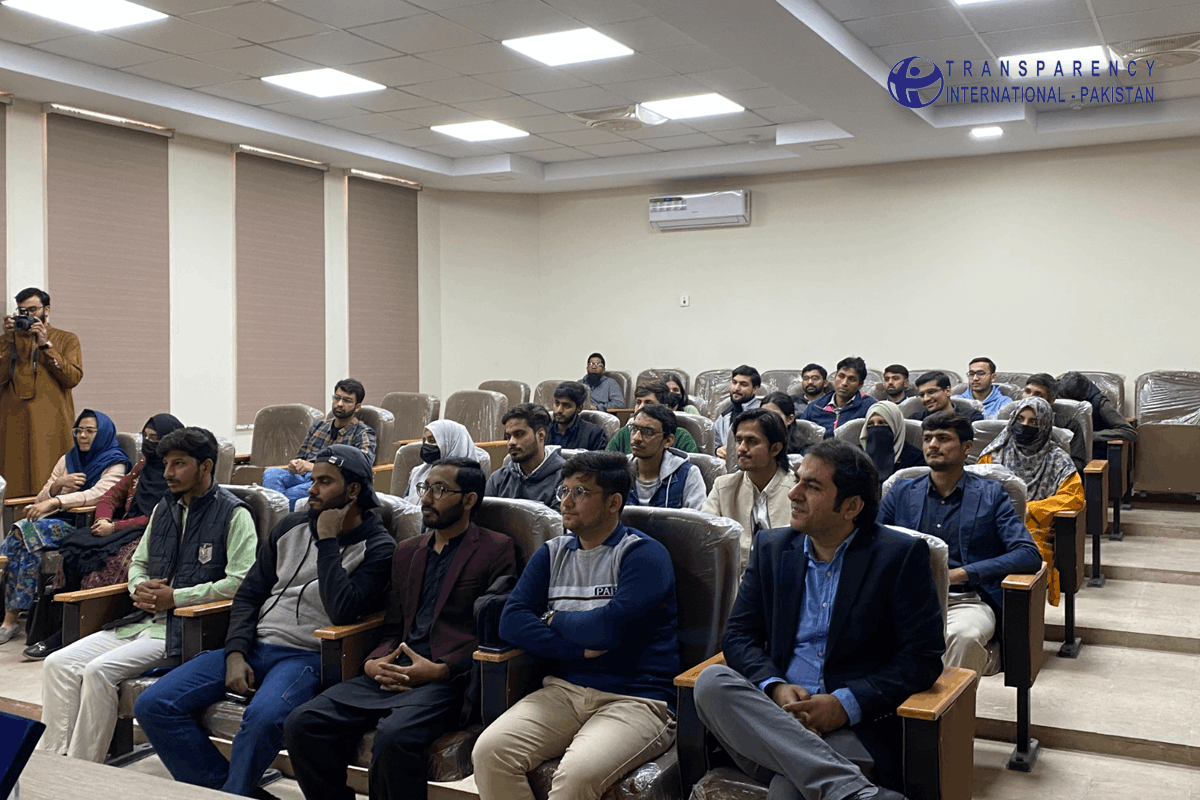
The Youth Climate Education and Fellowship Program 2025 held a successful session on Tuesday, December 9, 2025, at the University of Engineering and Technology (UET), Lahore, bringing together 41 youth fellows.
The session aimed to educate and engage young leaders, students, and climate enthusiasts on key governance themes, with a specific focus on social accountability and the Right to Information (RTI).
The session opened with Mr. Izzat Cheema, Associate Professor at UET Lahore he highlighting the youth’s role in governance and climate action. He emphasized the importance of education, awareness, and ethical leadership in building transparent institutions and reaffirmed UET’s support for youth led initiatives and meaningful engagement in governance and climate resilience.
Youth fellows shared their experiences in the fellowship, highlighting key learnings in climate governance, policy, and advocacy. They showed increased confidence, leadership, and motivation to create positive community change.
The important session was delivered by Mr. Mehboob Qadir Shah, Retired Chief Information Commissioner Punjab. He discussed the concept of social accountability, explaining it as a citizen-driven approach to holding public institutions accountable for their decisions, actions, and use of public resources.
Mr. Shah emphasized the importance of citizen participation in governance and highlighted how transparency, public oversight, and access to information are fundamental to democratic systems. He shared practical examples illustrating how social accountability mechanisms can improve public service delivery, reduce corruption, and strengthen trust between citizens and the state, particularly in climate-affected and environmental governance sectors.
In the second part of his session, Mr. Shah provided a detailed overview of the Punjab Transparency & Right to Information Act 2013. He explained the objectives, scope, and legal framework of the Act, along with the functions, powers, and responsibilities of the Punjab Information Commission. Participants learned about the RTI request process and how citizens can legally access public information.
Further, Mr. Shah emphasized the strategic role of youth in using RTI as a tool to promote transparency, combat corruption, and hold public institutions accountable. Practical examples were shared to demonstrate how RTI can support climate accountability, environmental governance, and evidence-based advocacy.
The session concluded with closing remarks by Mr. Izzat Cheema and UET representatives, who summarized the key discussions and encouraged fellows to apply their learnings in real-life civic, academic, and climate initiatives. They emphasized translating knowledge into action and motivated youth to continue advocating for transparency, social accountability, and good governance, highlighting youth leadership as a driving force for inclusive and sustainable development.
Overall, the session significantly enhanced participants’ understanding of social accountability and the Right to Information framework. It equipped youth with conceptual knowledge and practical tools to actively participate in transparent, accountable, and sustainable governance initiatives, reinforcing their role as informed citizens and change agents in climate governance and democratic accountability