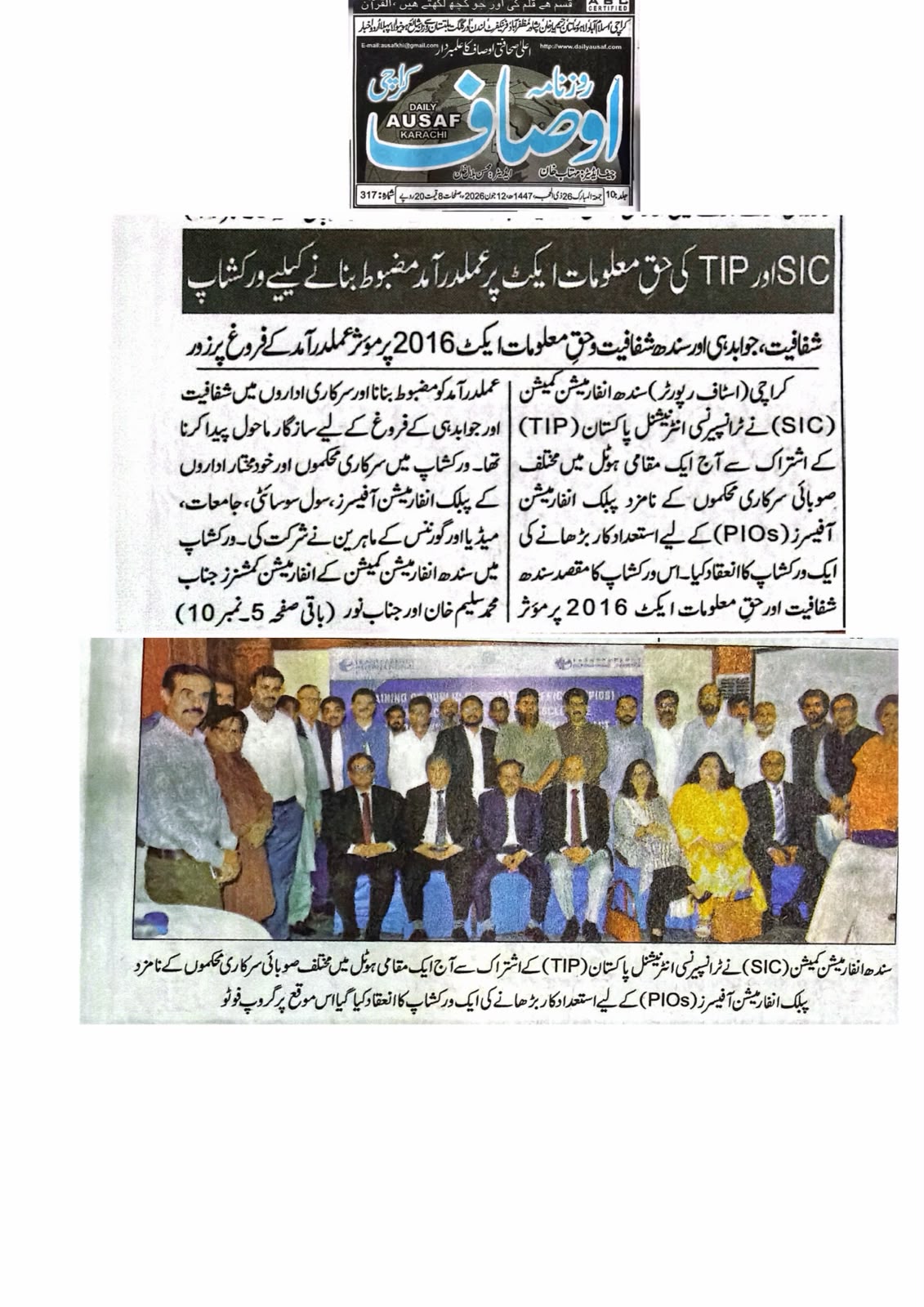
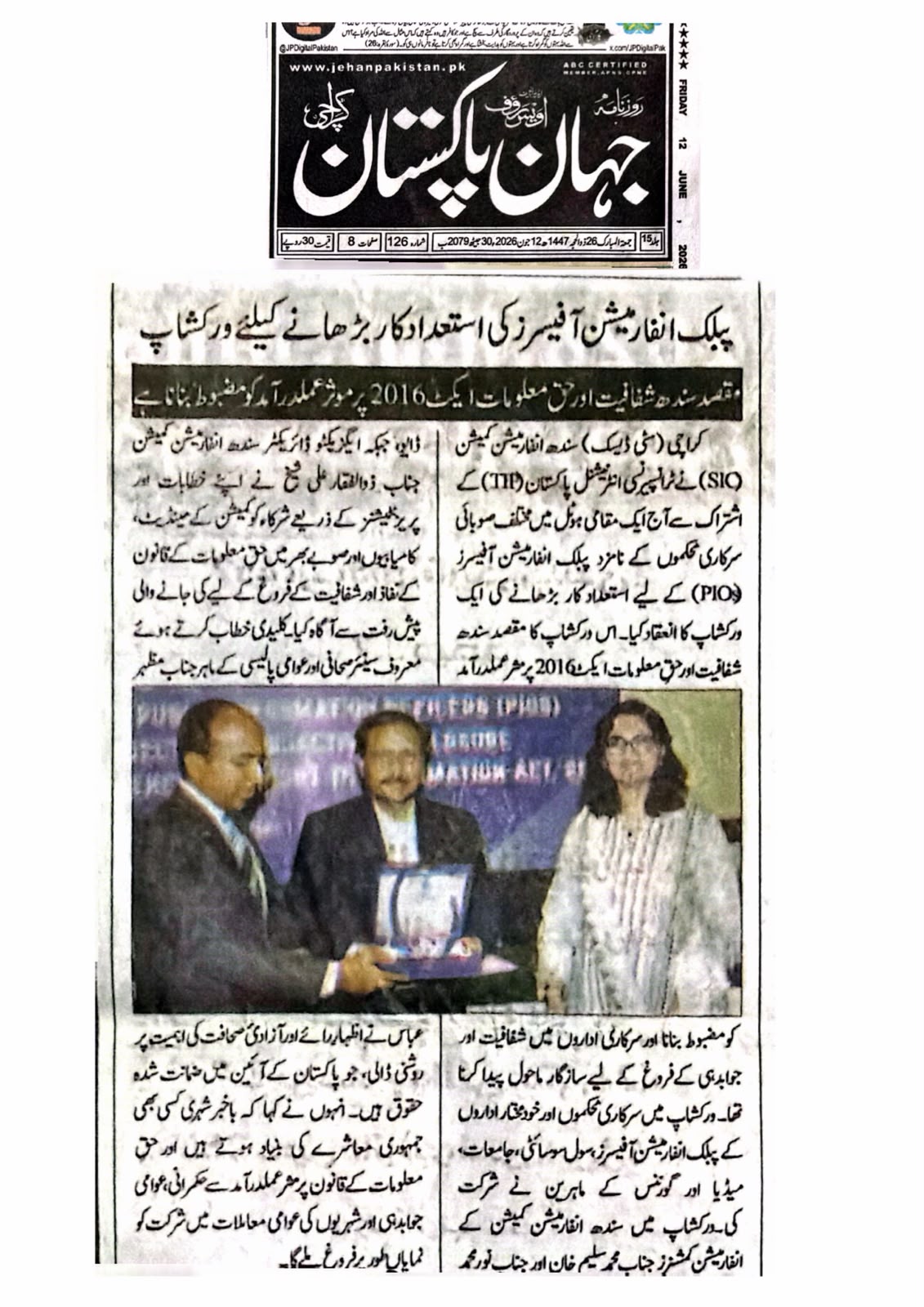
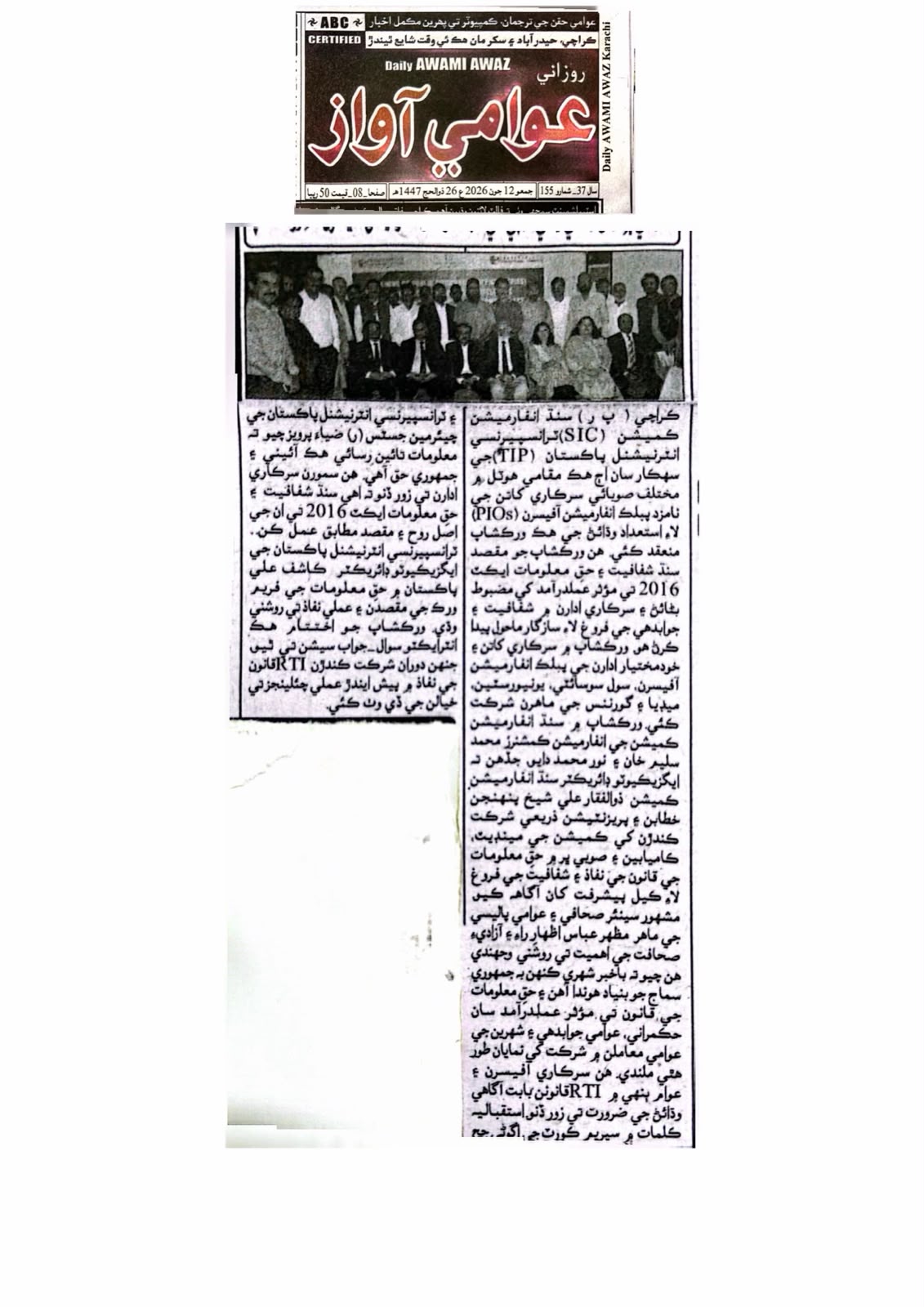
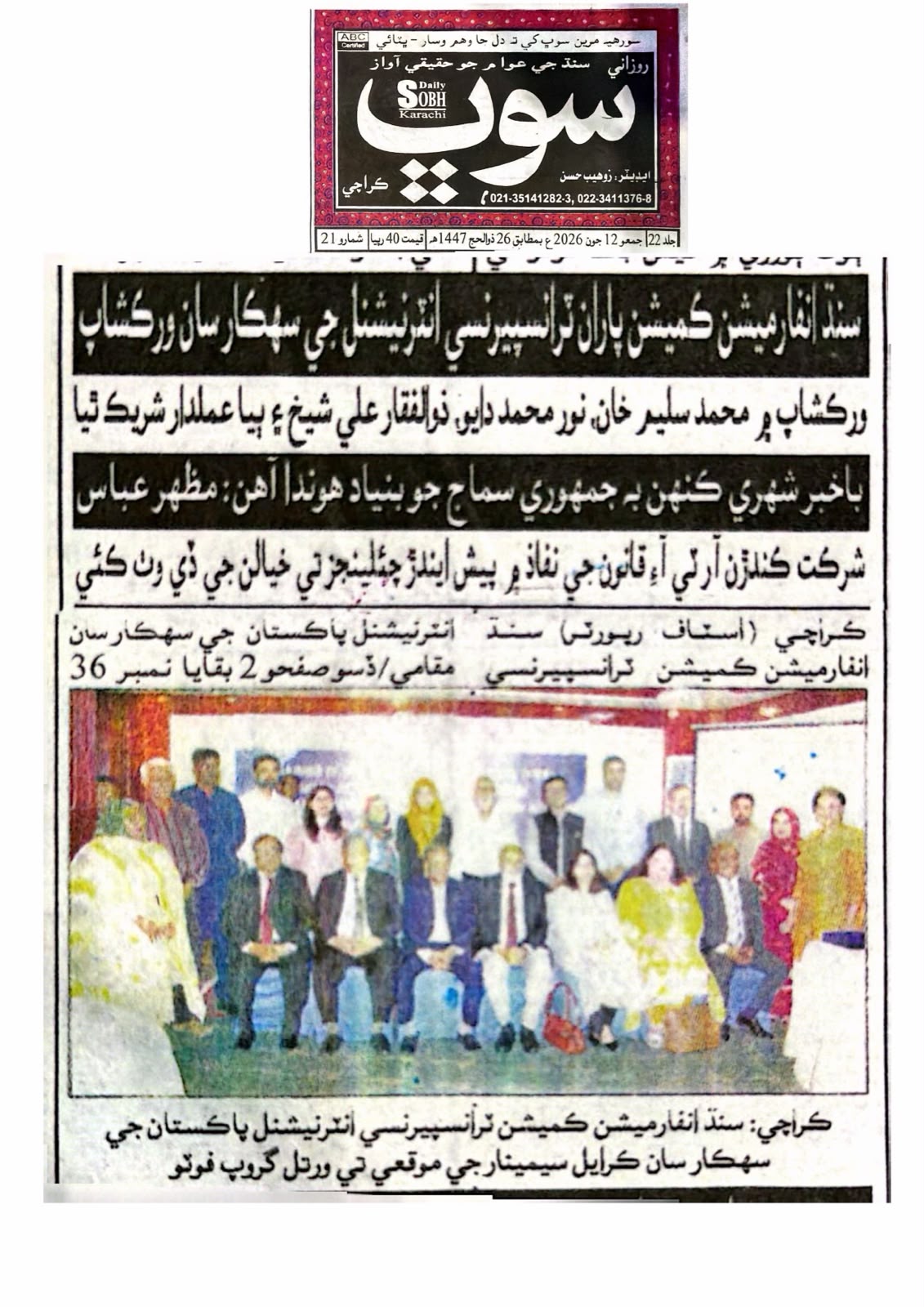
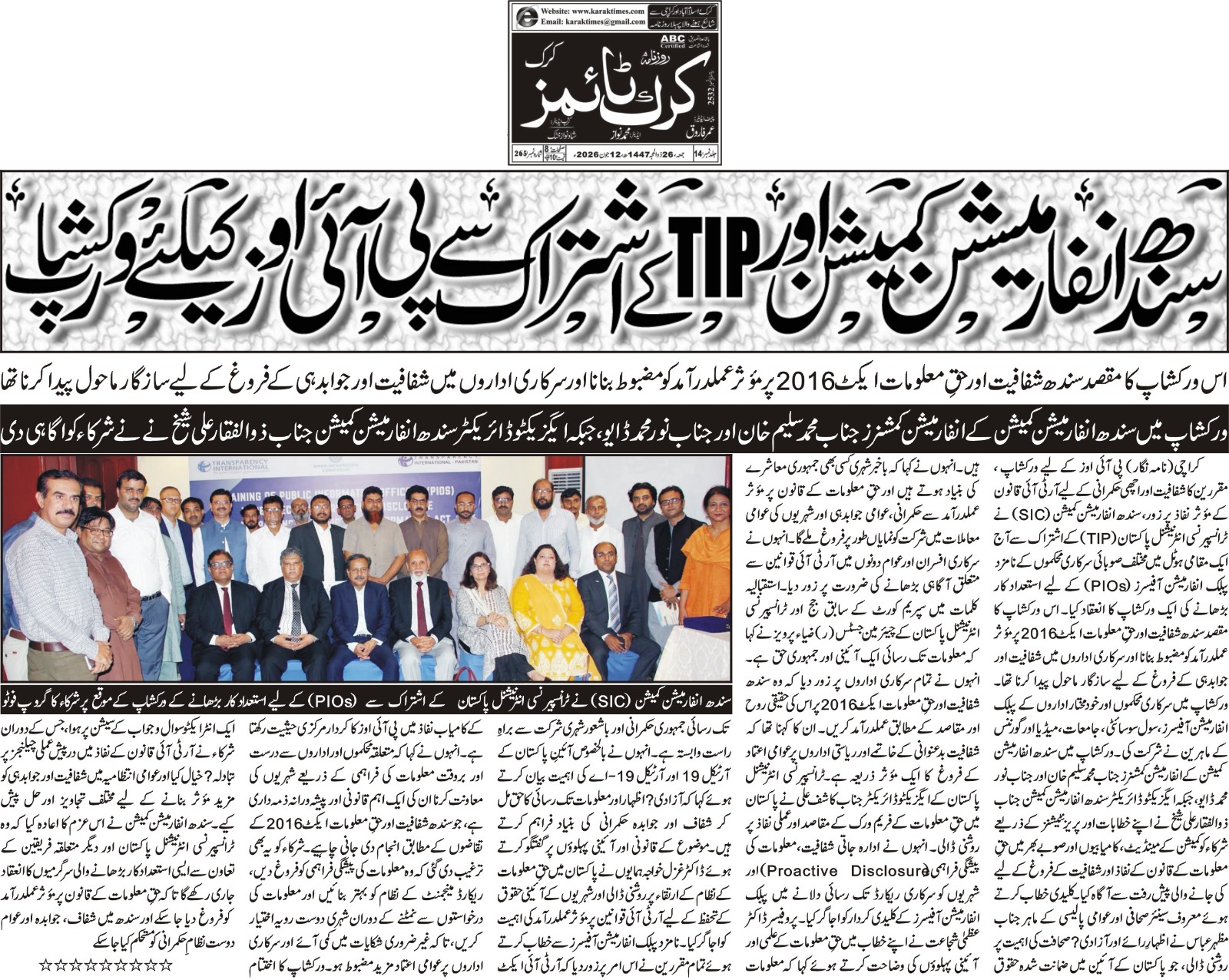
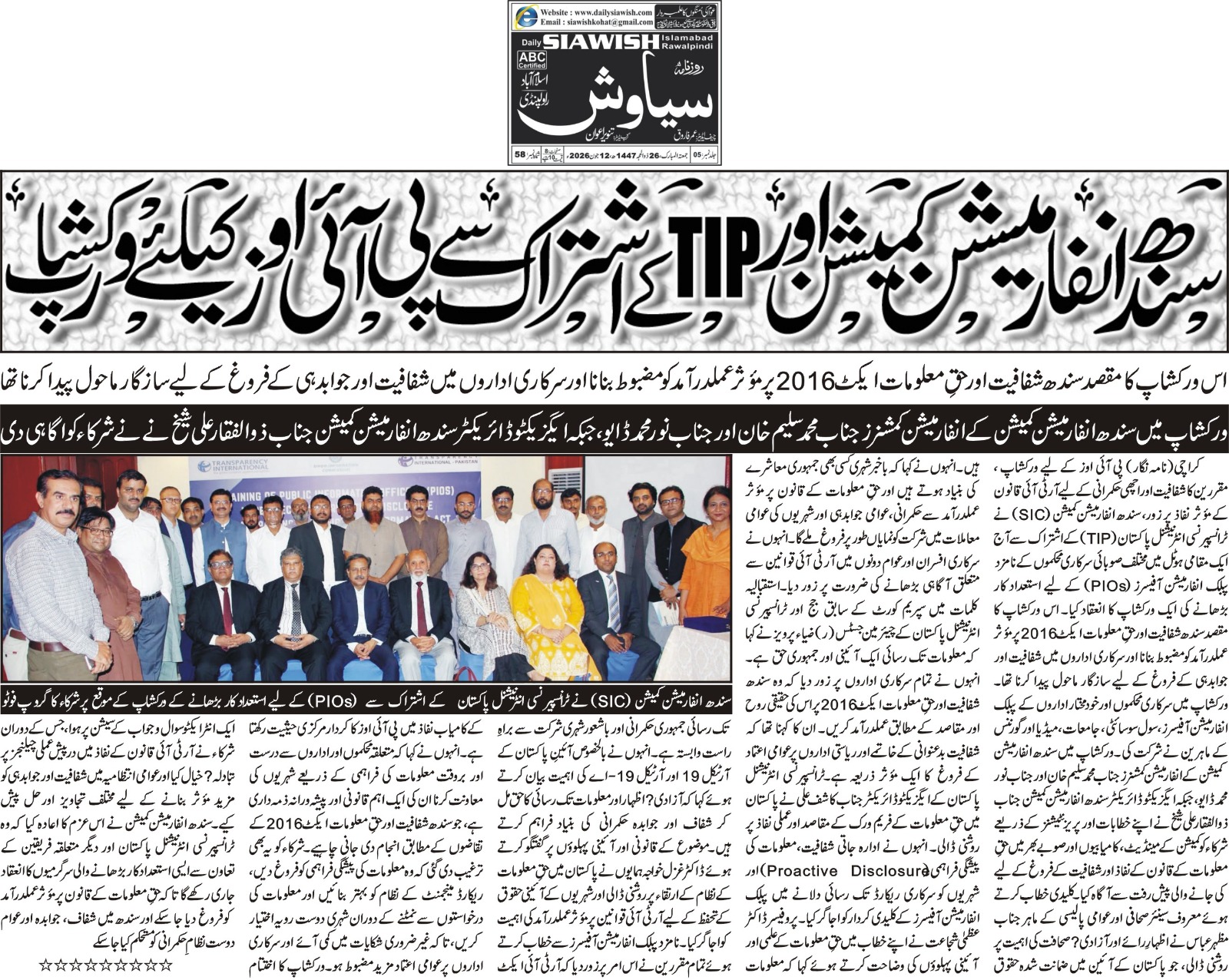
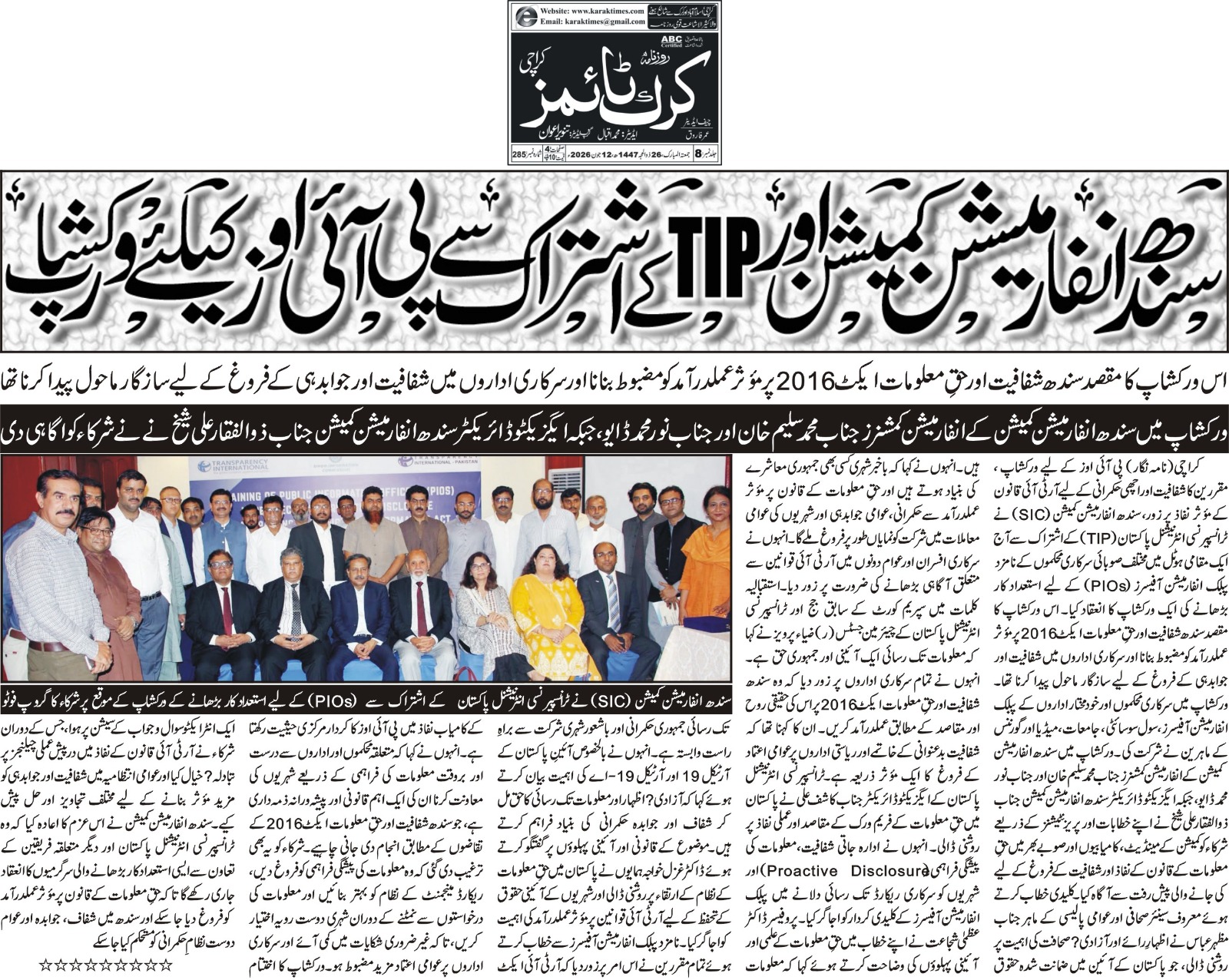
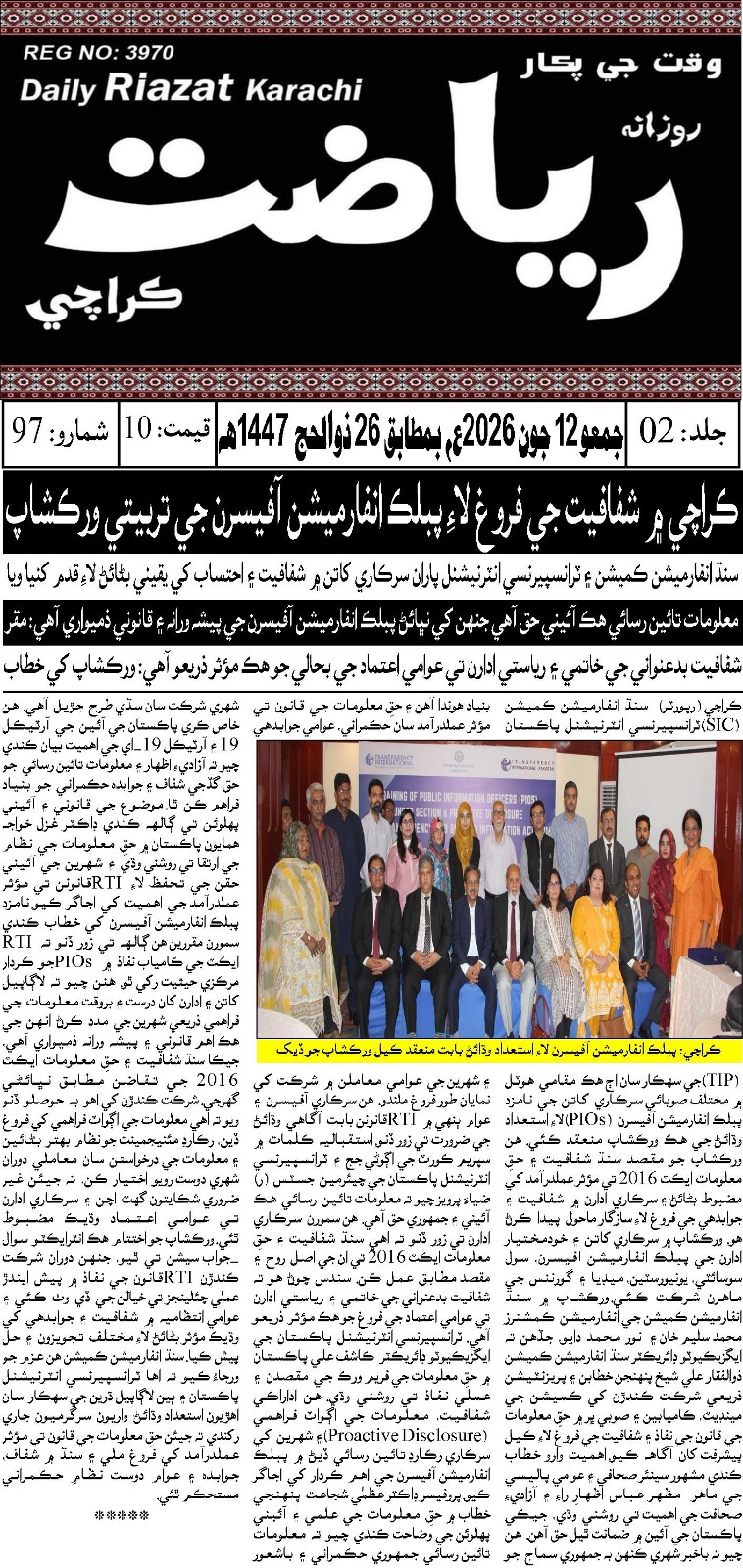
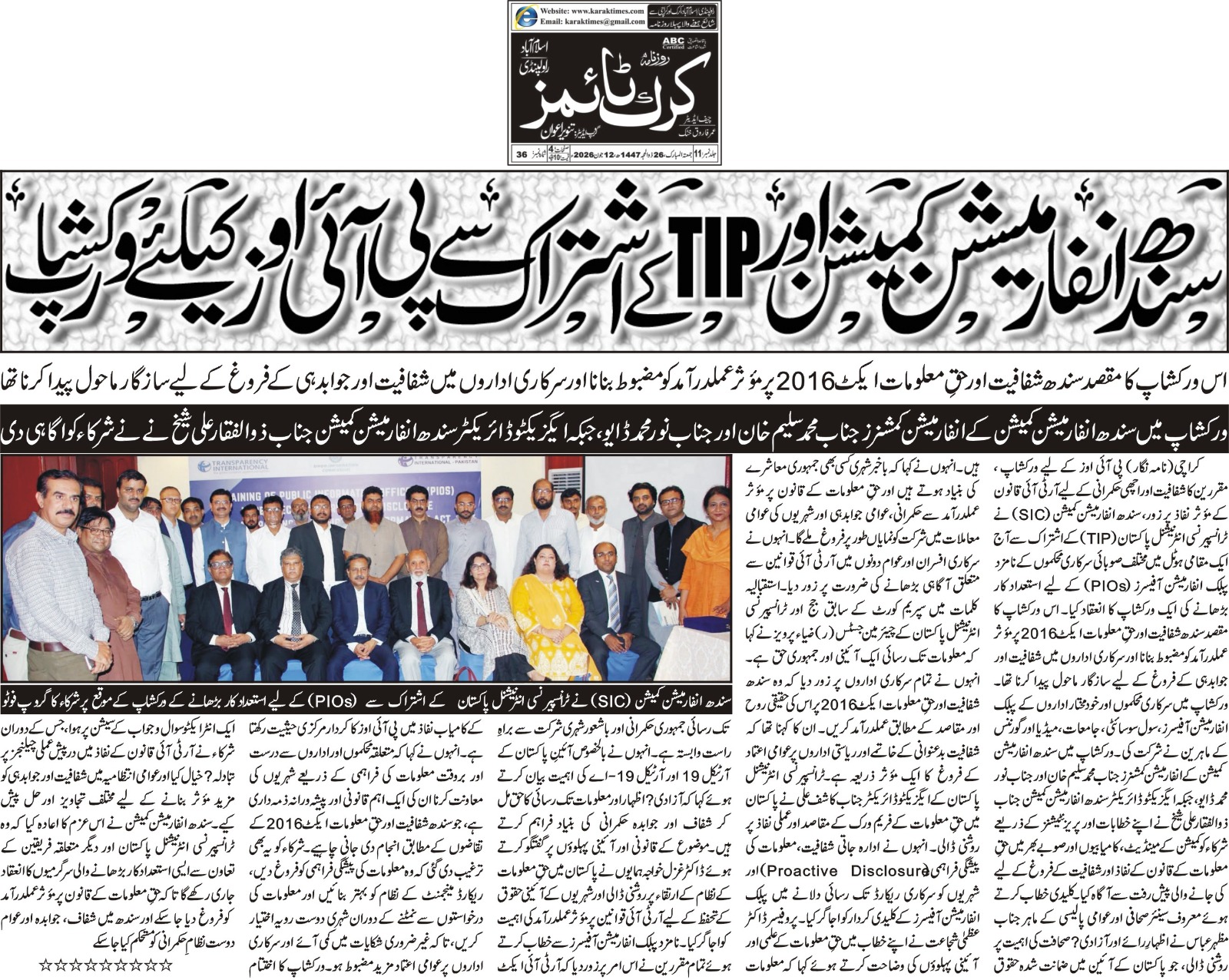
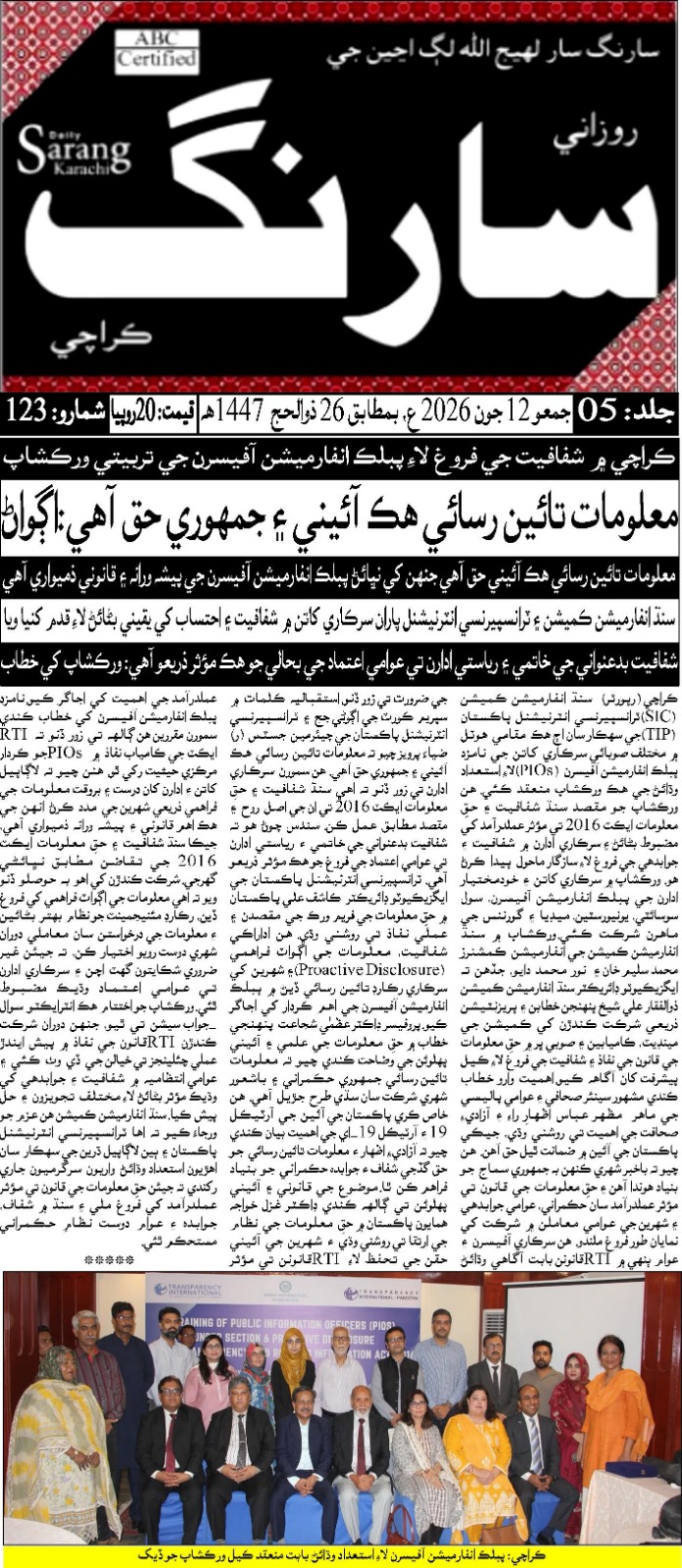
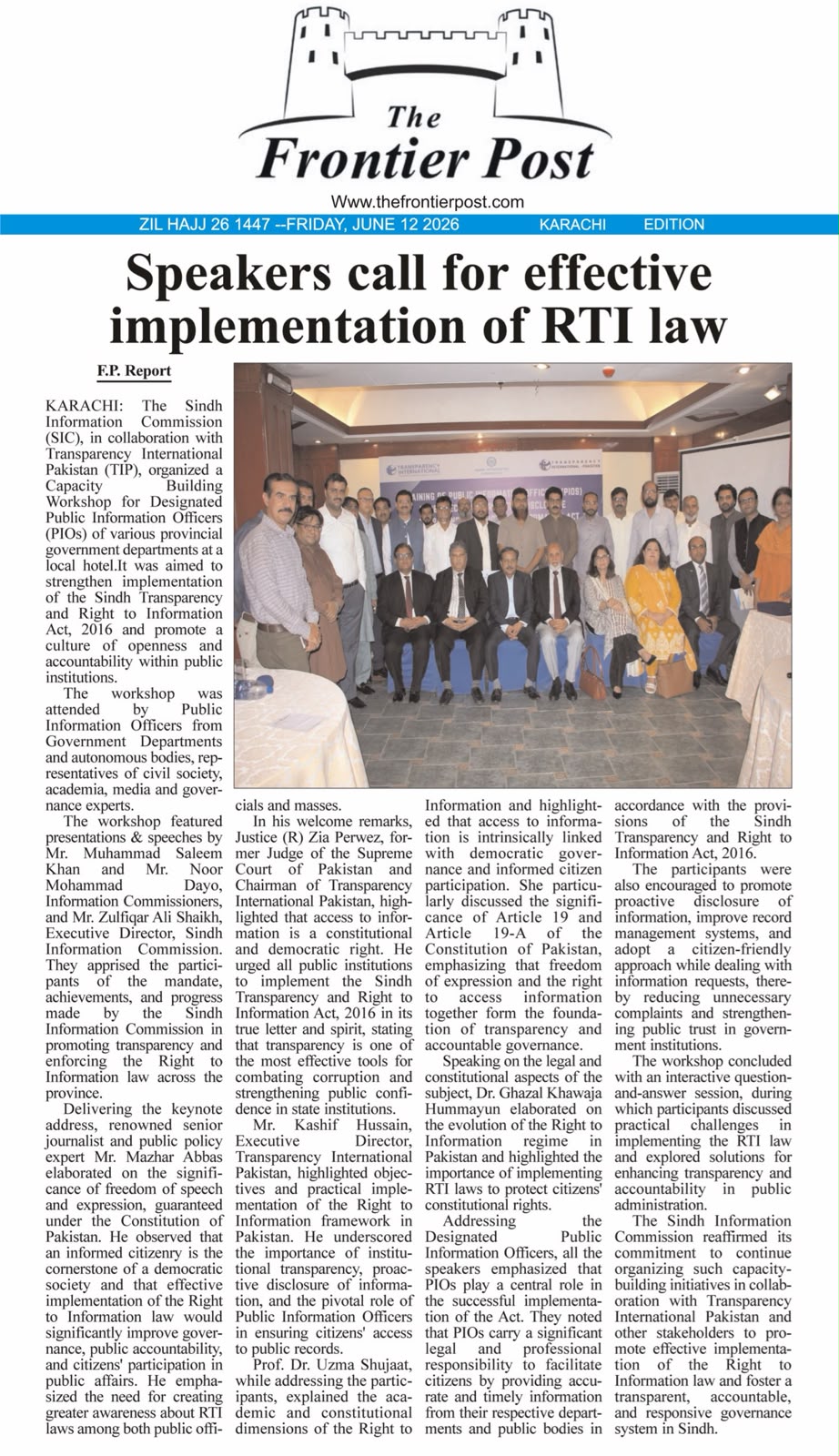
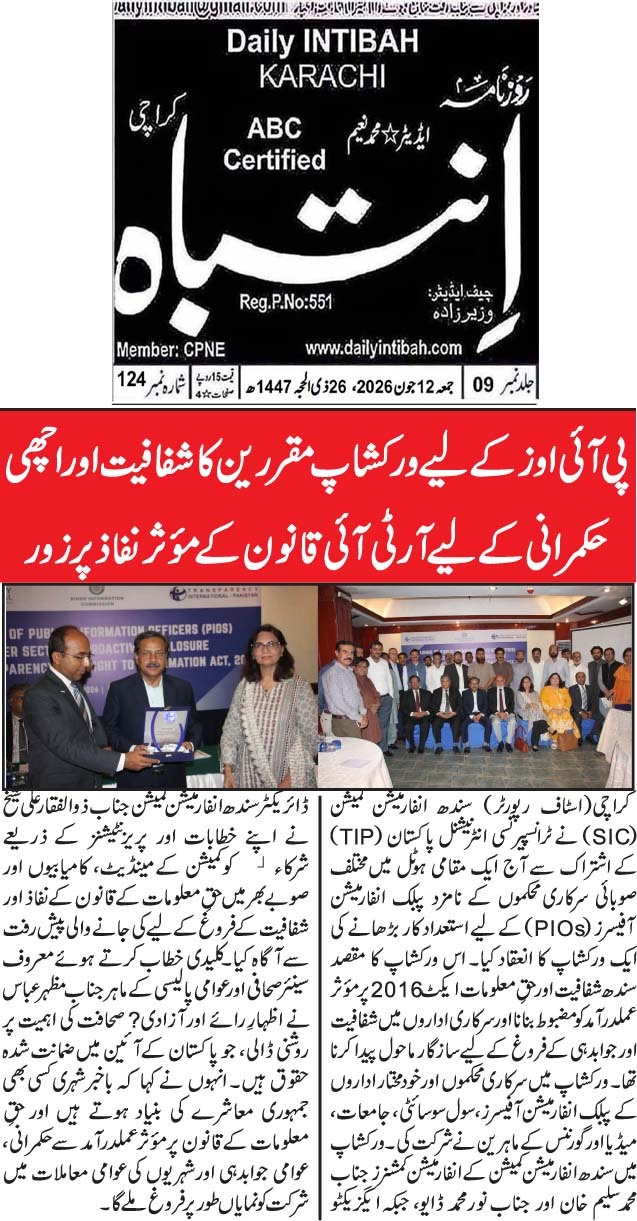
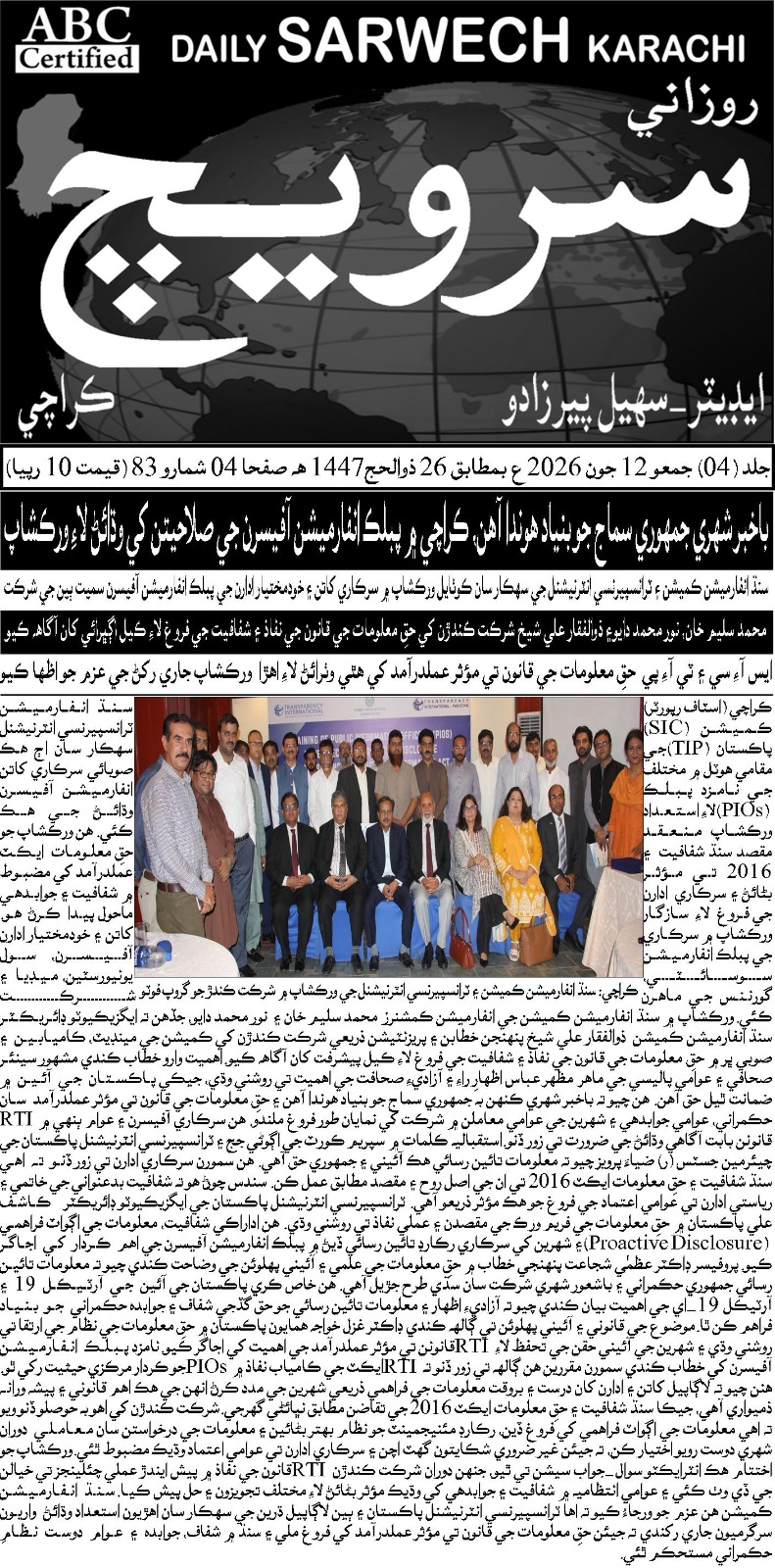
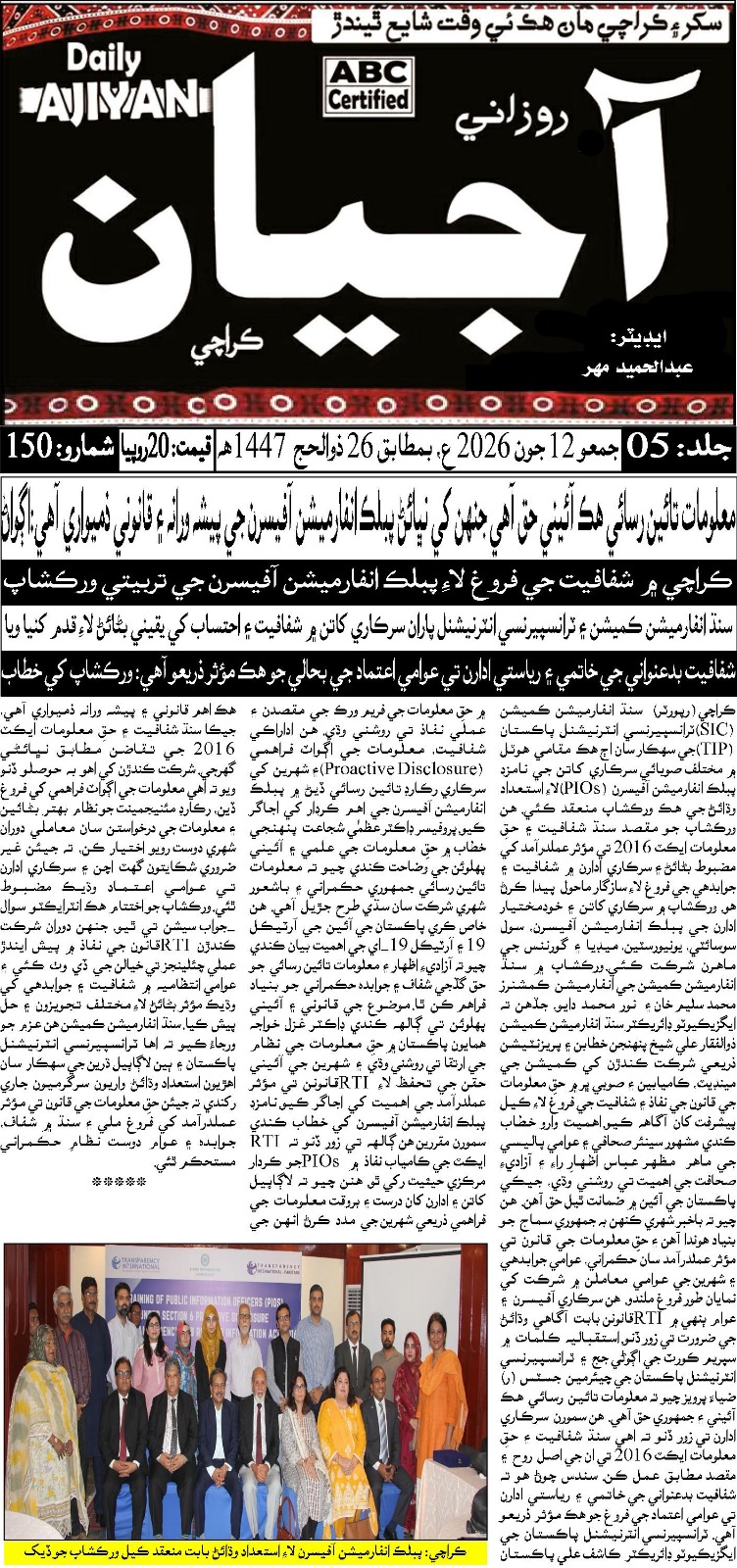
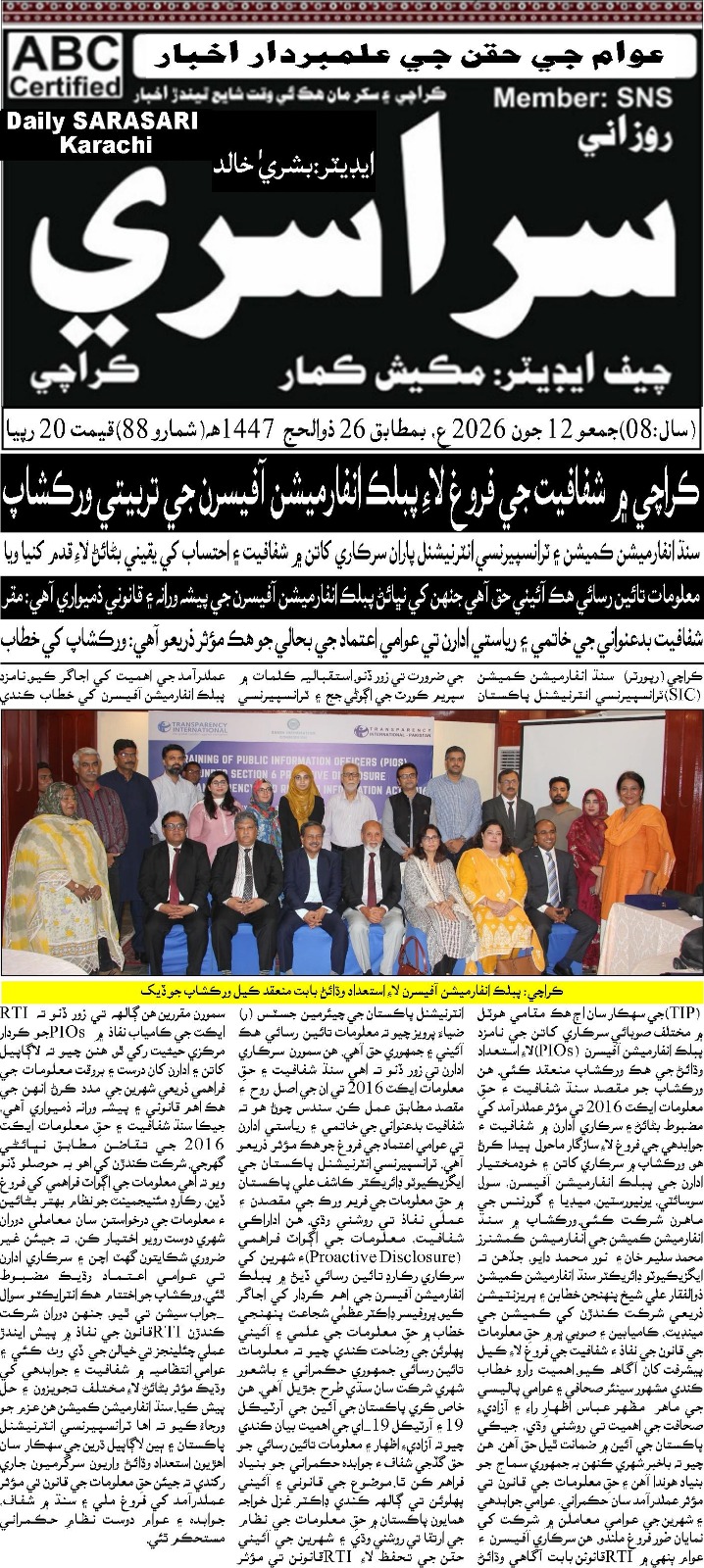
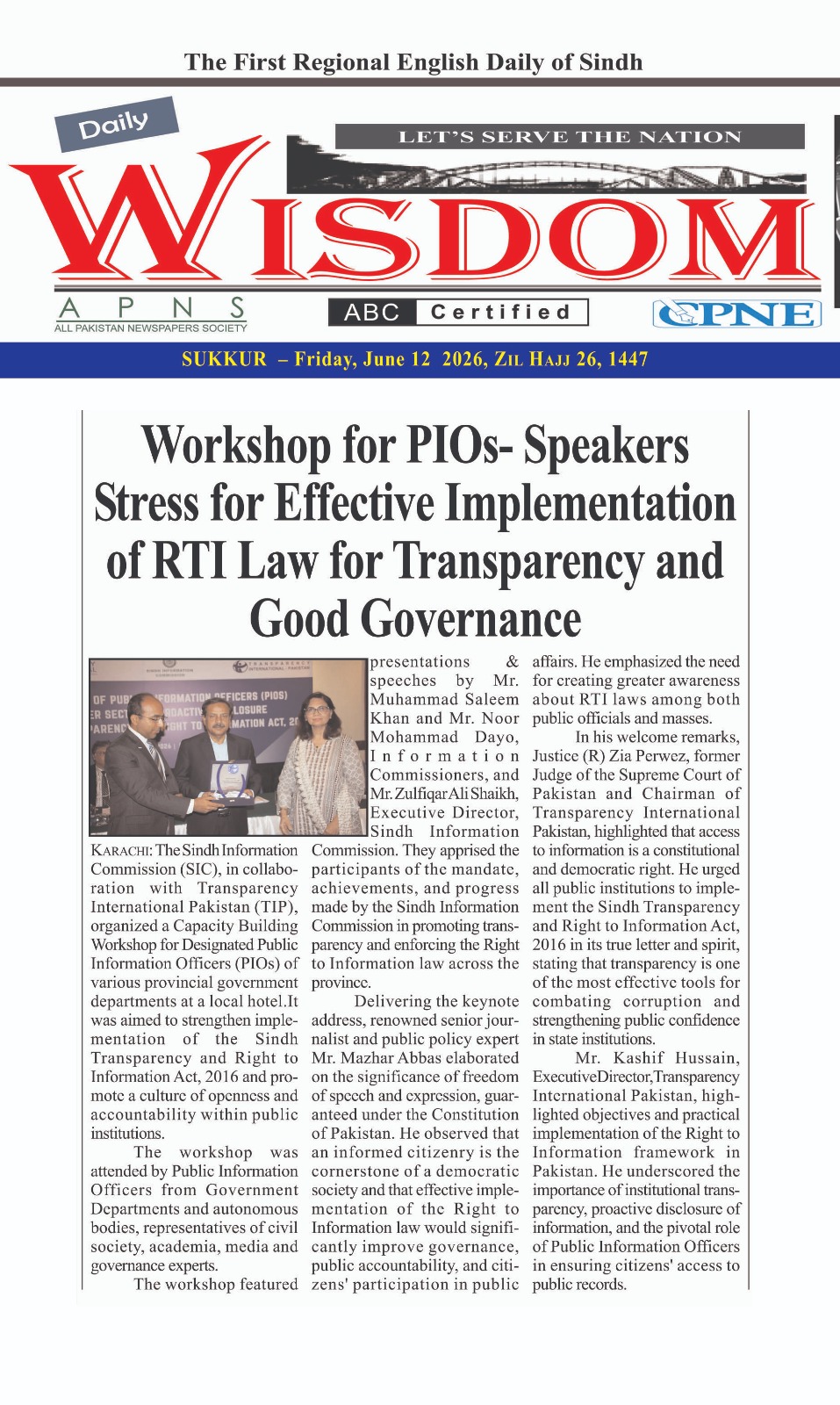
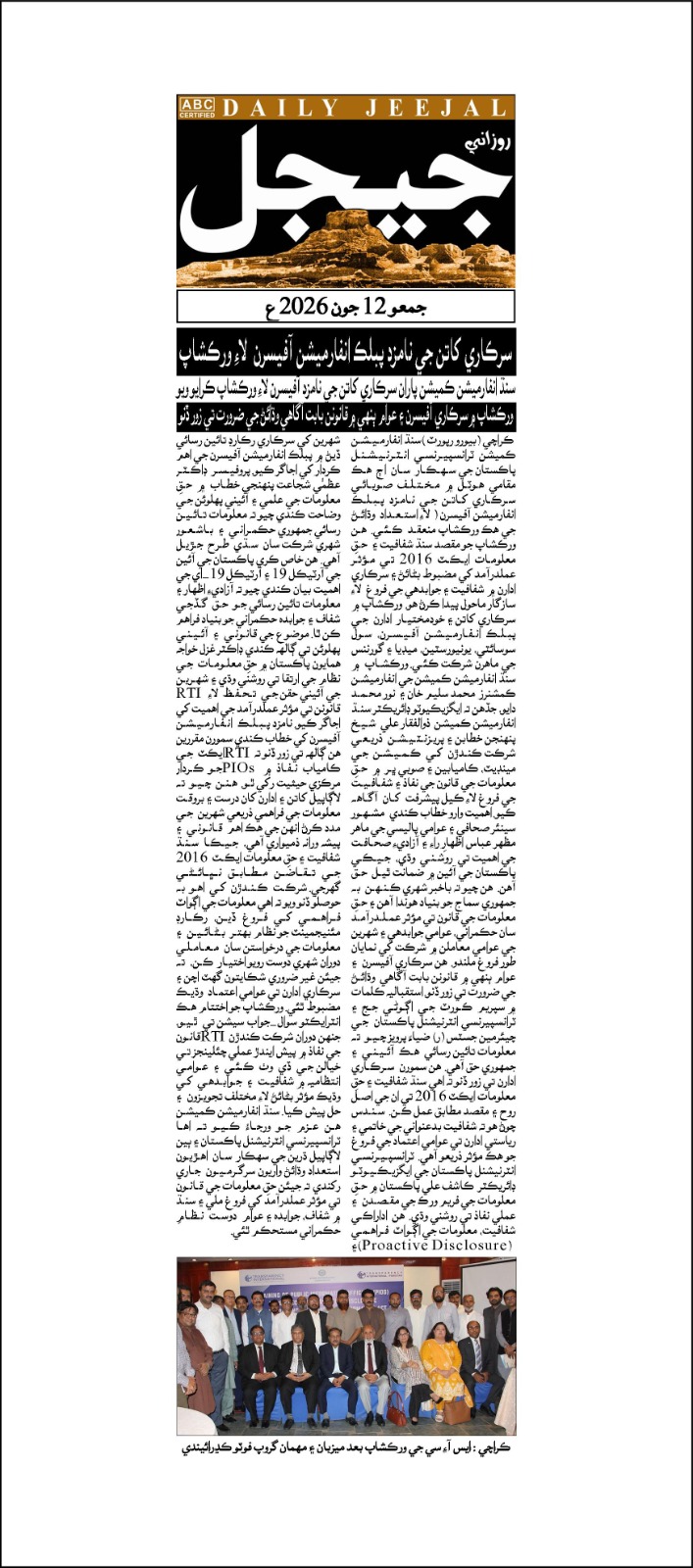
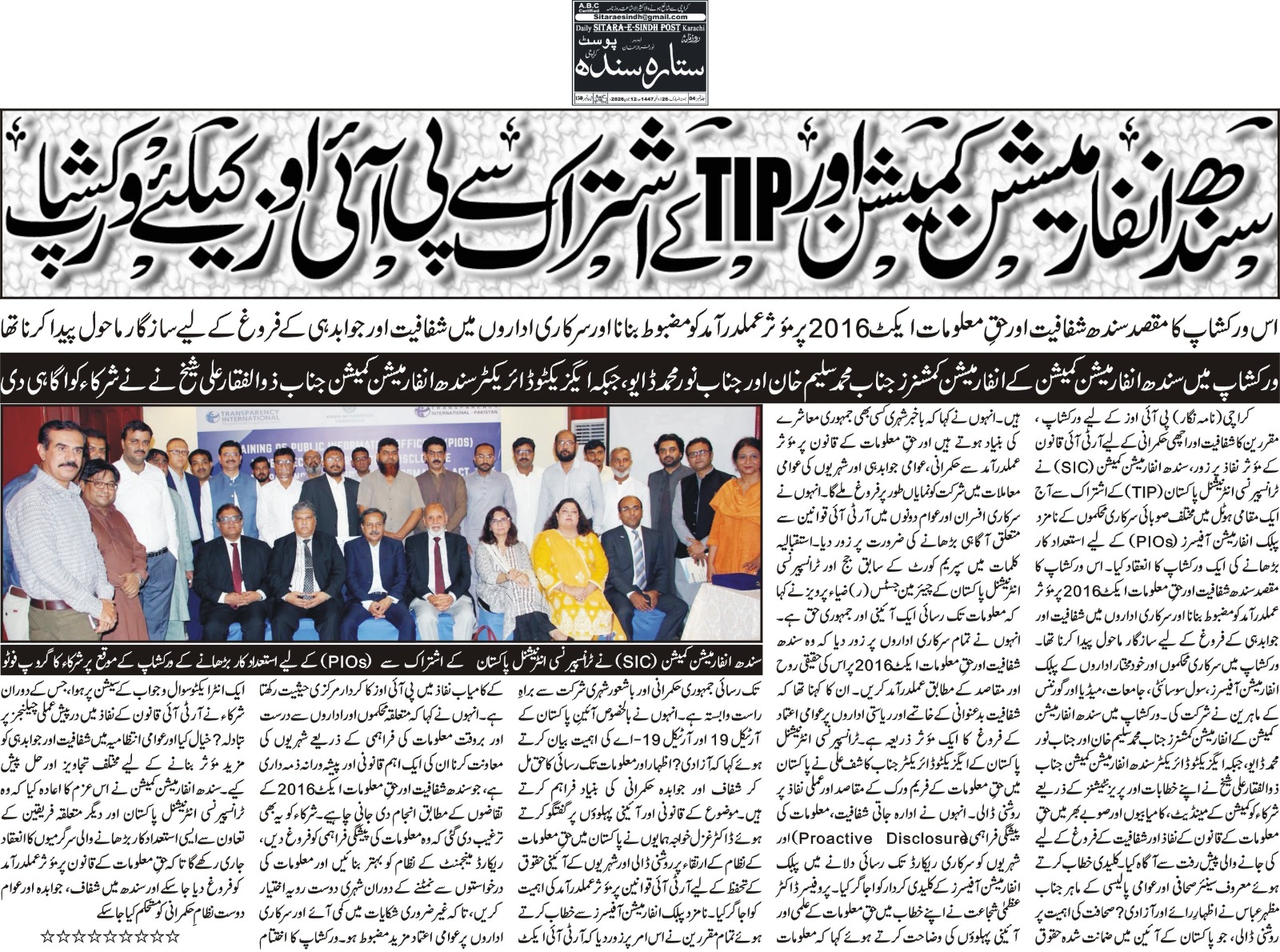
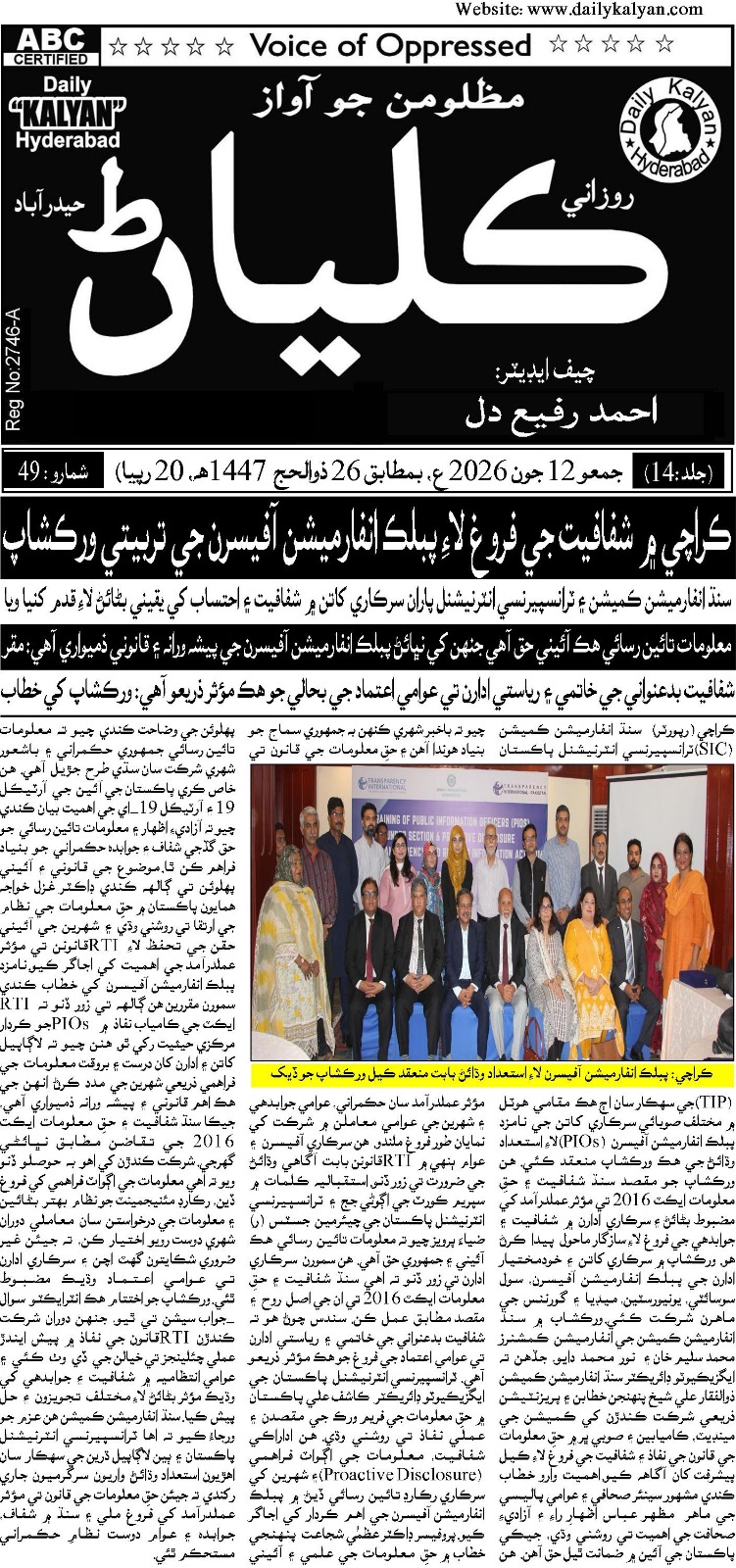
Event: Capacity Building Workshop of Public Information Officers (PIOs) - Section 6 Proactive Disclosure Sindh Transparency and Right to Information Act, 2016
Event: Capacity Building Workshop of Public Information Officers (PIOs) – Section 6 Proactive Disclosure Sindh Transparency and Right to Information Act, 2016
Date: June 11, 2026
Venue: Mehran Hotel, Karachi
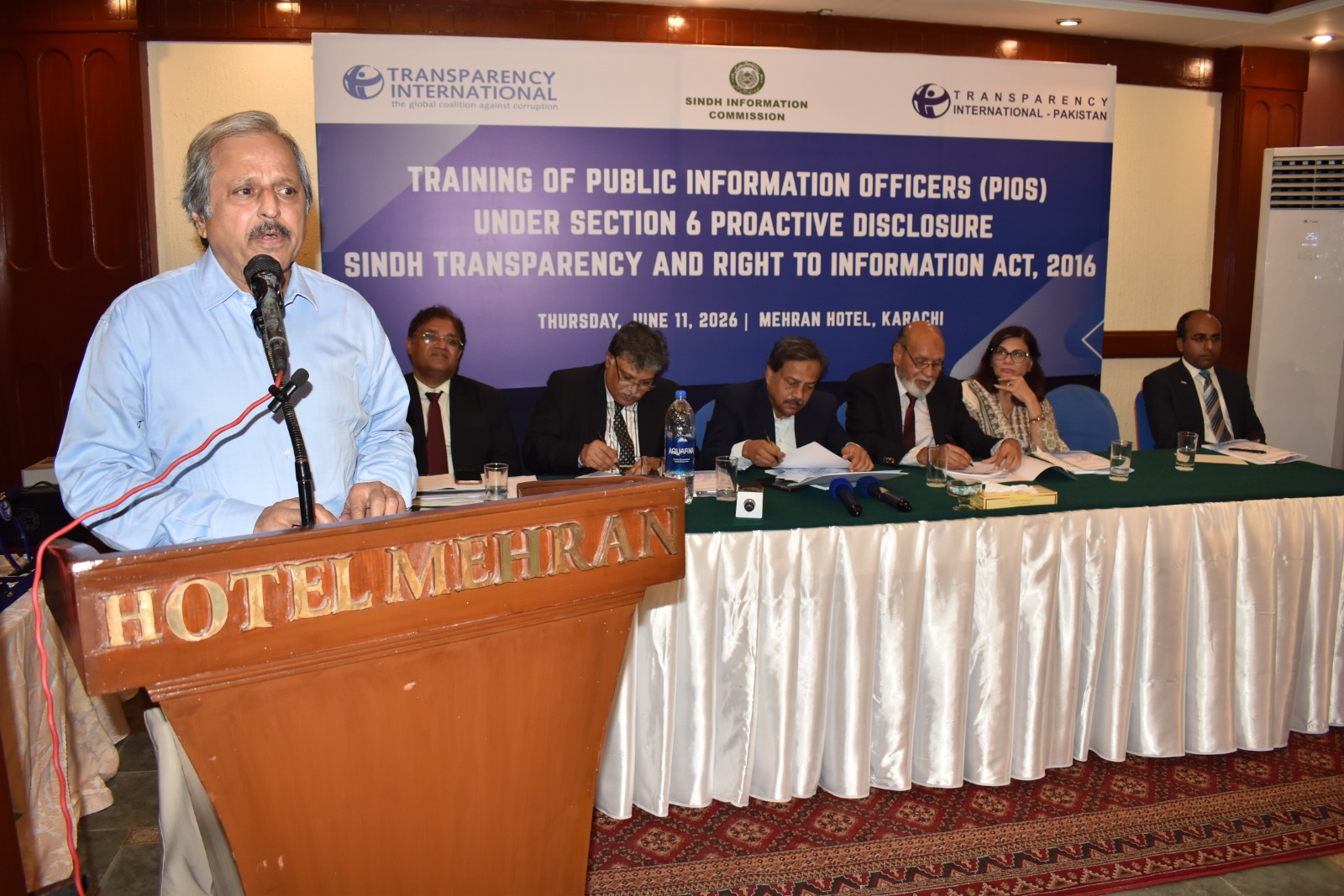
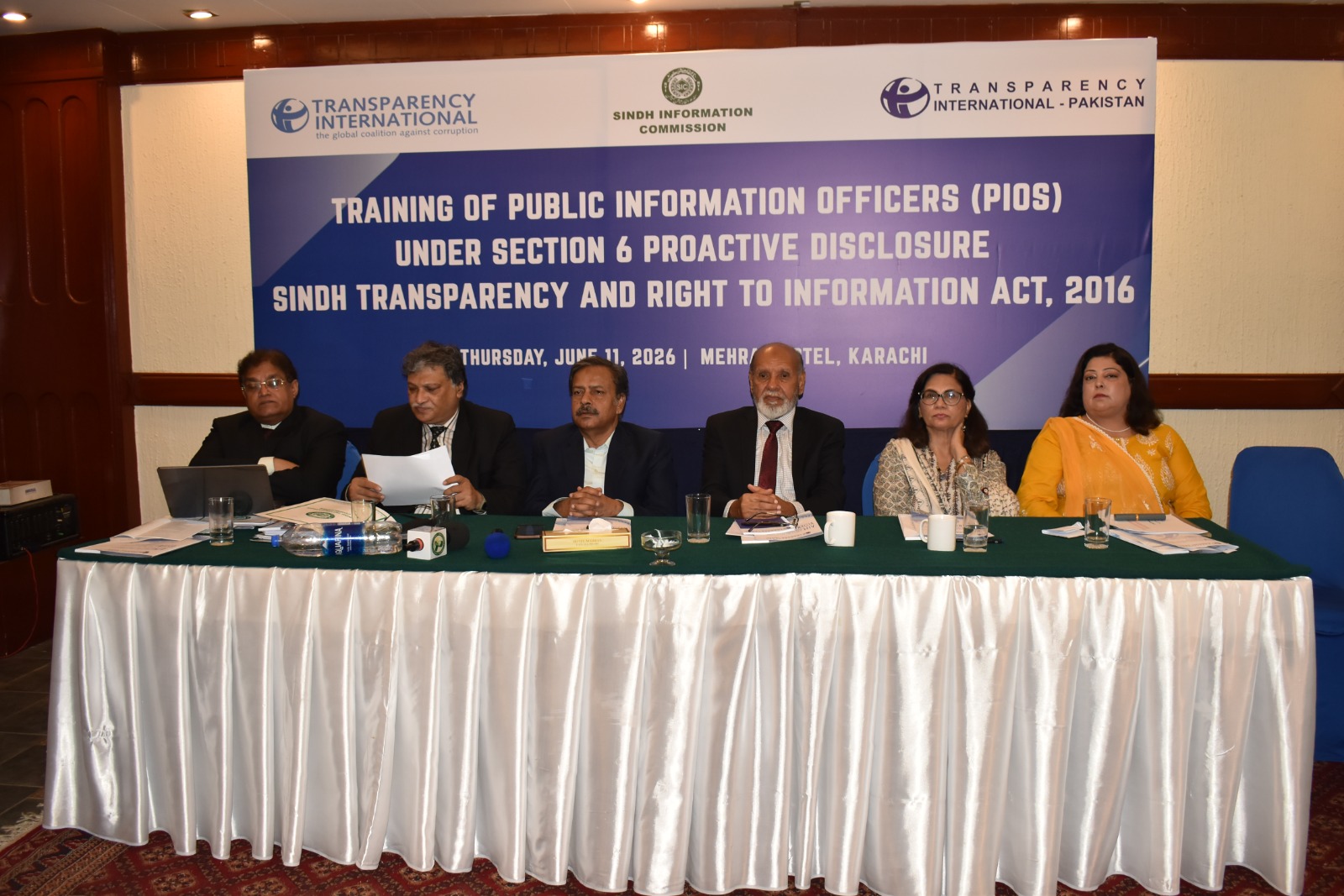
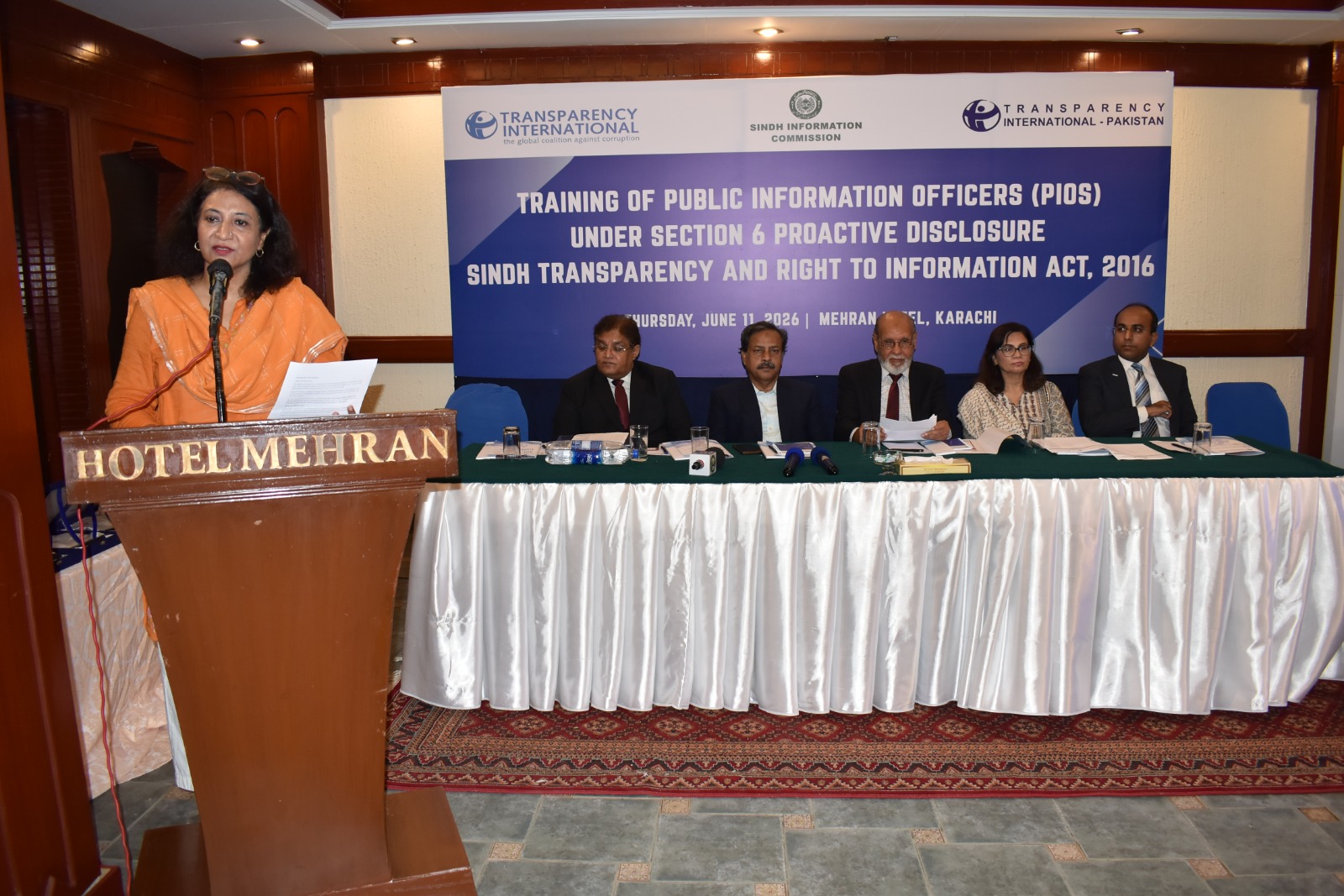
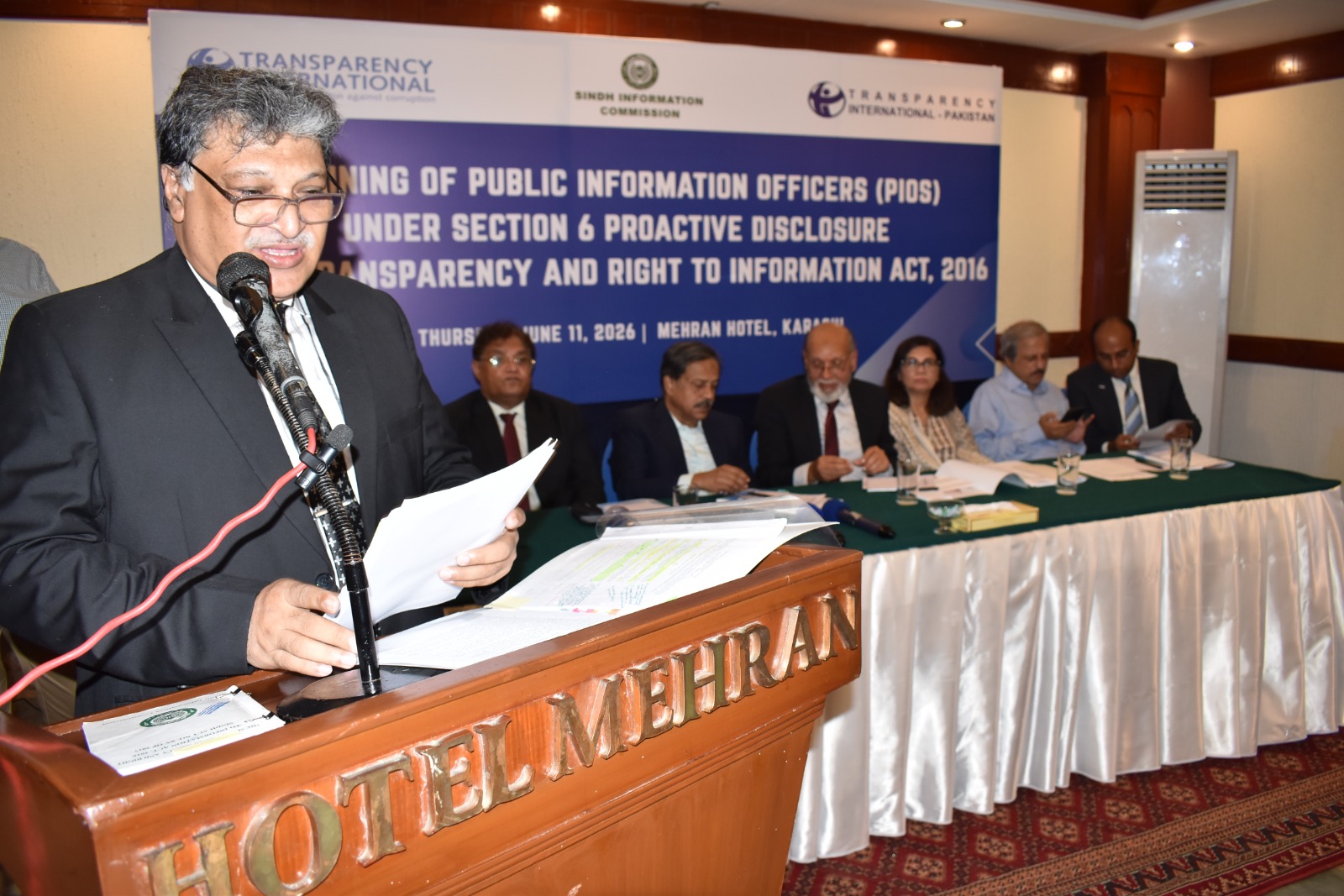
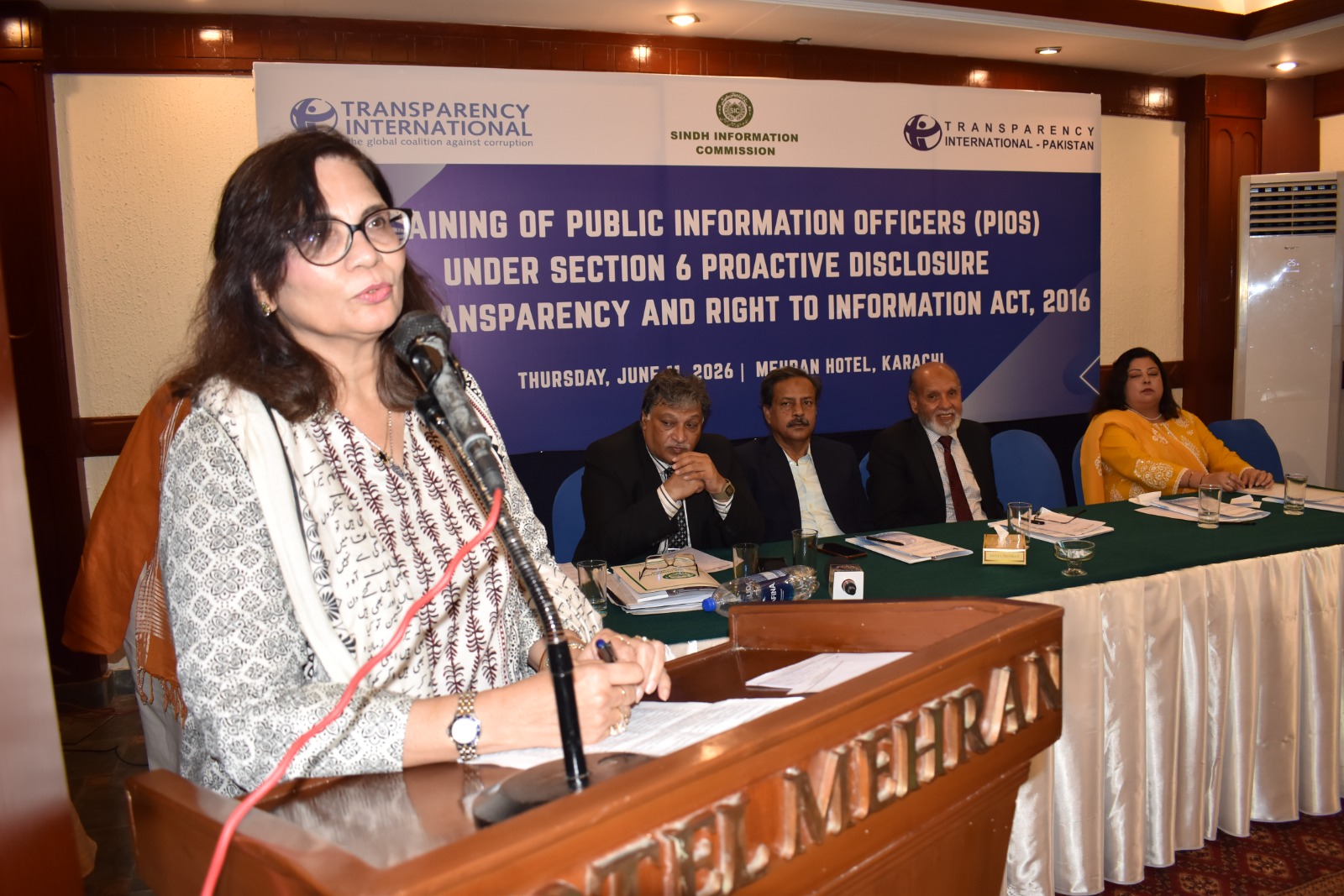
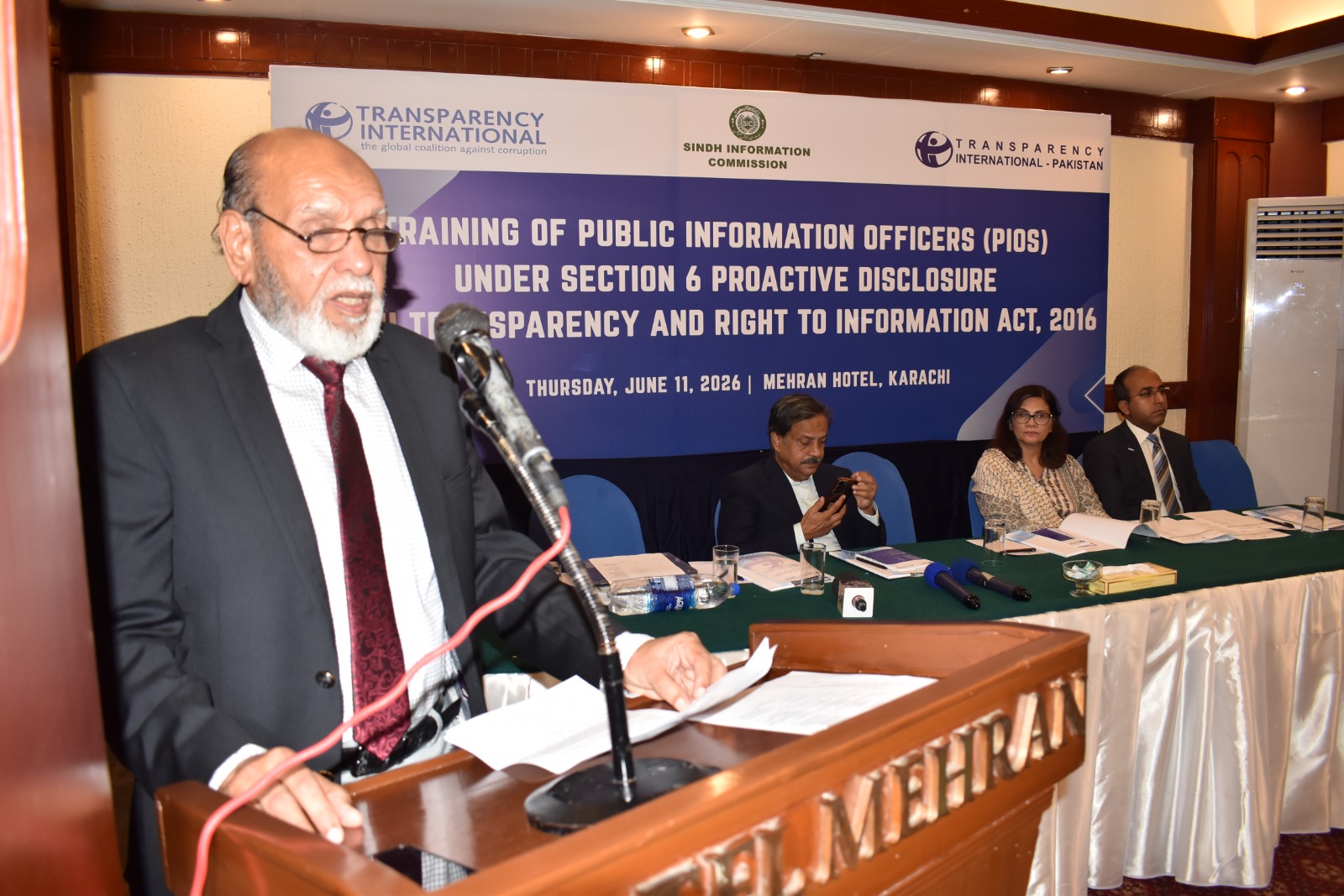
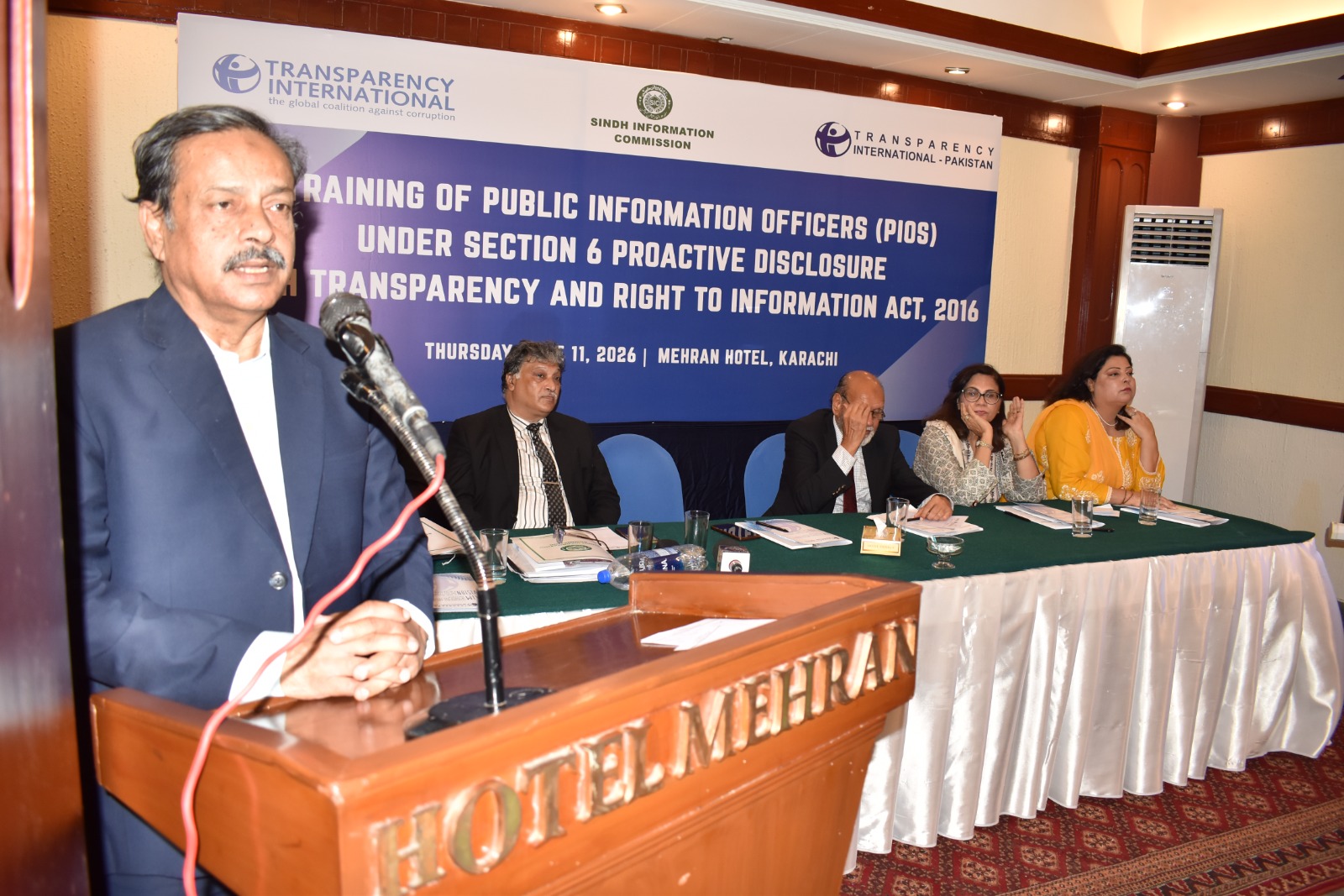
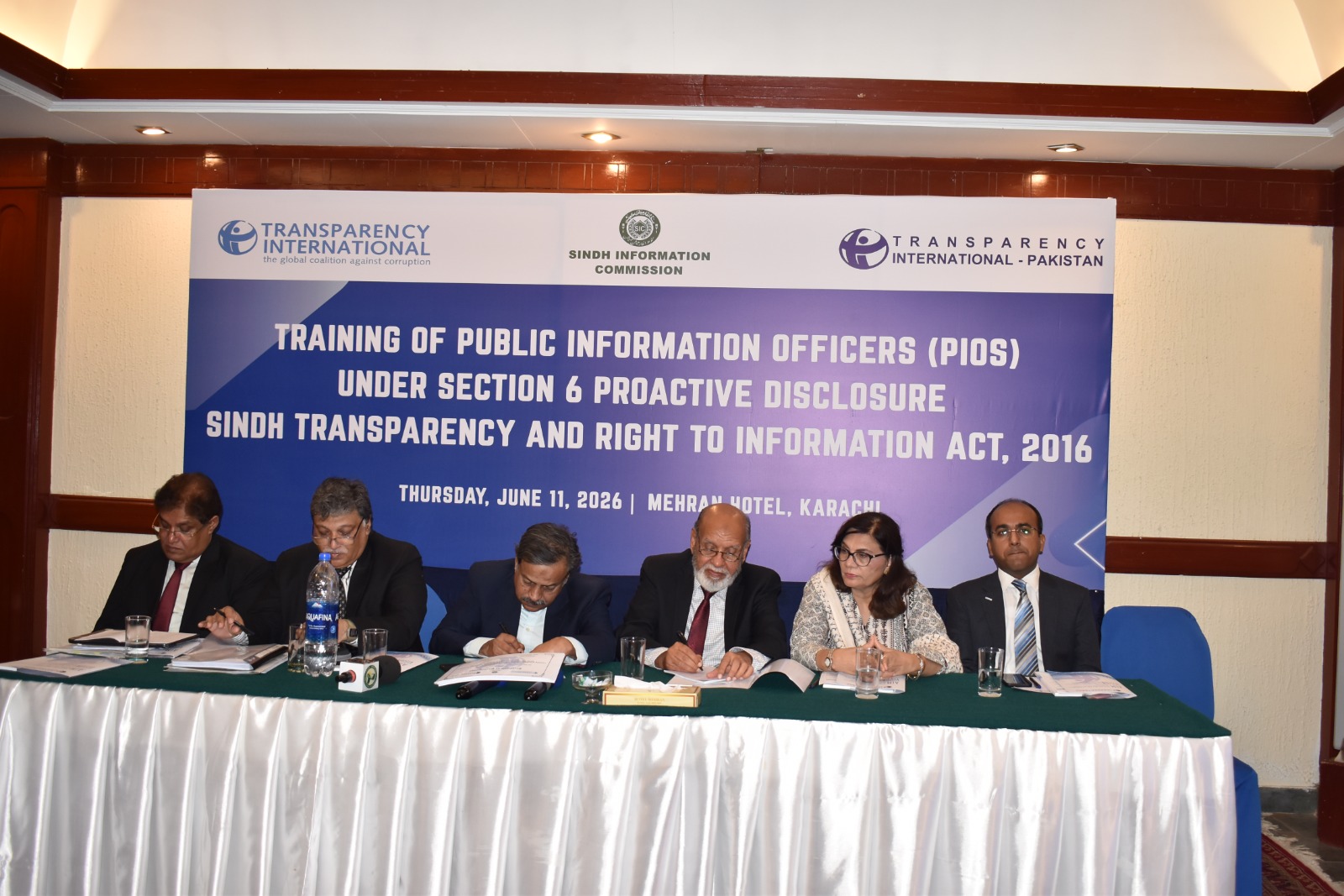
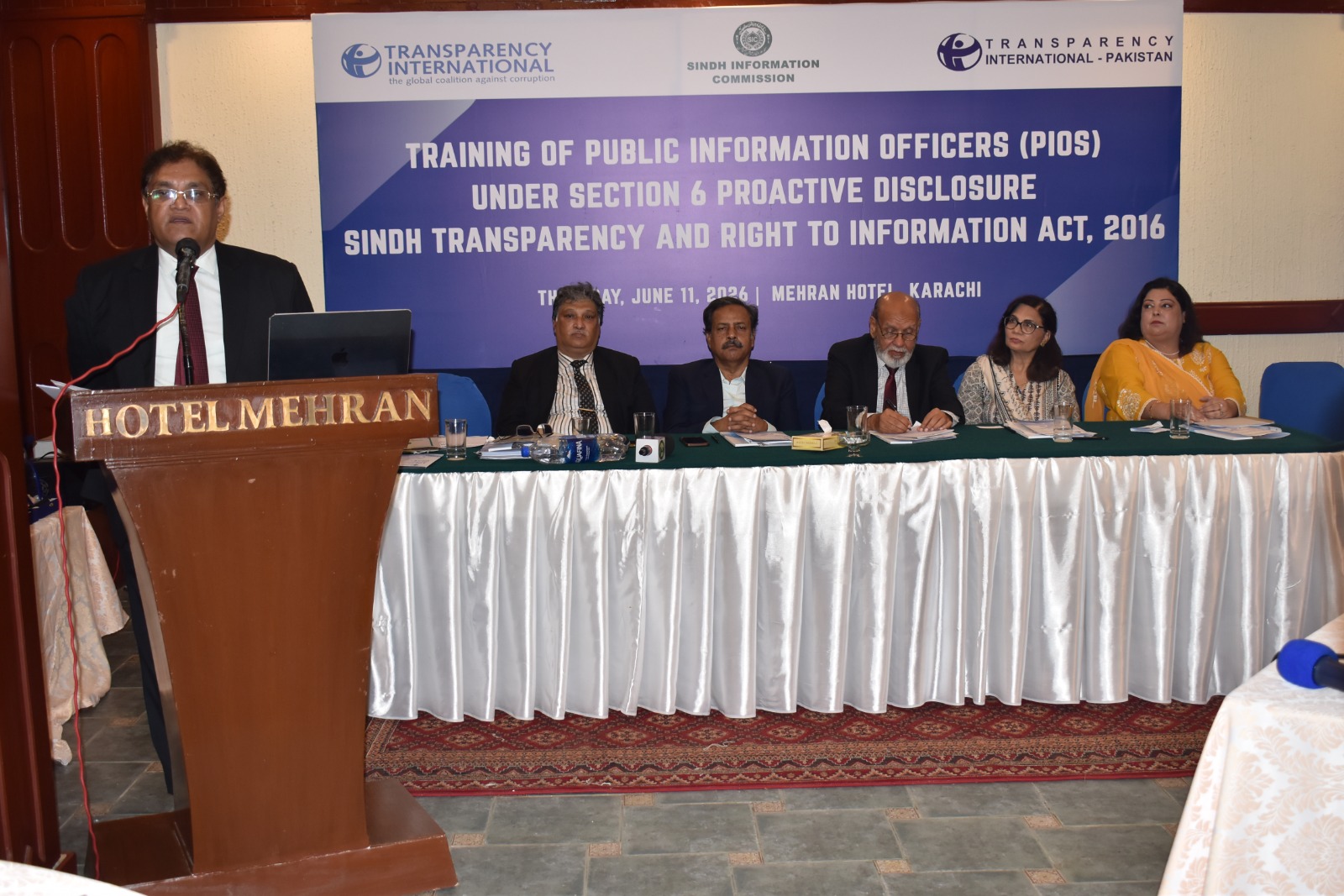
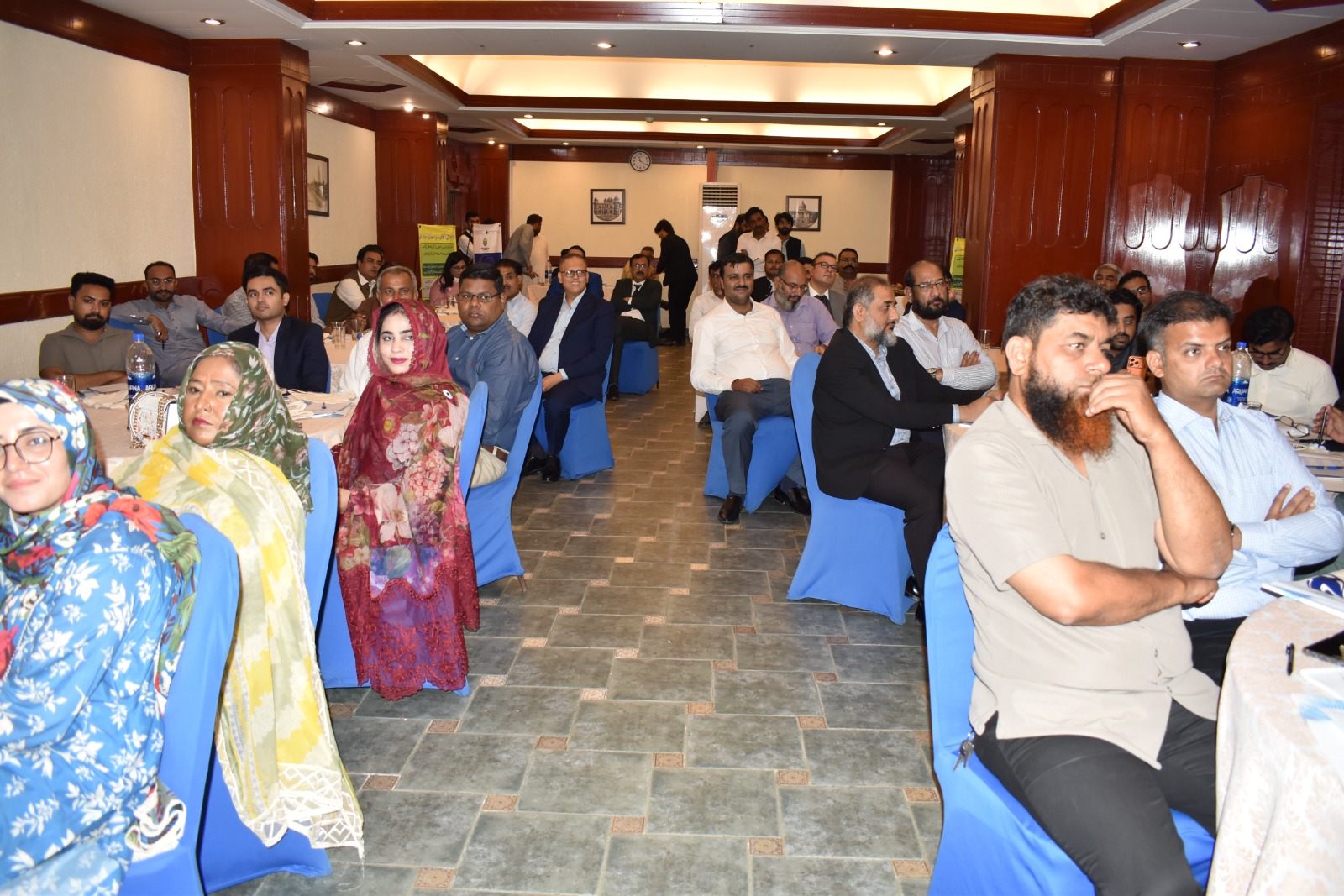
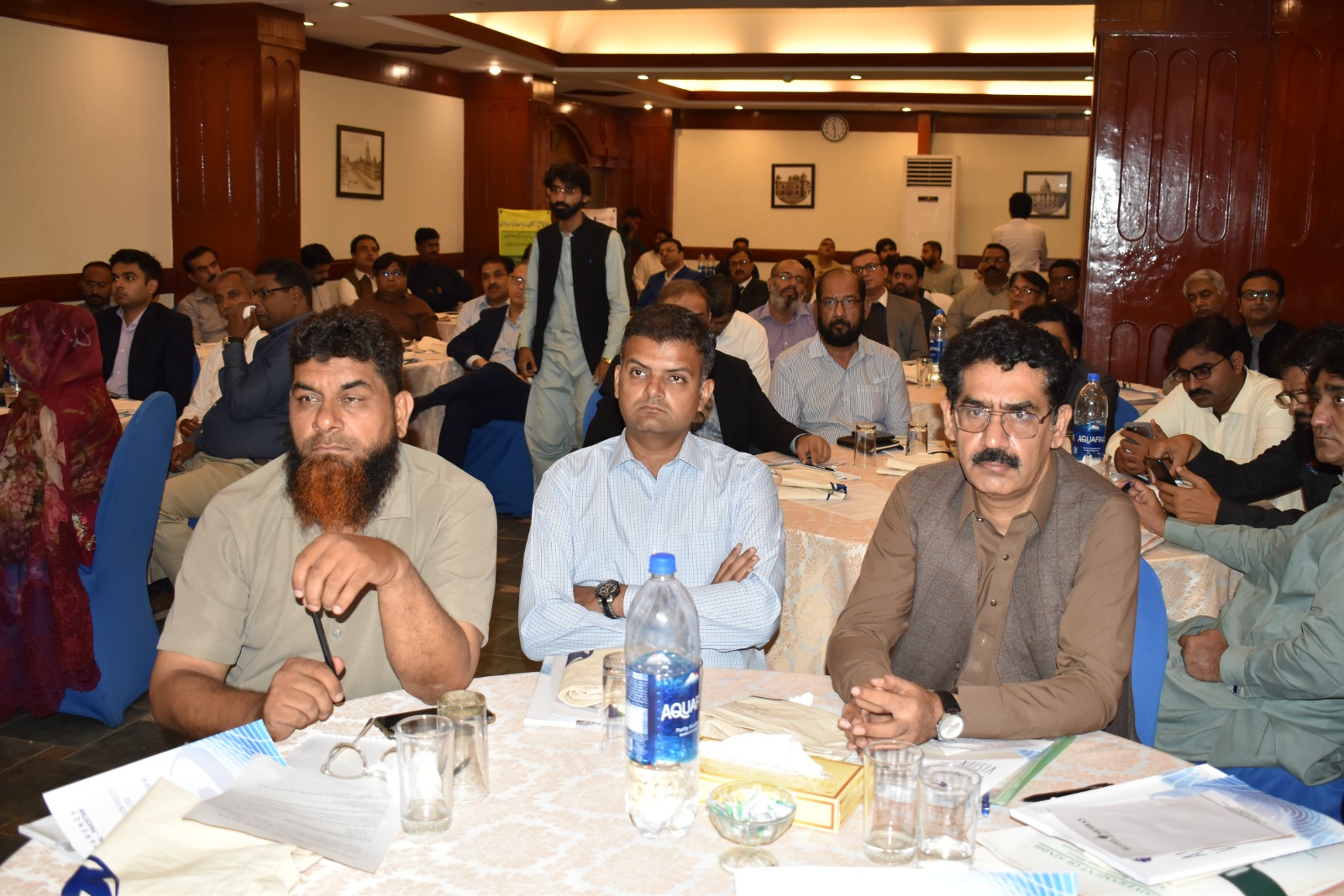
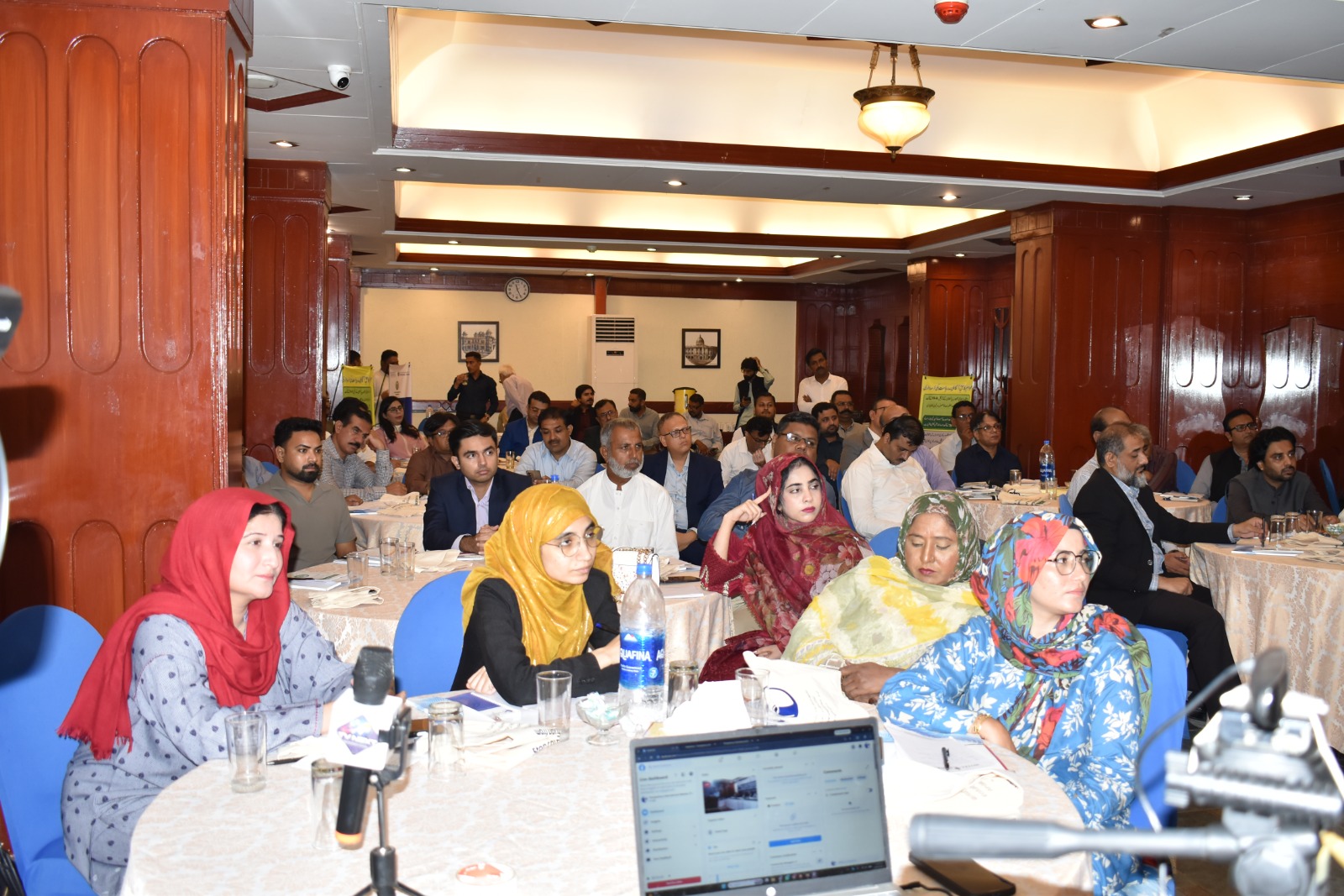
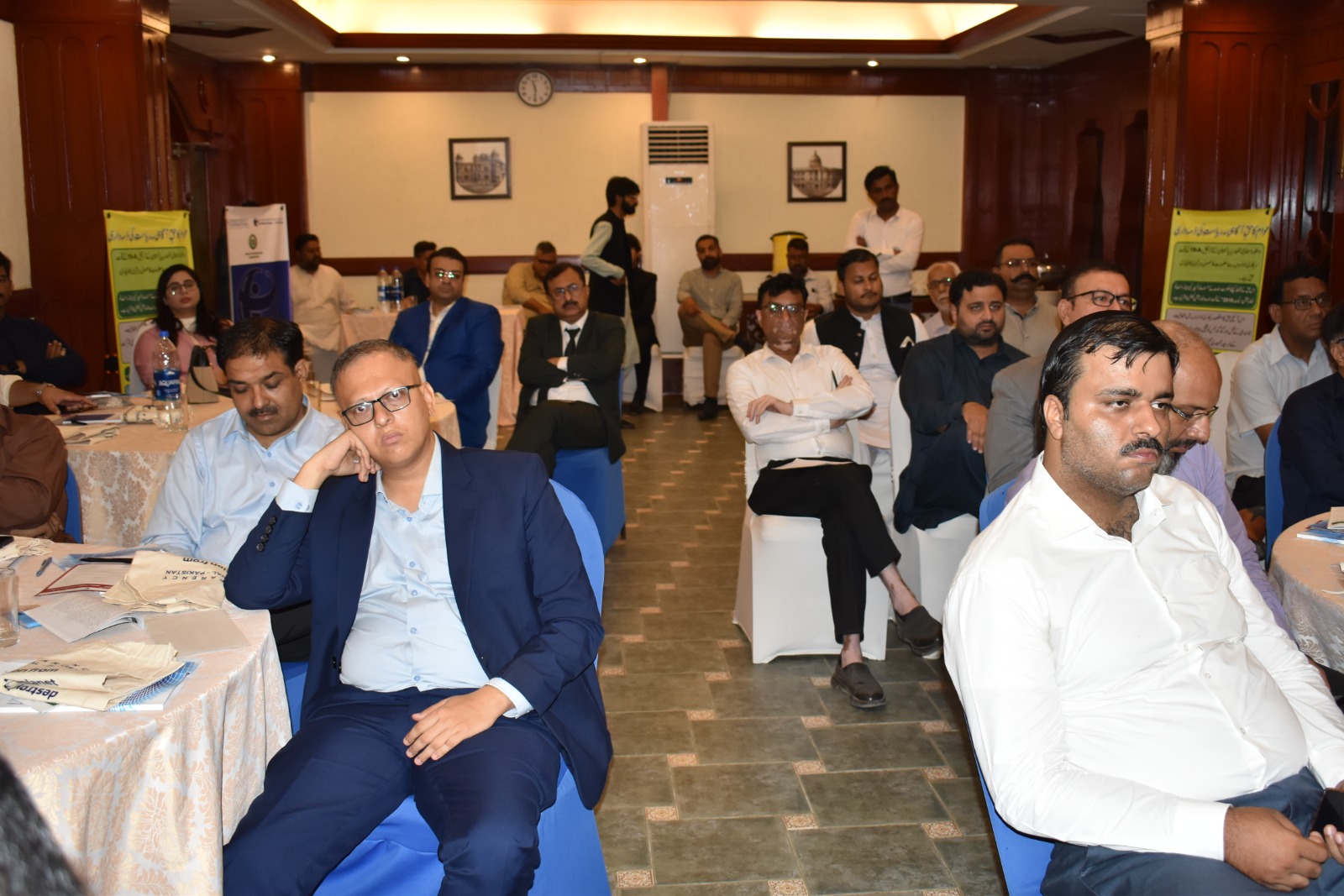
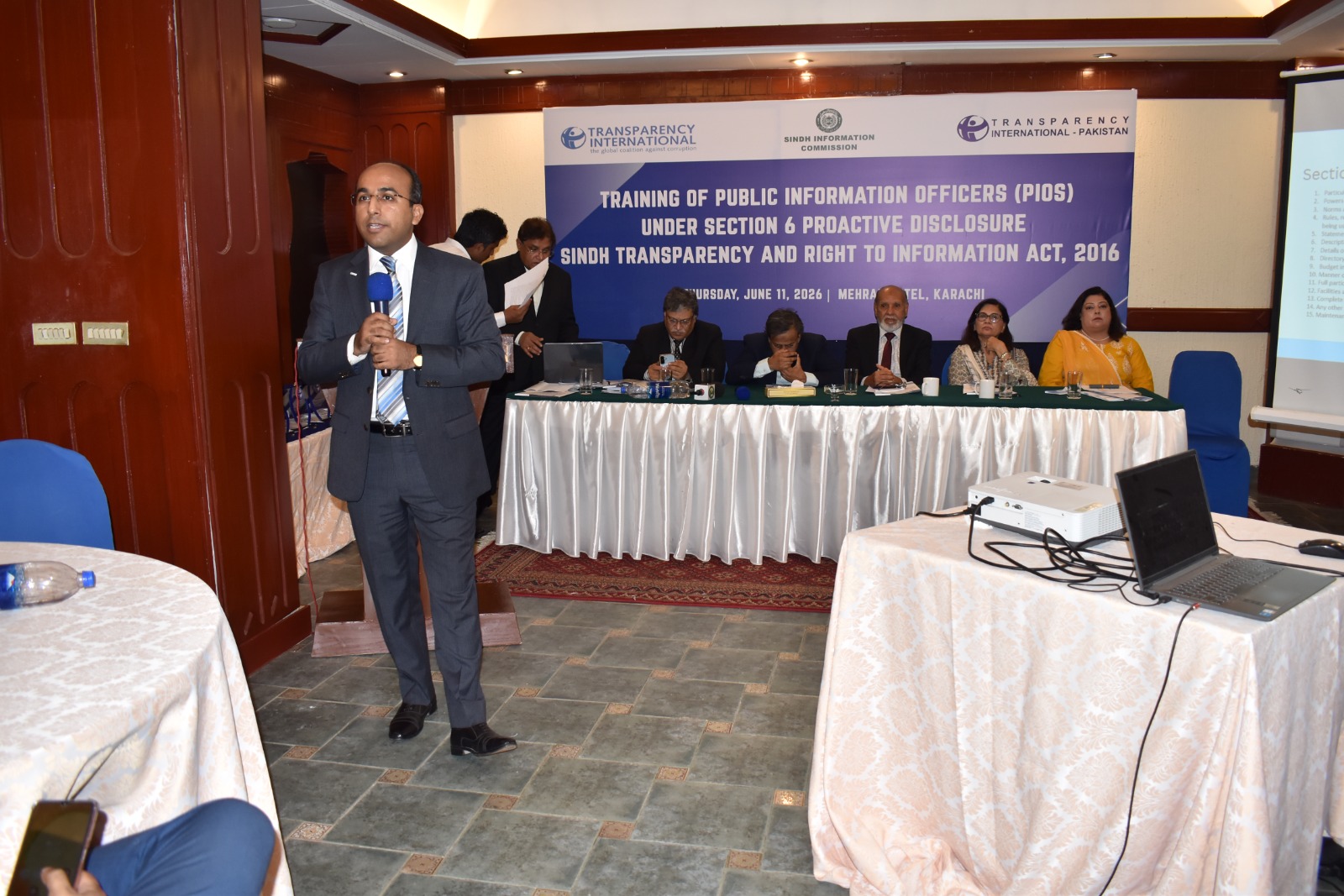
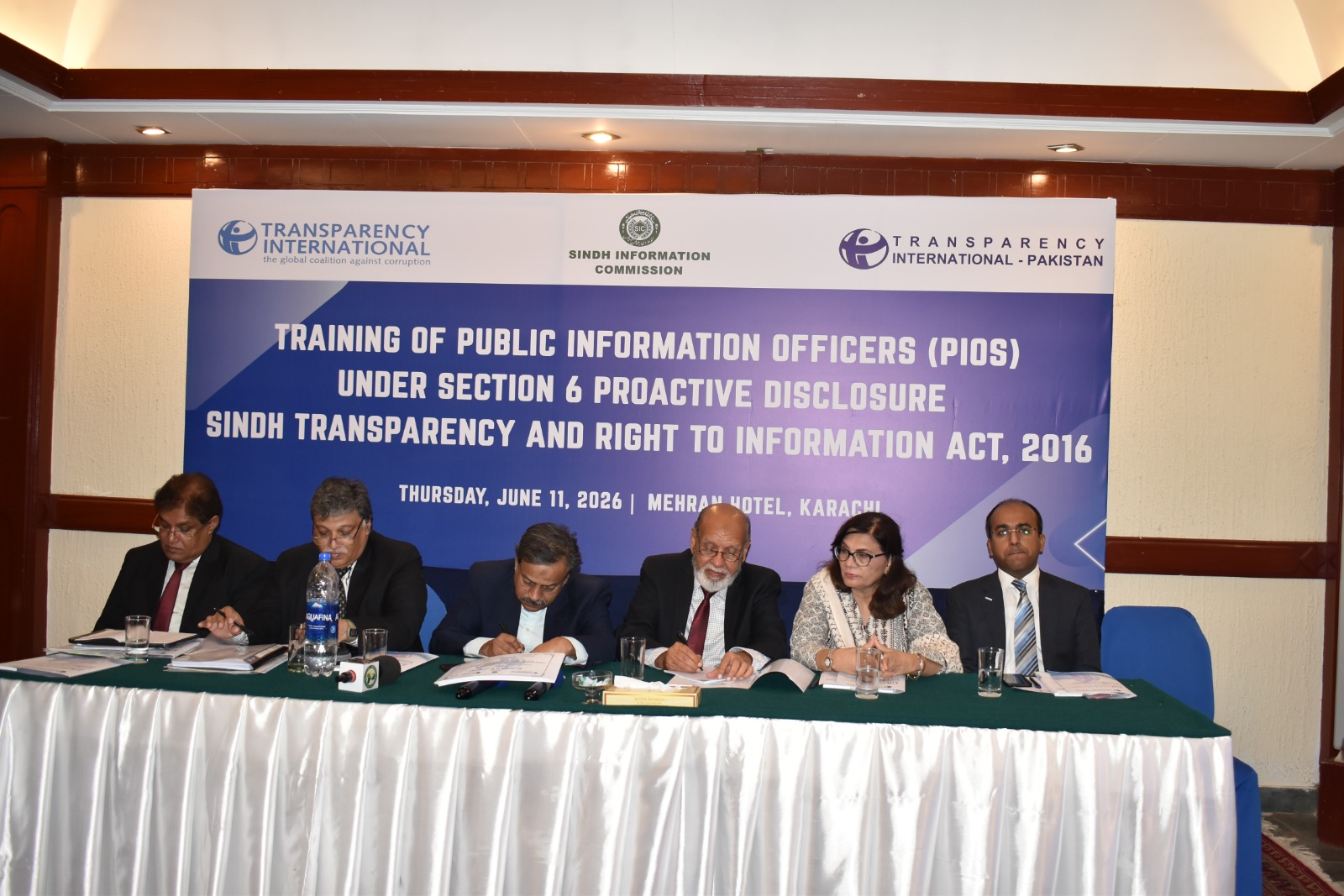
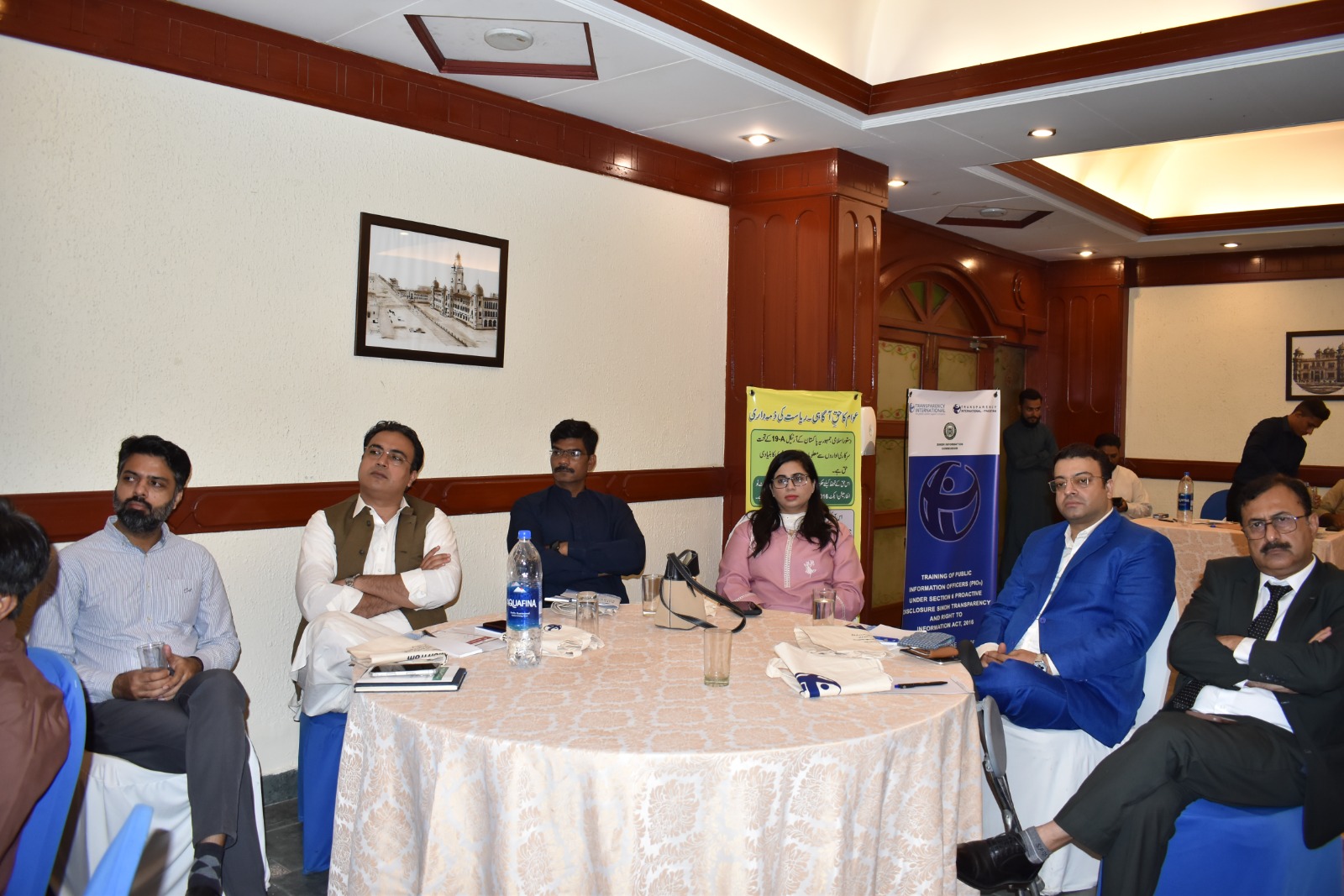
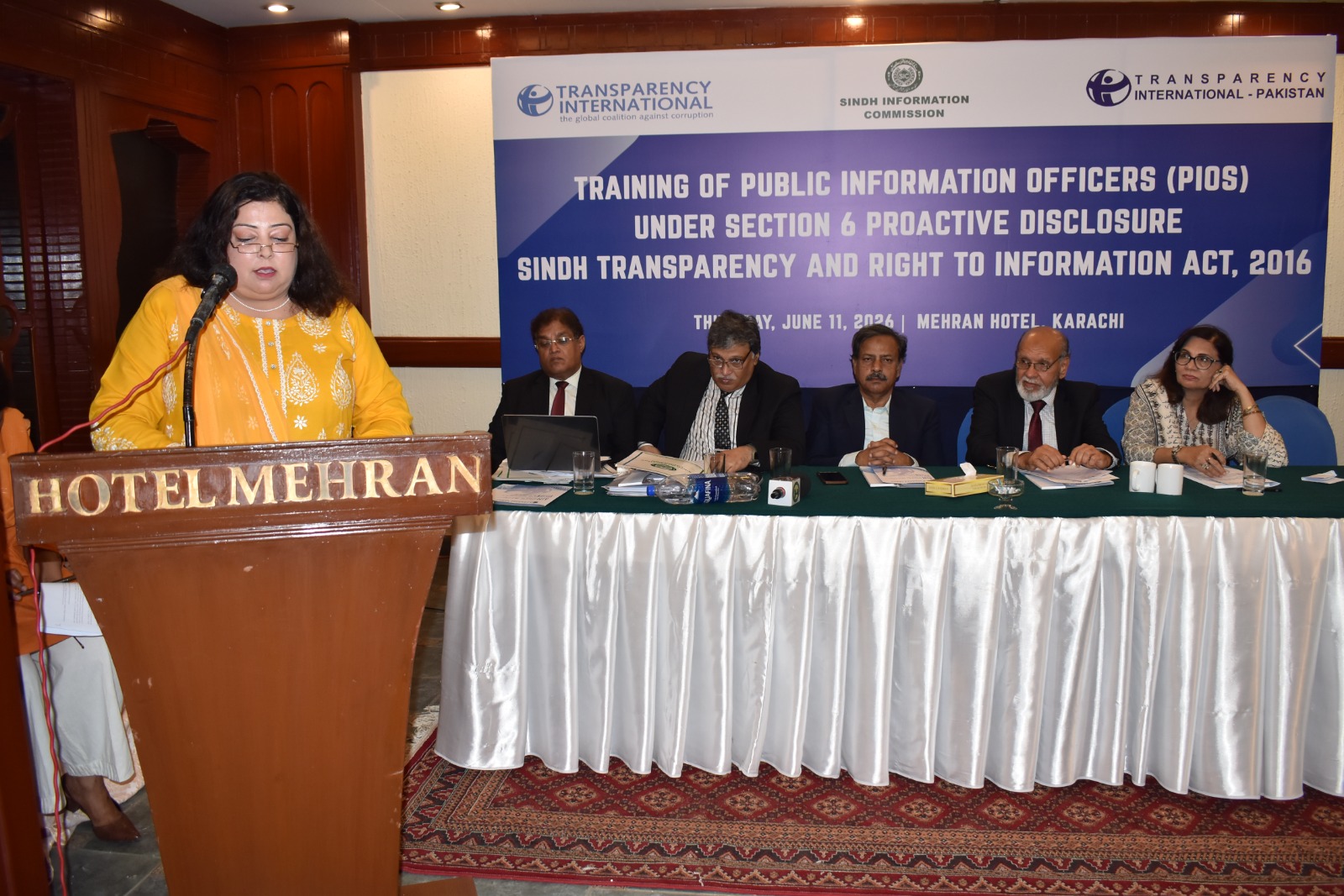
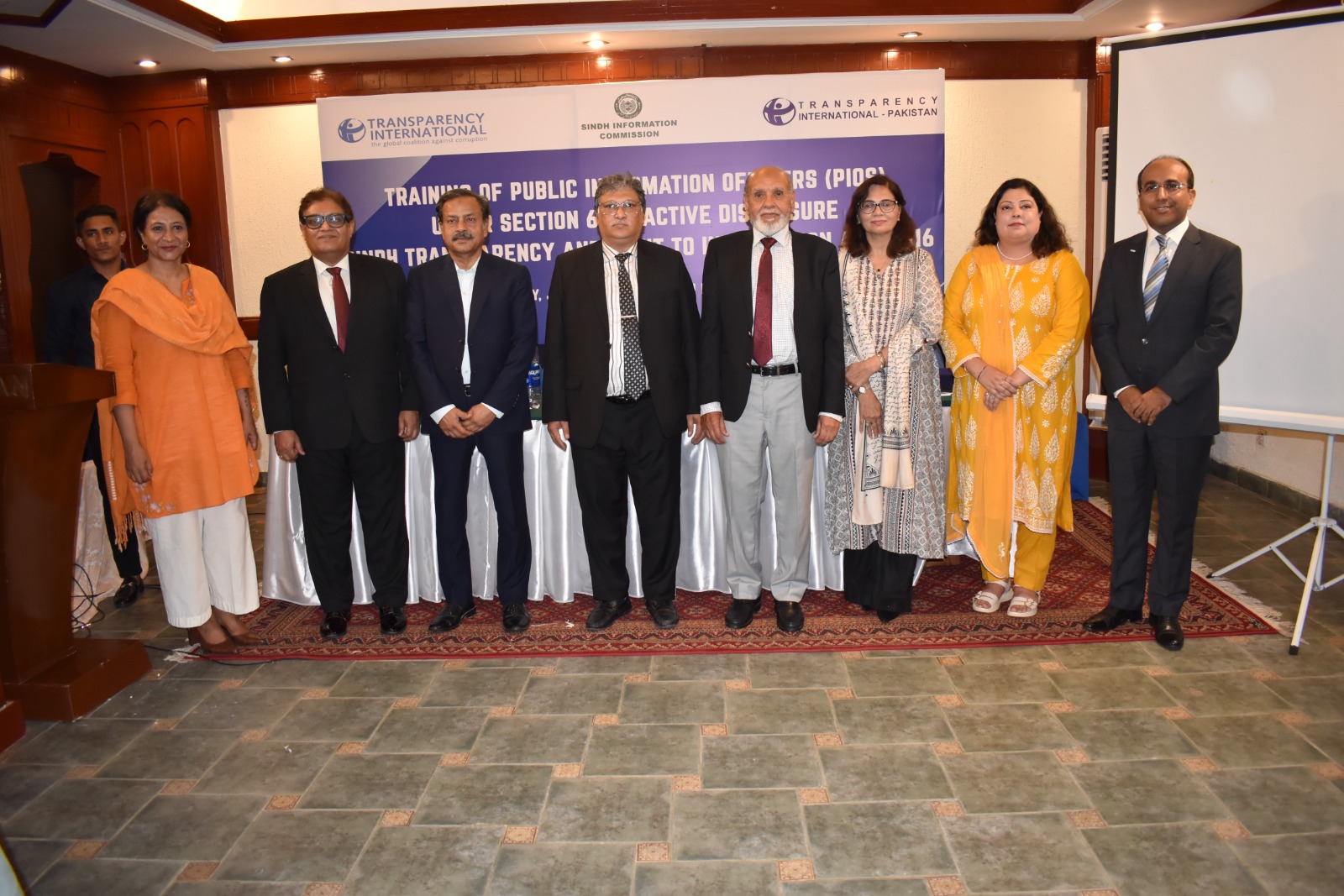
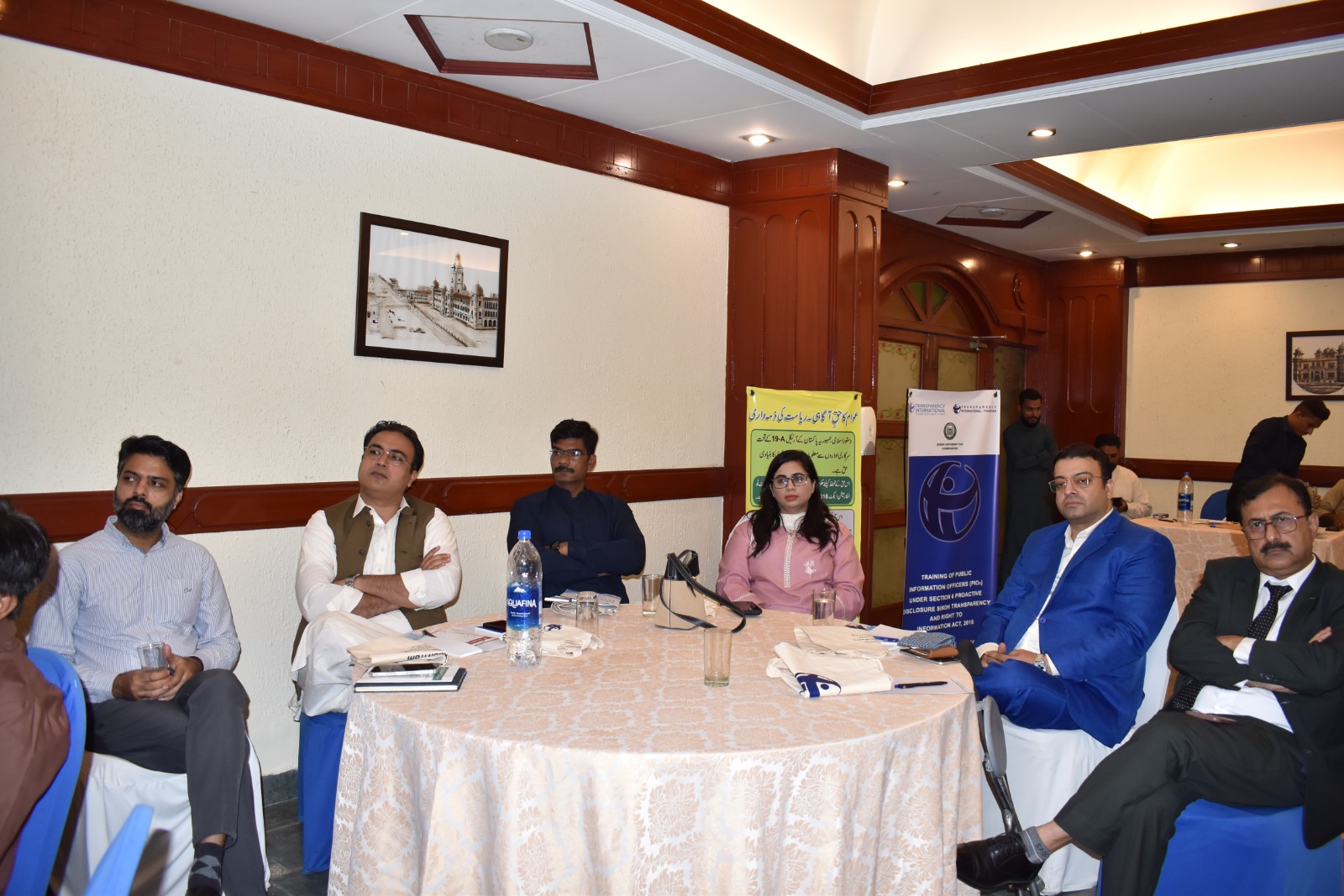
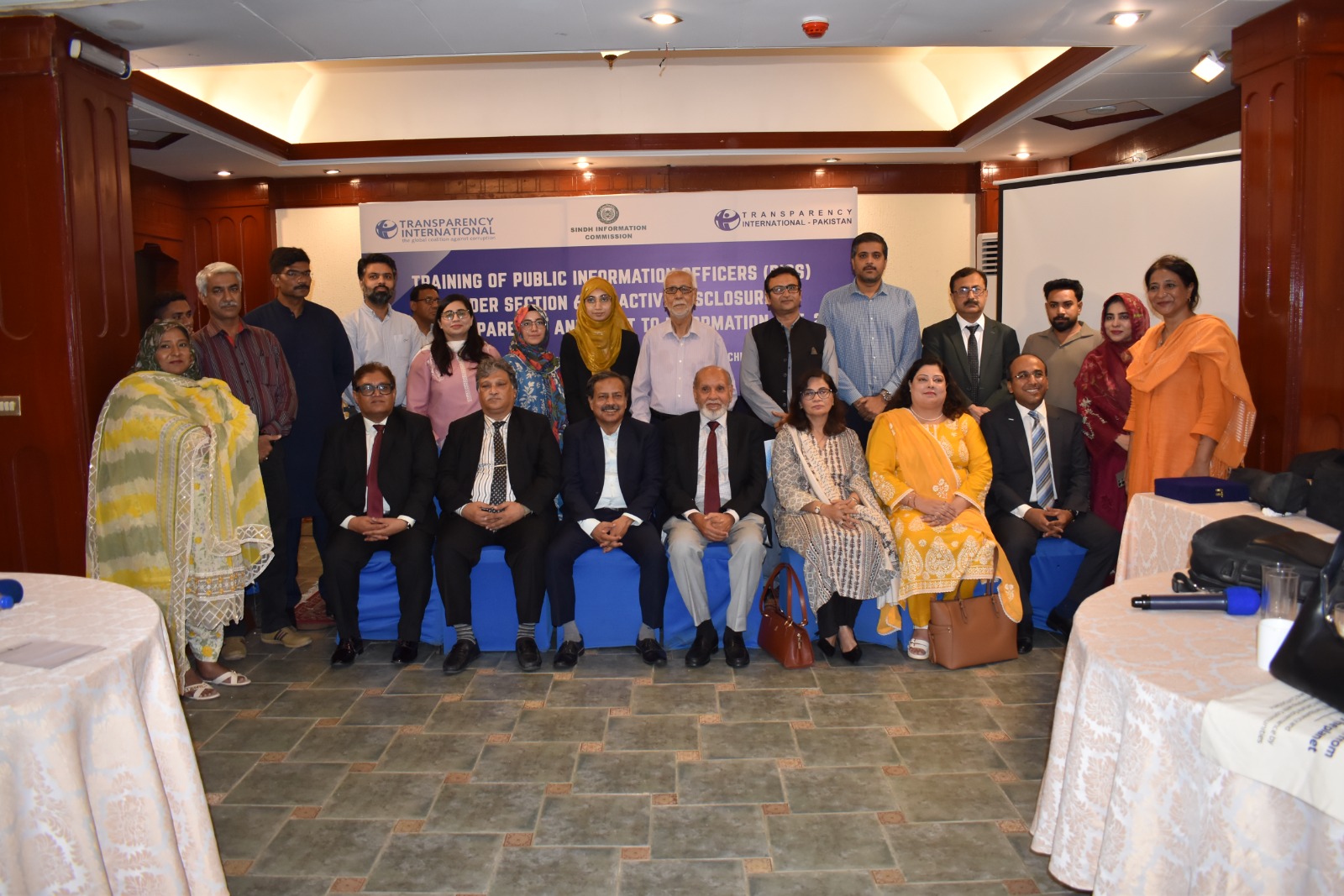
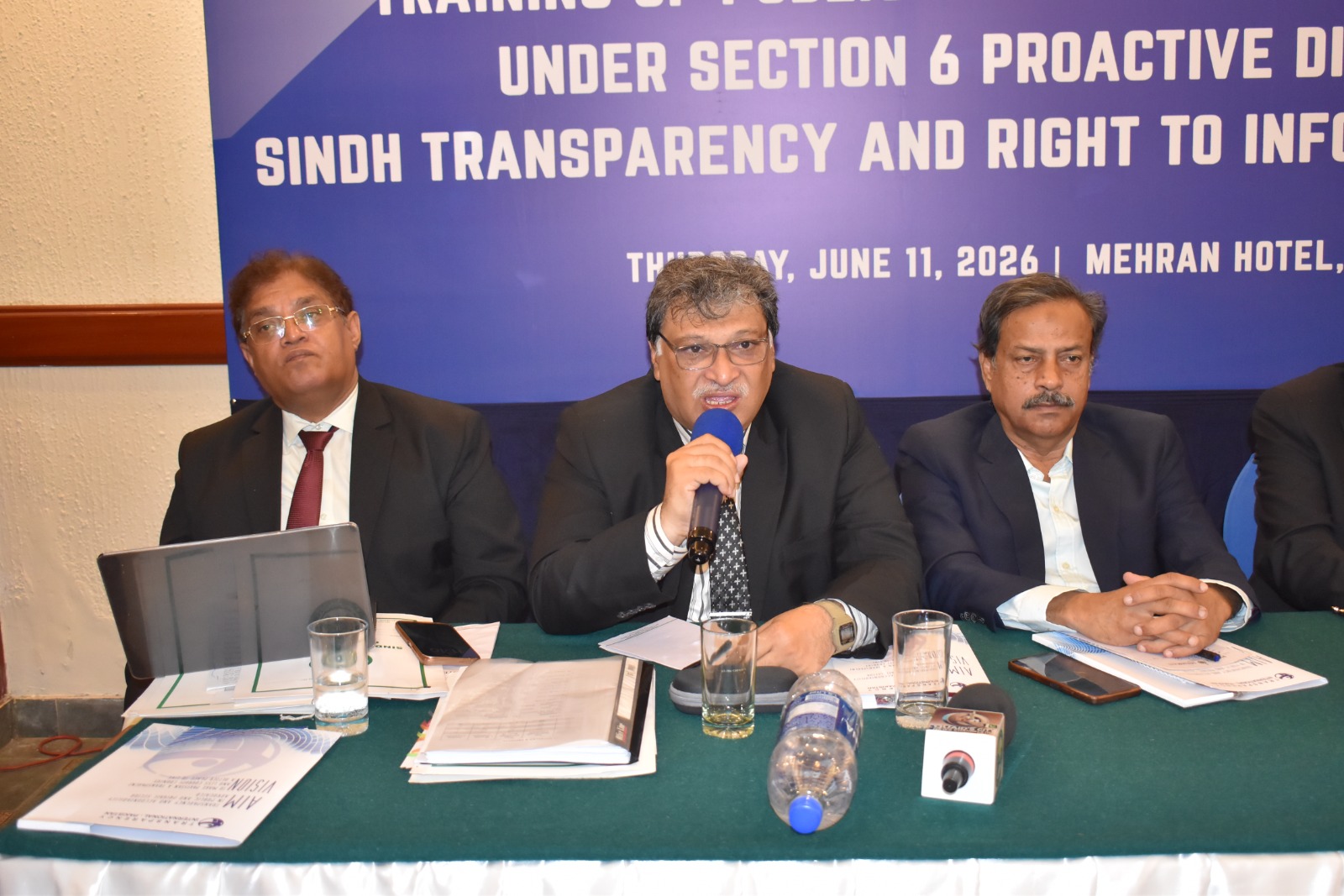
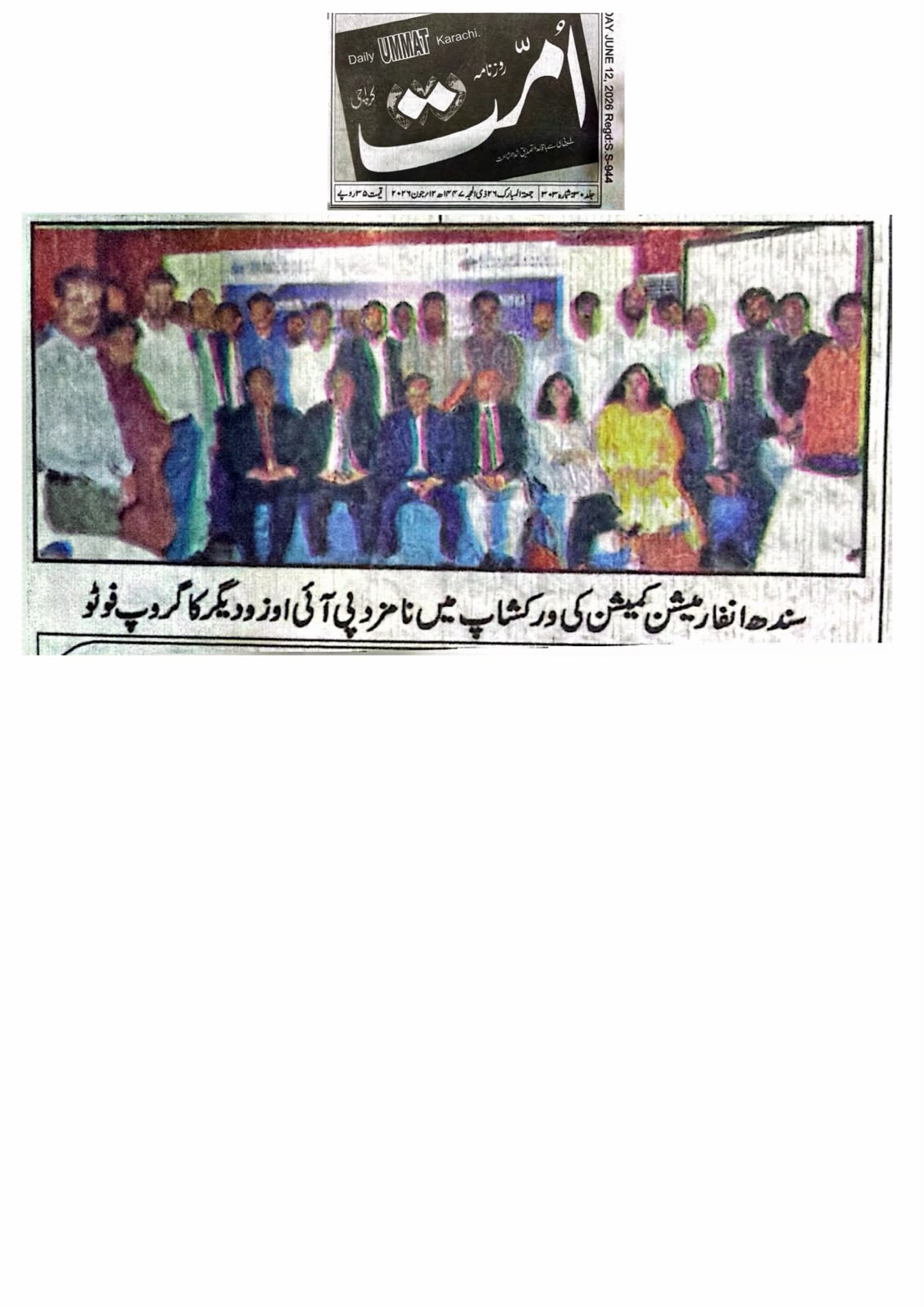
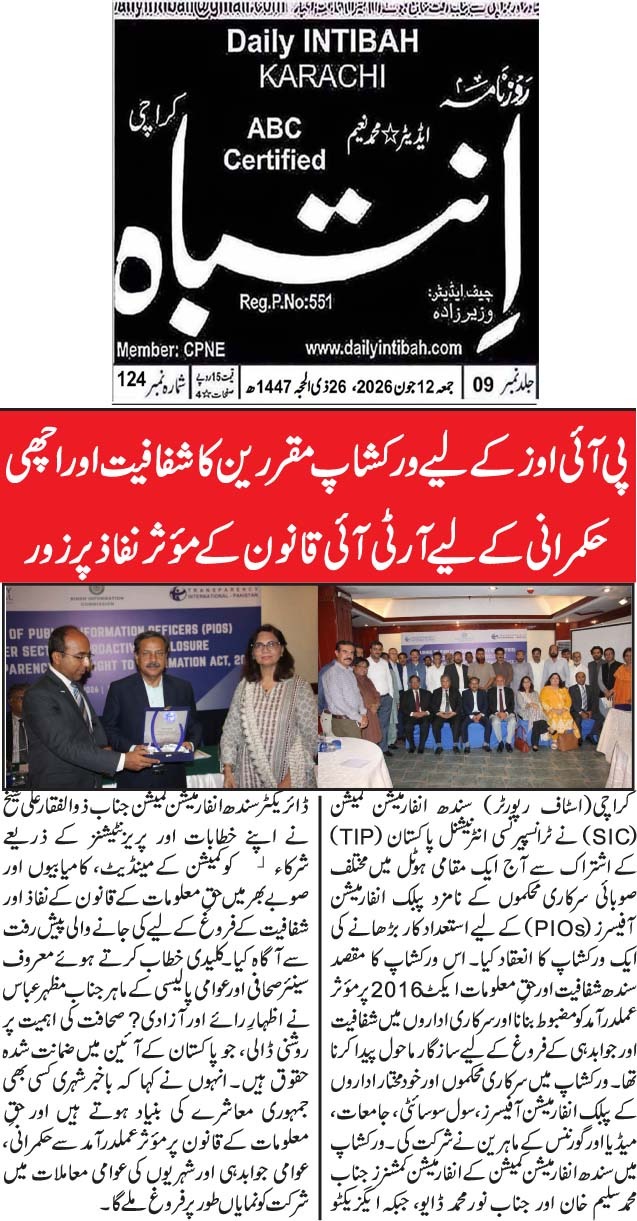
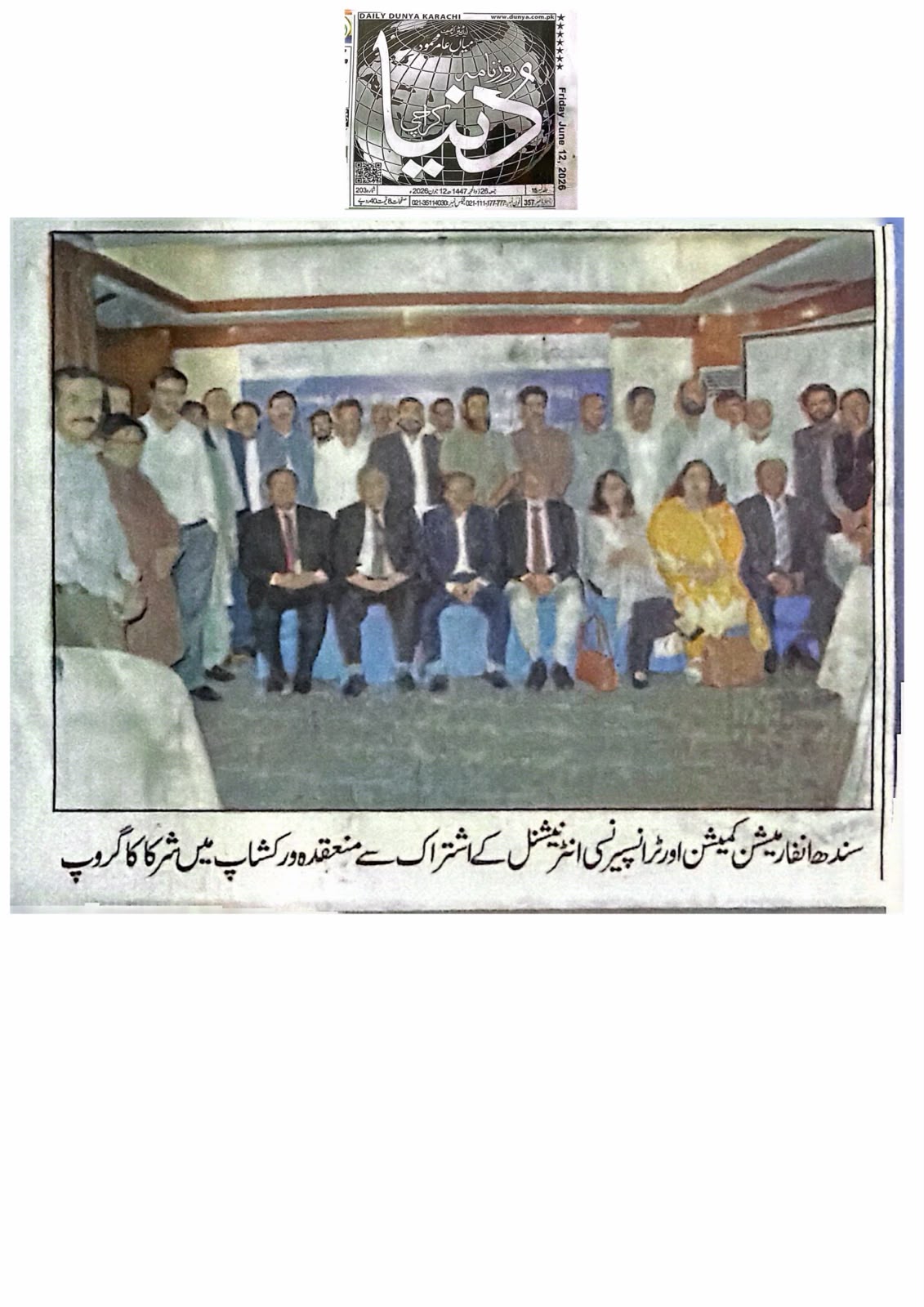
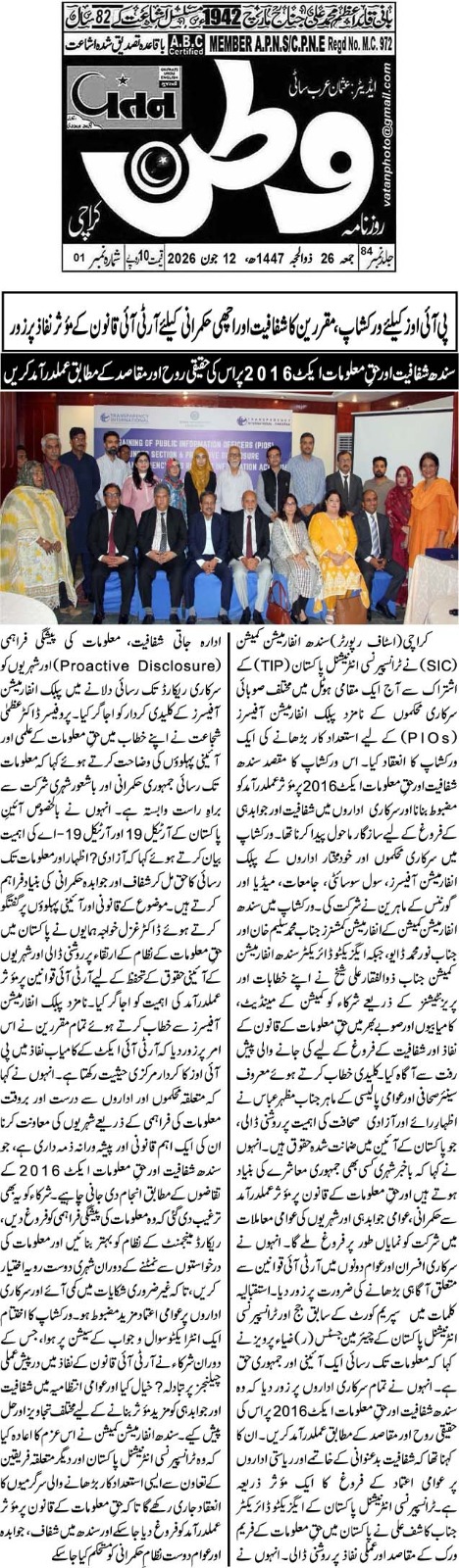
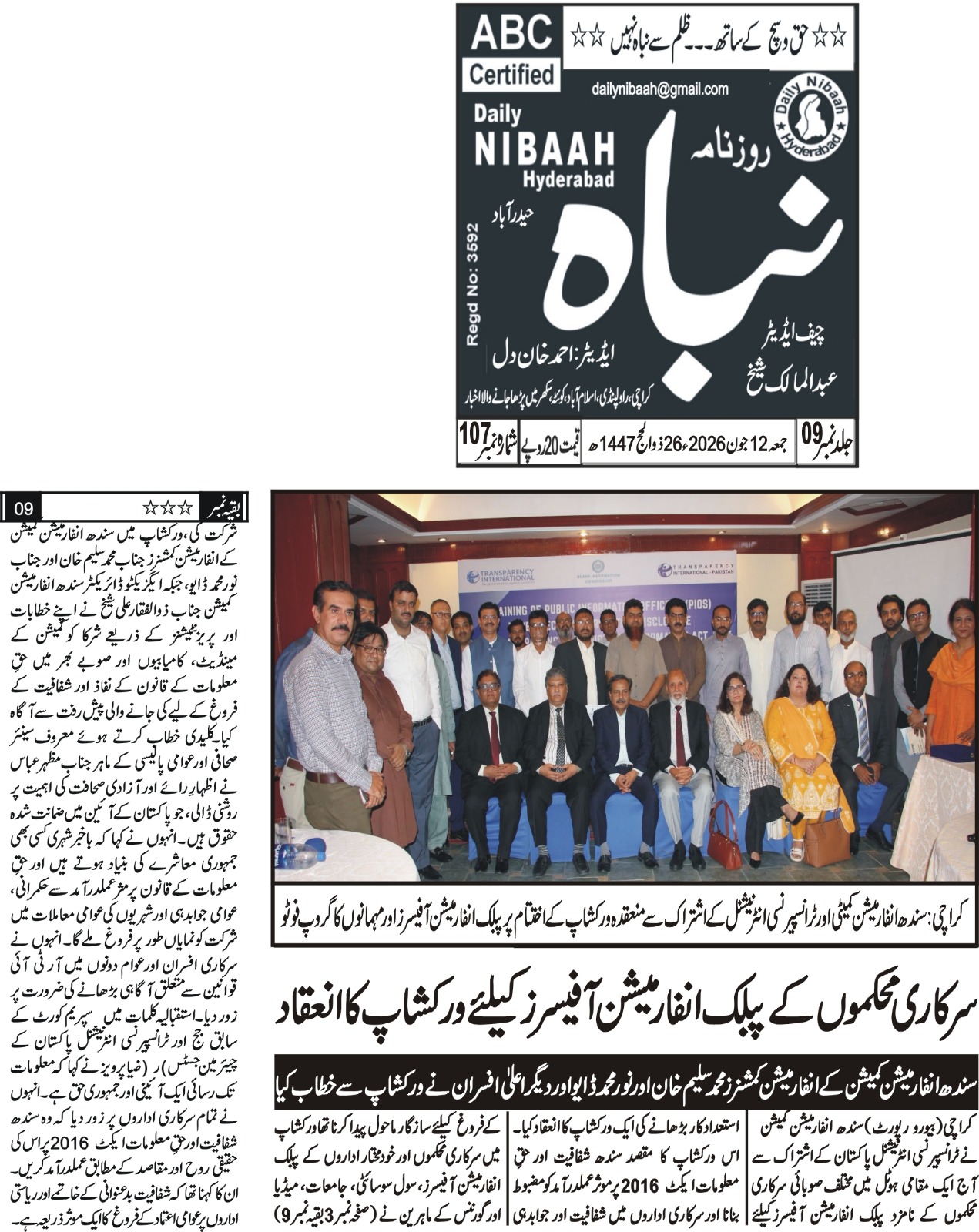
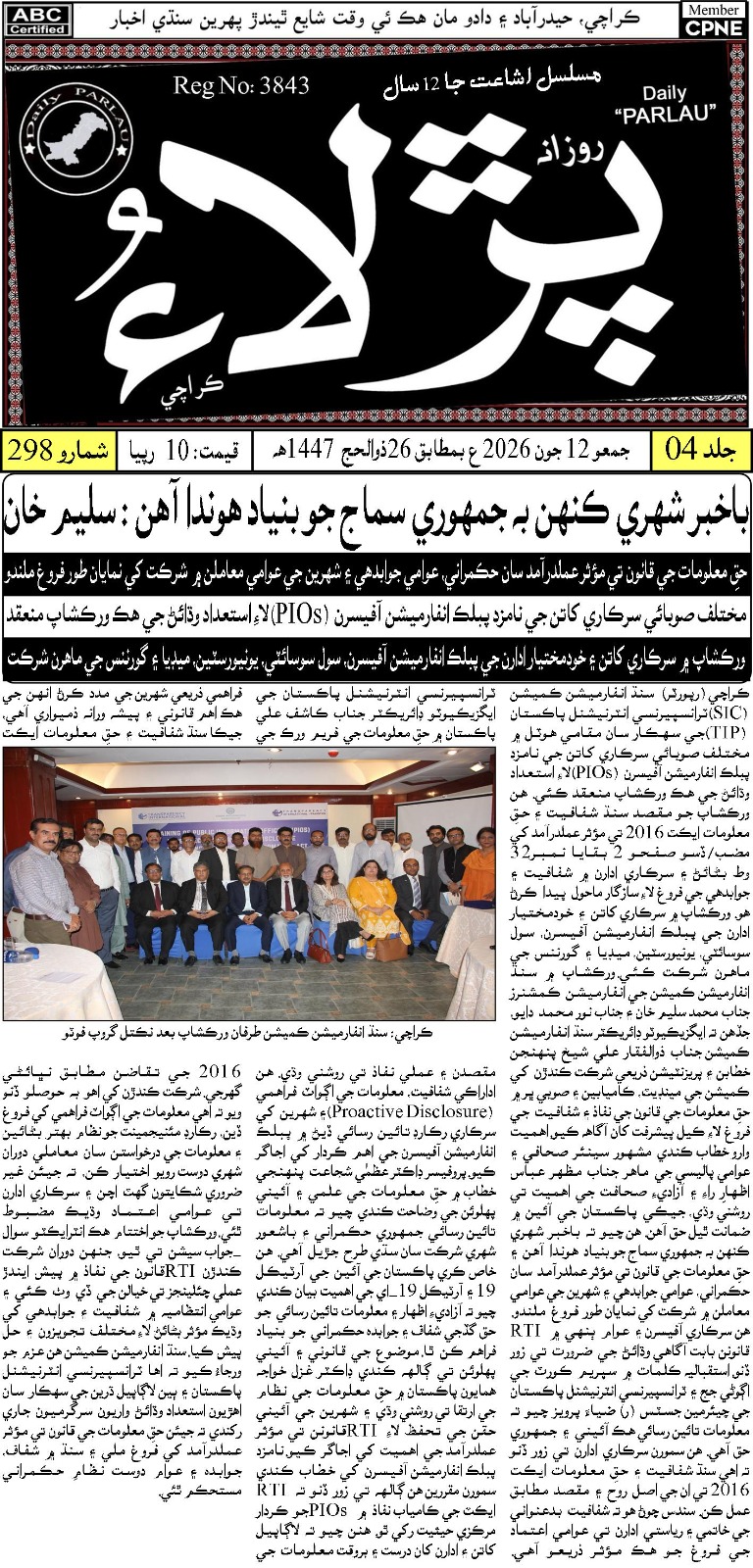
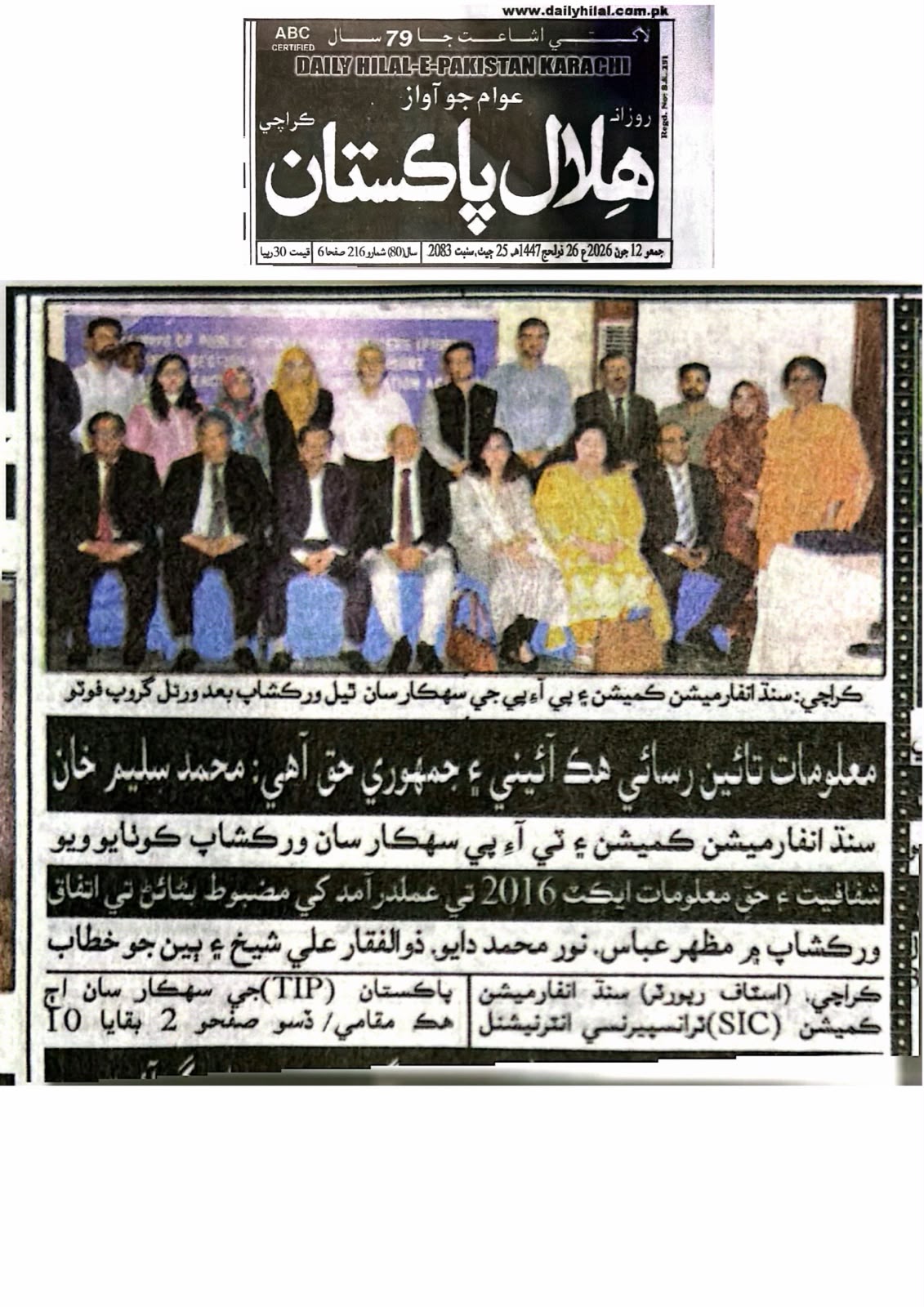
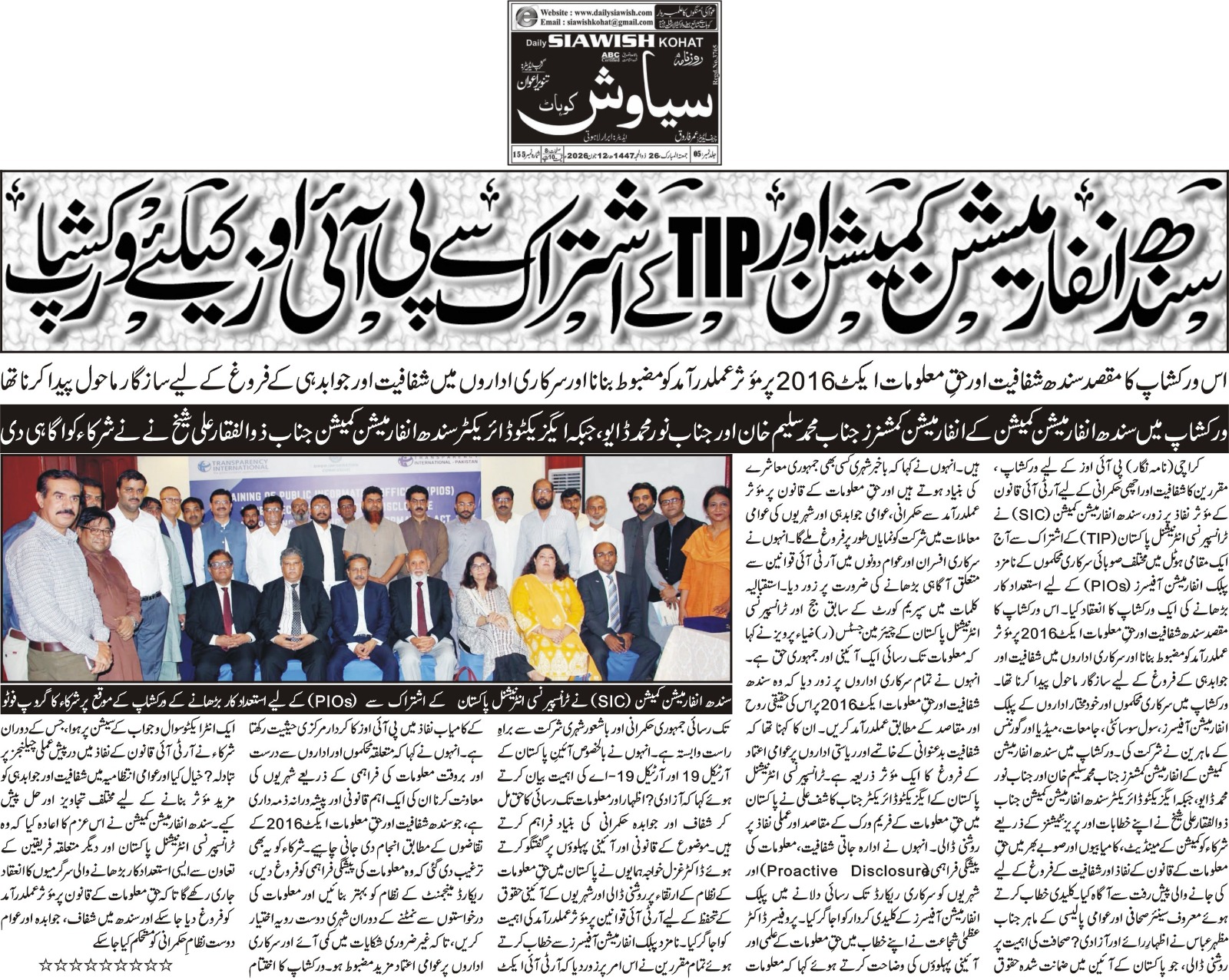
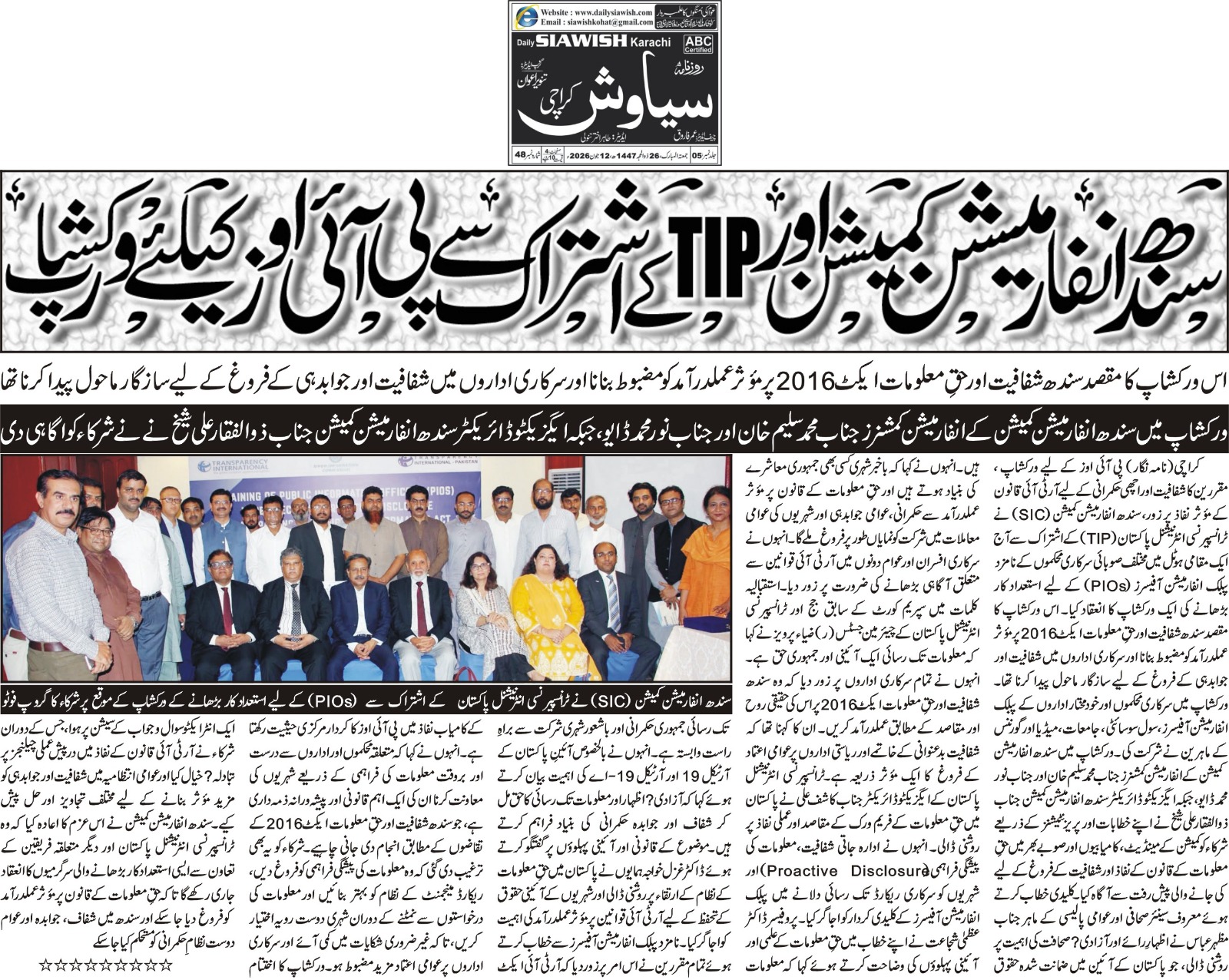
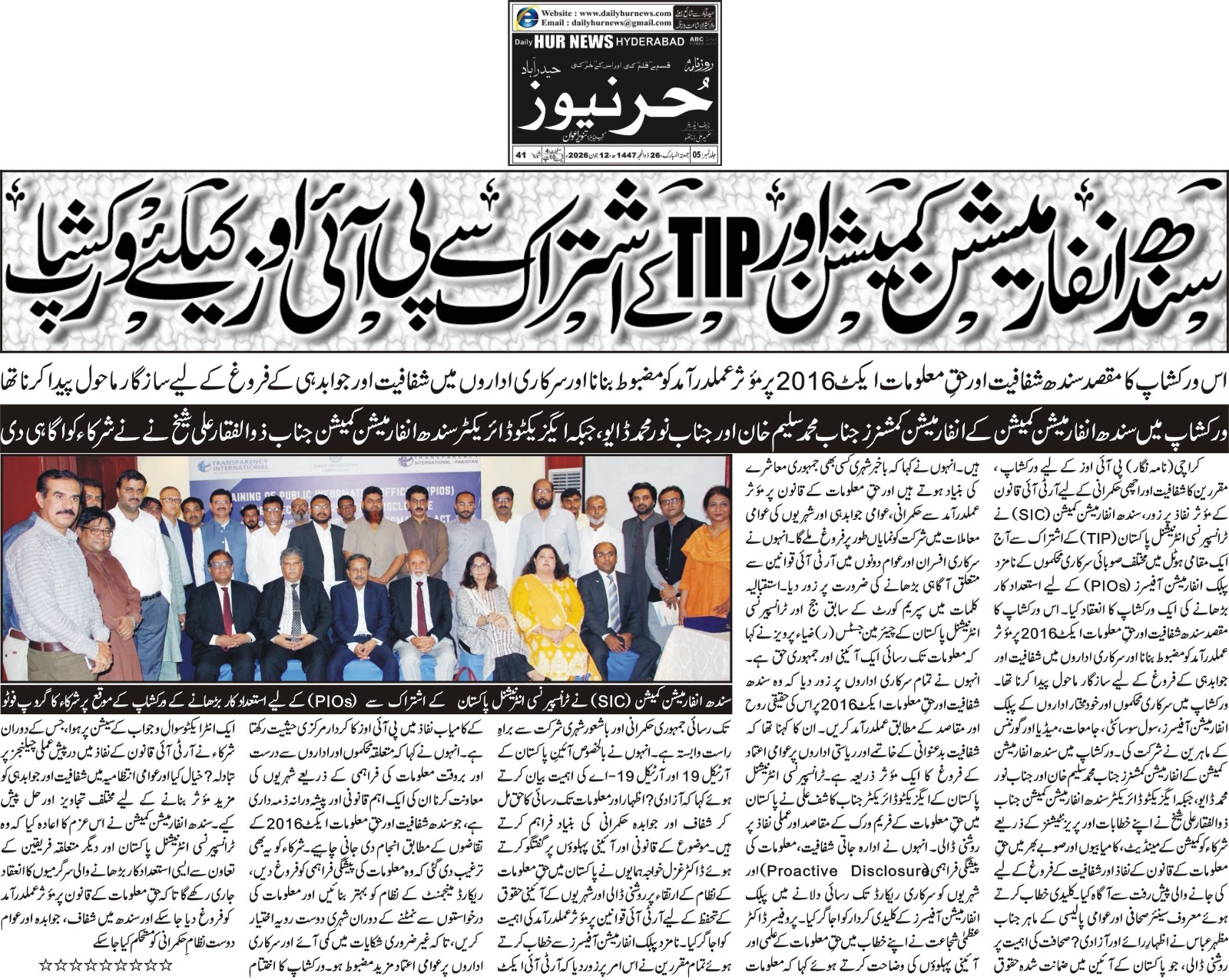
On June 11, 2026, Transparency International Pakistan (TI Pakistan) in collaboration with the Sindh Information Commission organized a training workshop for Public Information Officers (PIOs) on Section 6 (Proactive Disclosure) of the Sindh Transparency and Right to Information Act, 2016, at the Mehran Hotel, Karachi.
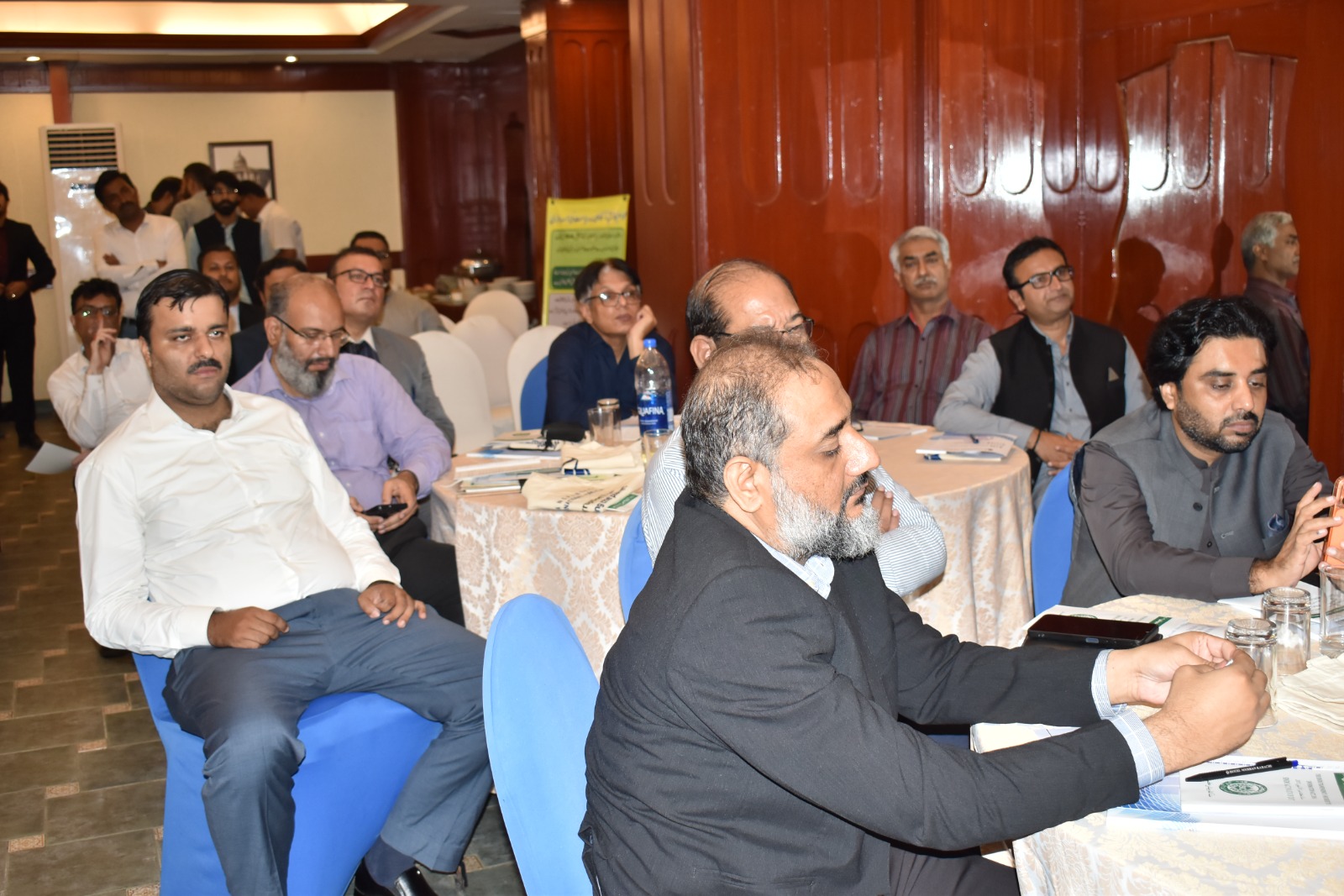
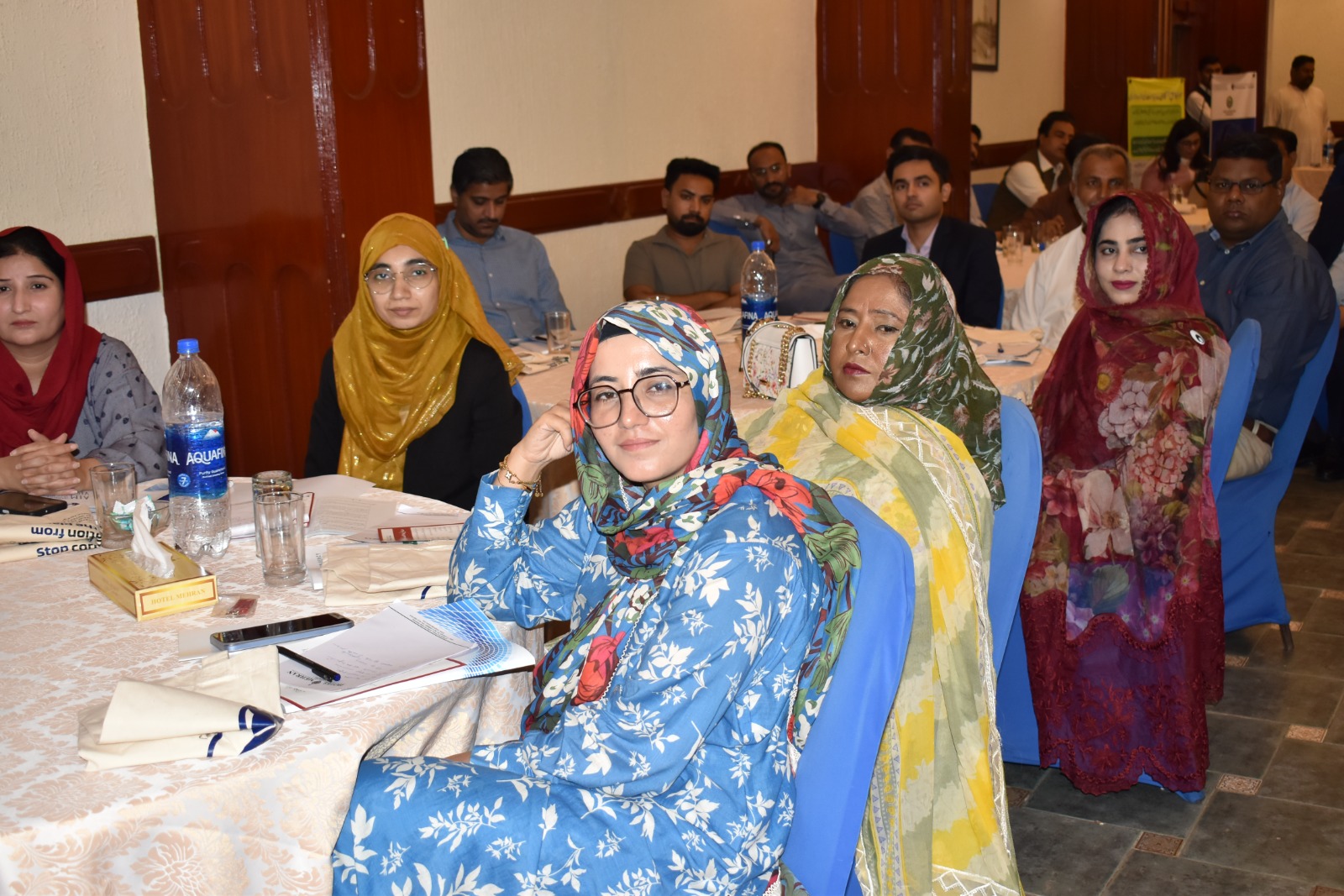
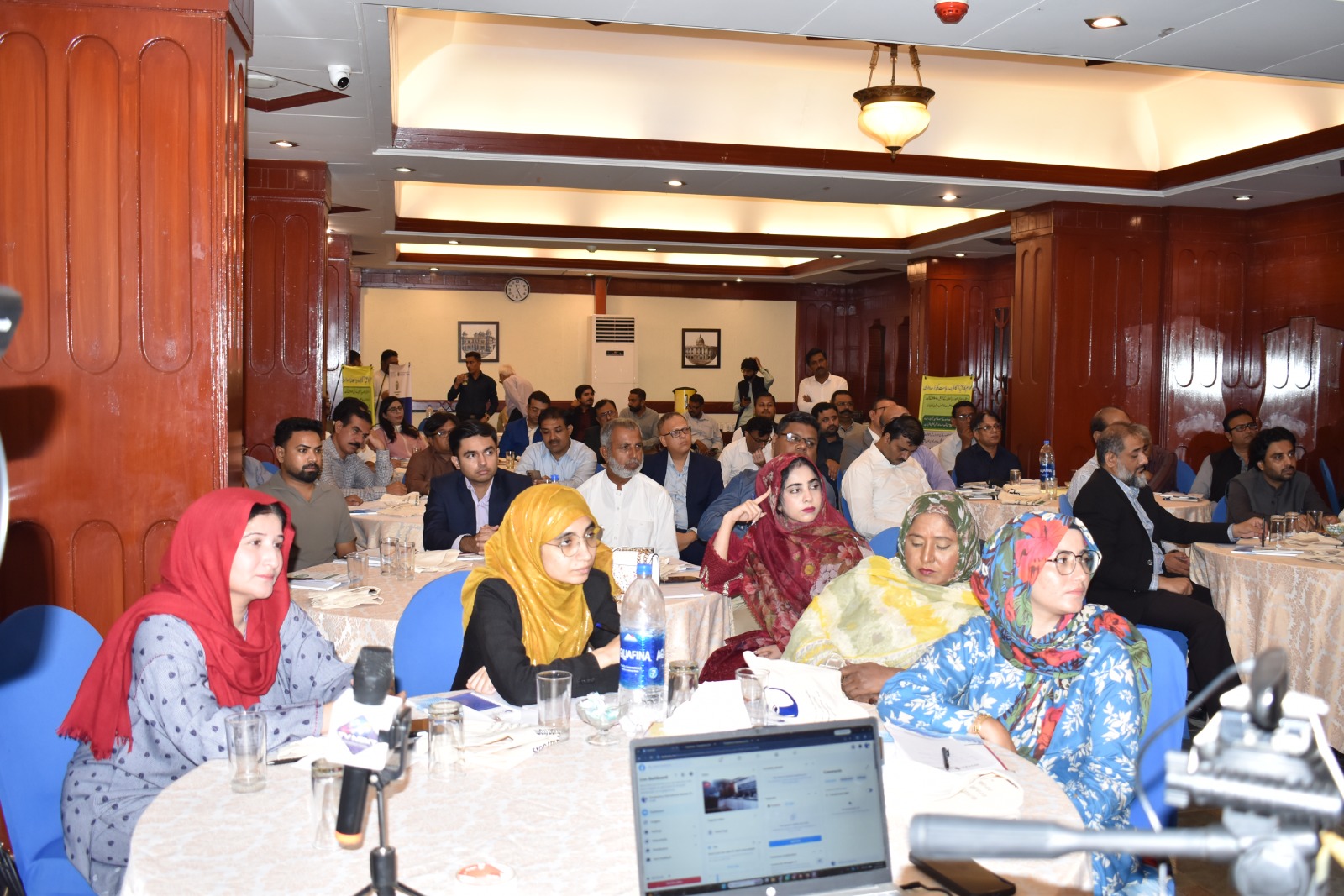
The workshop was attended by 51 Public Information Officers (PIOs) and senior officials from key departments of the Government of Sindh including the Environment, Energy, Irrigation, Revenue, Labour, Works and Services, Health, Law, Police and other relevant departments. The workshop aimed to strengthen participants’ understanding of the Sindh Transparency and Right to Information Act, 2016, with a particular focus on proactive disclosure a legal requirement for public bodies to publish key information on their official websites.
The training commenced with the recitation of the Holy Quran. A pre-test was conducted to assess participants’ baseline understanding of the RTI act and the roles and responsibilities of Public Information Officers. The pre-test score revealed an average score of 39.14%.
Justice (R) Zia Perwez, Chairman, TI Pakistan welcomed the participants and emphasized that RTI is fundamental to good governance. He highlighted that RTI promotes transparency, accountability, and public trust while empowering citizens through access to information and enabling informed, evidence-based decision-making across public institutions.
Mr. Noor Mohammad Dayo, Information Commissioner, Sindh Information Commission, delivered a detailed presentation on the key provisions of the Sindh Transparency and Right to Information Act, 2016, highlighting citizens’ constitutional right to access information and the Act’s role in promoting transparency, accountability, and good governance. He explained that, under Section 7, every Designated Public Information Officer (PIO) is responsible for implementing the Act, maintaining proper records, and ensuring information is readily available when required by the Information Commission or other competent authorities. He also discussed Section 10, explaining that certain information related to national security, public order, international relations, and specified private entities are exempted from disclosure, while information serving the public interest must still be released. He highlighted the citizens’ right to appeal to the Sindh Information Commission if information is denied. The session concluded with an interactive discussion where participants addressed practical challenges related to RTI implementation and disclosure practices.
Next, Mr. Mazhar Abbas, Journalist, Governance and Public Policy expert delivered a session on the Role of Media in Advancing the Effective Implementation of the Right to Information (RTI). He explained that the media plays a vital role in promoting transparency and accountability by acting as a bridge between citizens and government institutions. He emphasized that journalists should actively use RTI laws to obtain public information and produce evidence-based reports that encourage accountability. Referring to Article 19 of the Constitution of Pakistan, he stressed that greater public awareness is essential for citizens to exercise their rights effectively.
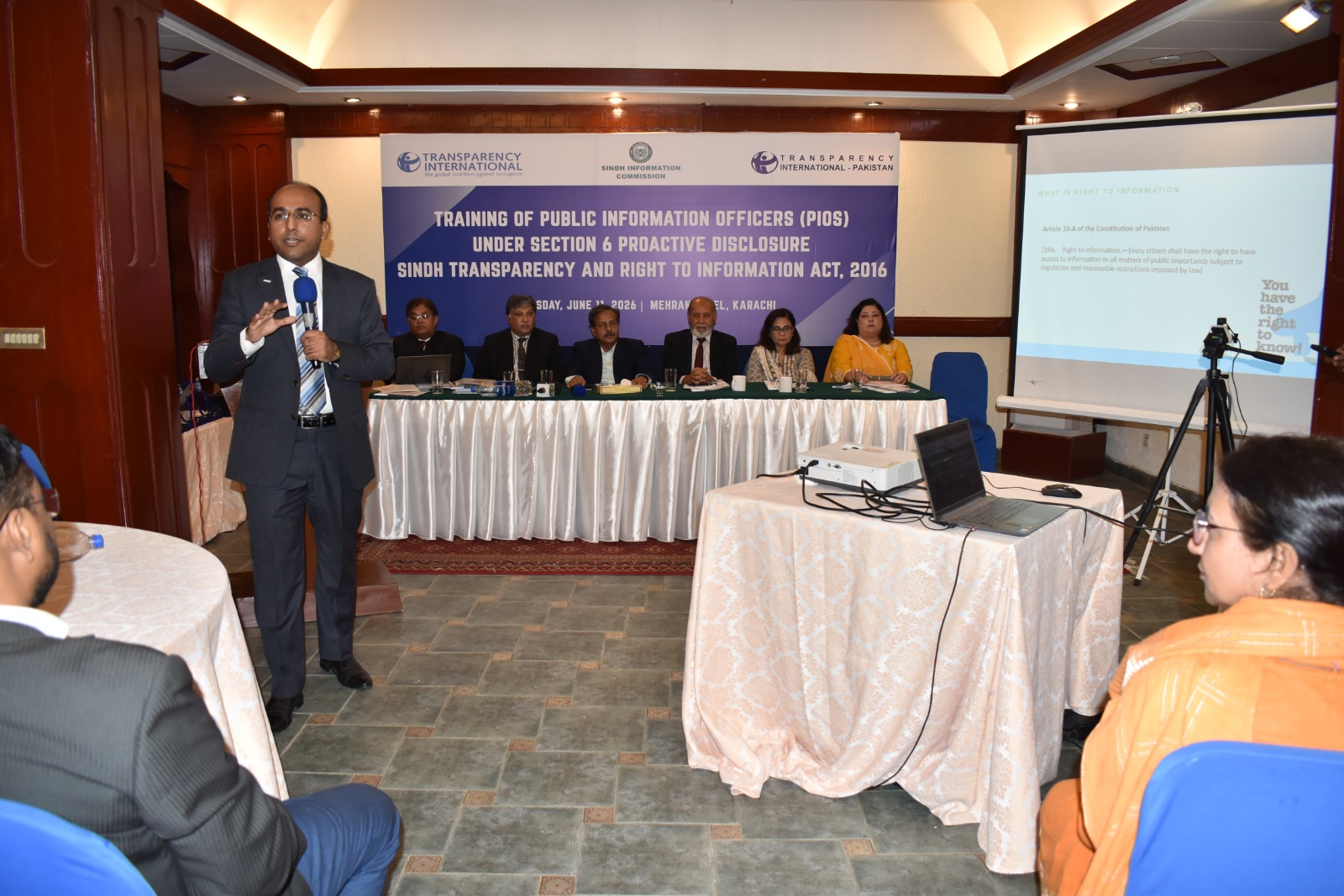
Moving forward, Mr. Kashif Ali, Executive Director, Transparency International Pakistan, explained that the Sindh Transparency and Right to Information Act, 2016, together with Article 19-A of the Constitution of Pakistan guarantees every citizen the right to access information held by public bodies. He informed participants that if information is not provided, citizens have the right to seek an internal review and, if still dissatisfied, file an appeal before the Sindh Information Commission. He explained the two internationally recognized RTI models: the reactive model, where citizens obtain information by submitting requests, and the proactive model, where public bodies voluntarily publish key information without waiting for requests.
Mr. Kashif Ali further explained that Section 6 of the Sindh Transparency and Right to Information Act, 2016, requires public bodies to proactively publish key information on their official websites. He highlighted that proactive disclosure improves transparency, accountability, and public access to information. He informed the participants about the nature of information to be published under Section 6 of Sindh RTI Act 2016, including the functions, duties, and responsibilities of the public body; organizational structure; applicable laws, rules, regulations, manuals, and policies; decision-making procedures; a directory of officers and employees; the name and contact details of the designated Public Information Officer (PIO); details of public services; budget allocations and expenditures; financial information; development projects and programmes; procurement information; and other information that is in the public interest. He emphasized that proper implementation of Section 6 improves public access to information, reduces the need for individual RTI requests, and supports greater transparency, accountability, and good governance.
Next, Dr. Ghazal Khawaja, Associate Professor, Department of Public Administration, University of Karachi spoke on the Role of Civil Society and Academia in Advancing Awareness of the Right to Information (RTI). She highlighted that RTI is a fundamental human right and is closely linked to three pillars of democracy: freedom of expression, public participation, and access to justice. She emphasized that transparent, accessible, and easily understood government decisions encourage meaningful public participation and strengthen accountability.
Dr. Khawaja explained that the modern concept of open government is founded on transparency, accountability, and collaboration between citizens and public institutions. She encouraged Public Information Officers (PIOs) to uphold integrity, professionalism, and impartiality while safeguarding citizens’ right to information and promoting good governance. She further stressed that transparency cannot be achieved by government institutions alone and highlighted the essential role of civil society organizations and academia in raising awareness about citizens right to information. She noted that civil society can educate citizens, support vulnerable communities, monitor RTI implementation, and strengthen public participation through awareness campaigns, legal assistance, capacity-building, and constructive engagement.
She also underscored the contribution of universities in integrating RTI into academic curricula and developing evidence-based policy recommendations through sustained collaboration among government, civil society, and academia.
Towards the end, Mr. Zulfiqar Shaikh, Executive Director, Sindh Information Commission, explained the roles and responsibilities of Public Information Officers under the Sindh Transparency and Right to Information Act, 2016. He highlighted that PIOs must properly manage RTI requests, maintain records, ensure timely information disclosure and update departmental websites in compliance with the law. He also informed the participants that the failure to comply with Article 19-A and RTI provisions may result in penalties as per the Act.
During the open discussion and Q&A session, participants shared insights from their respective departments and raised questions regarding exemption handling, resource constraints, and coordination challenges. The dialogue provided an opportunity for peer learning and direct interaction with experts from civil society, academia and Sindh Information Commission.
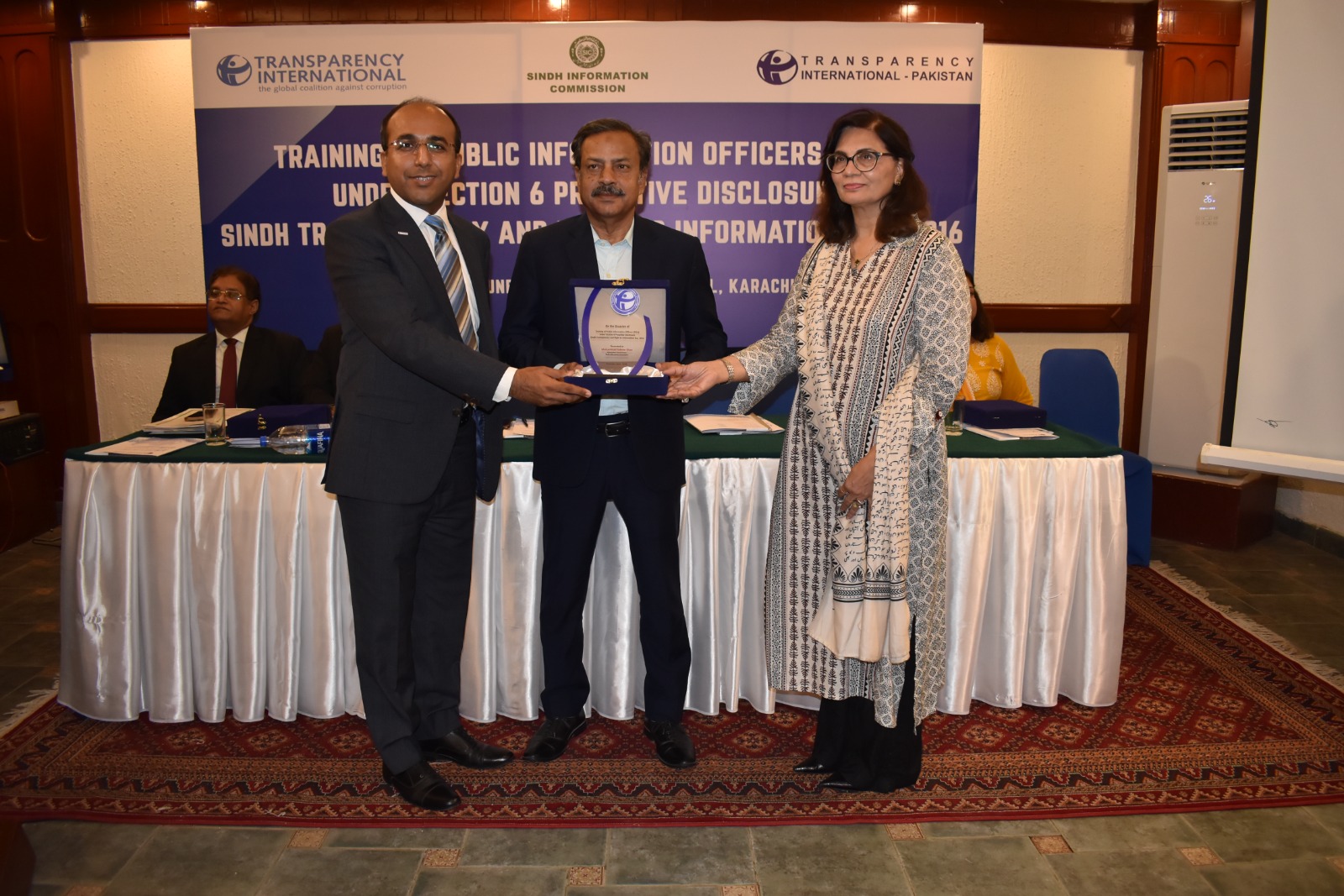
Prof. Dr. Uzma Shujaat, Board Member, Transparency International Pakistan, delivered concluding remarks and thanked the participants for their active engagement. She emphasized that the true success of the training lies in the practical implementation of transparency and RTI principles. She highlighted the important role of Public Information Officers in building public trust through the timely and accurate disclosure of information. She also appreciated the efforts of the Sindh Information Commission and Transparency International Pakistan in fostering dialogue and promoting good governance.
In his closing remarks, Mr. Muhammad Saleem Khan, Information Commissioner, Sindh Information Commission, appreciated the active participation of Public Information Officers and emphasized the importance of the effective implementation of the Sindh Transparency and Right to Information Act, 2016. He encouraged participants to promote transparency, proactive disclosure, and timely access to information to strengthen public trust and institutional accountability. He also thanked TI Pakistan for its vibrant role on RTI implementation in Pakistan.
The event concluded with a post-test which showed significant improvement and increase of an average score to 68.86%.