Capacity Building Workshop-Empowering Person with Disabilities (PWDs): Legal Rights, Voice & Participation
Capacity Building Workshop-Empowering Person with Disabilities (PWDs): Legal Rights, Voice & Participation
Venue: Hotel Tourmaline Peshawar District, KP
Date: Thursday, September 3, 2026
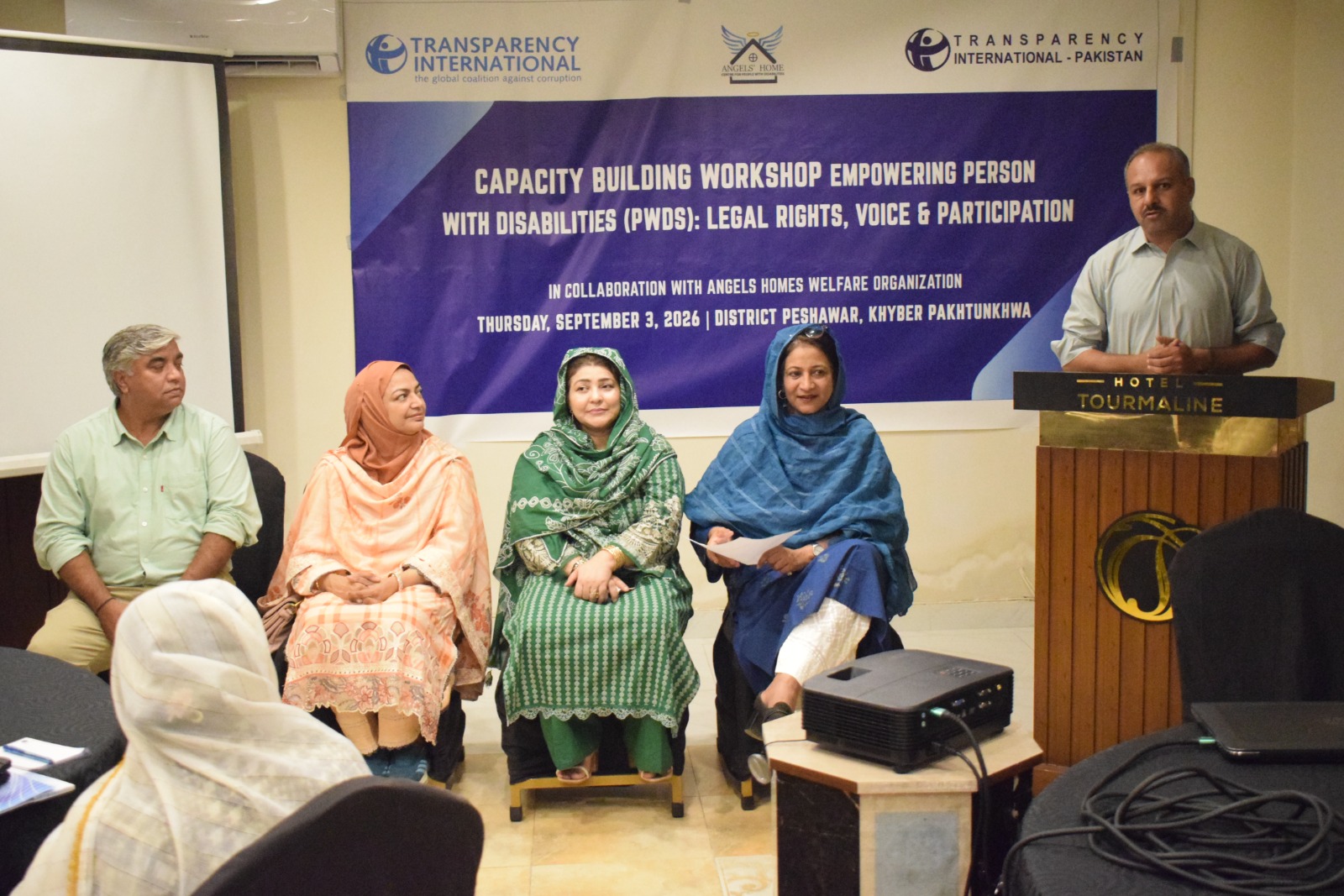
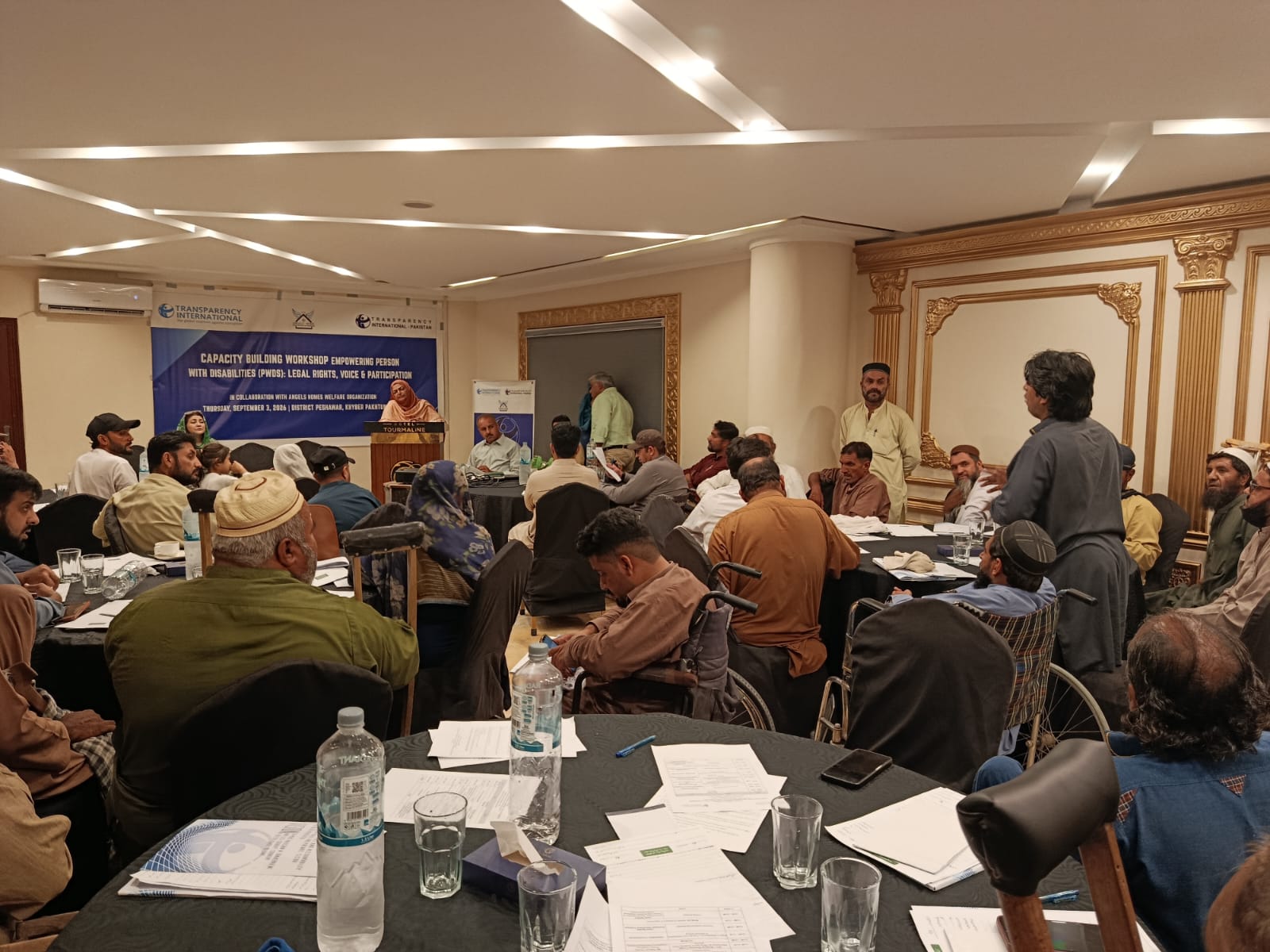
Transparency International Pakistan in collaboration with Angels Homes Welfare Organization, organized a Capacity Building Workshop titled “Empowering Persons with Disabilities (PWDs): Legal Rights, Voice & Participation” at District Peshawar, Khyber Pakhtunkhwa.
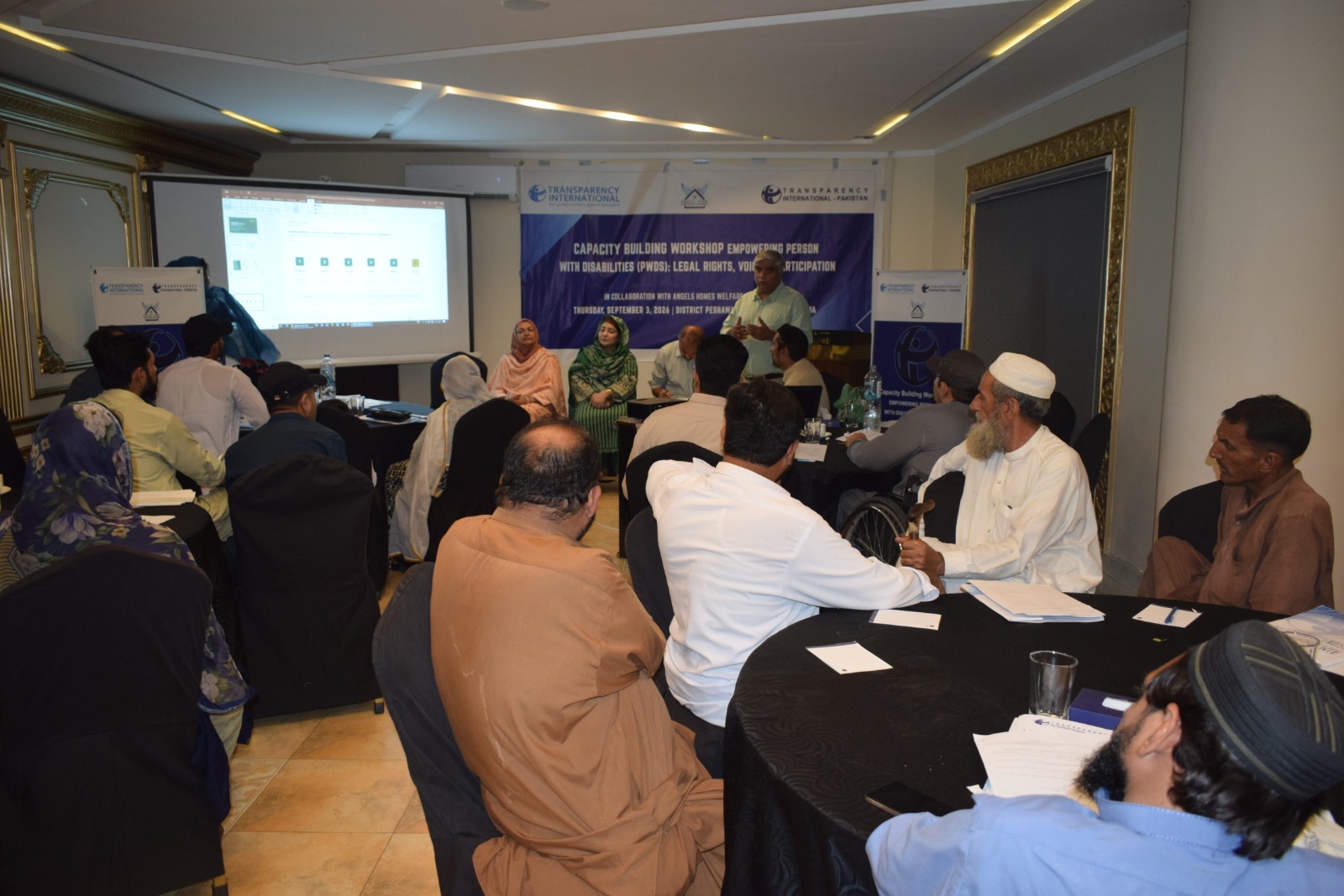
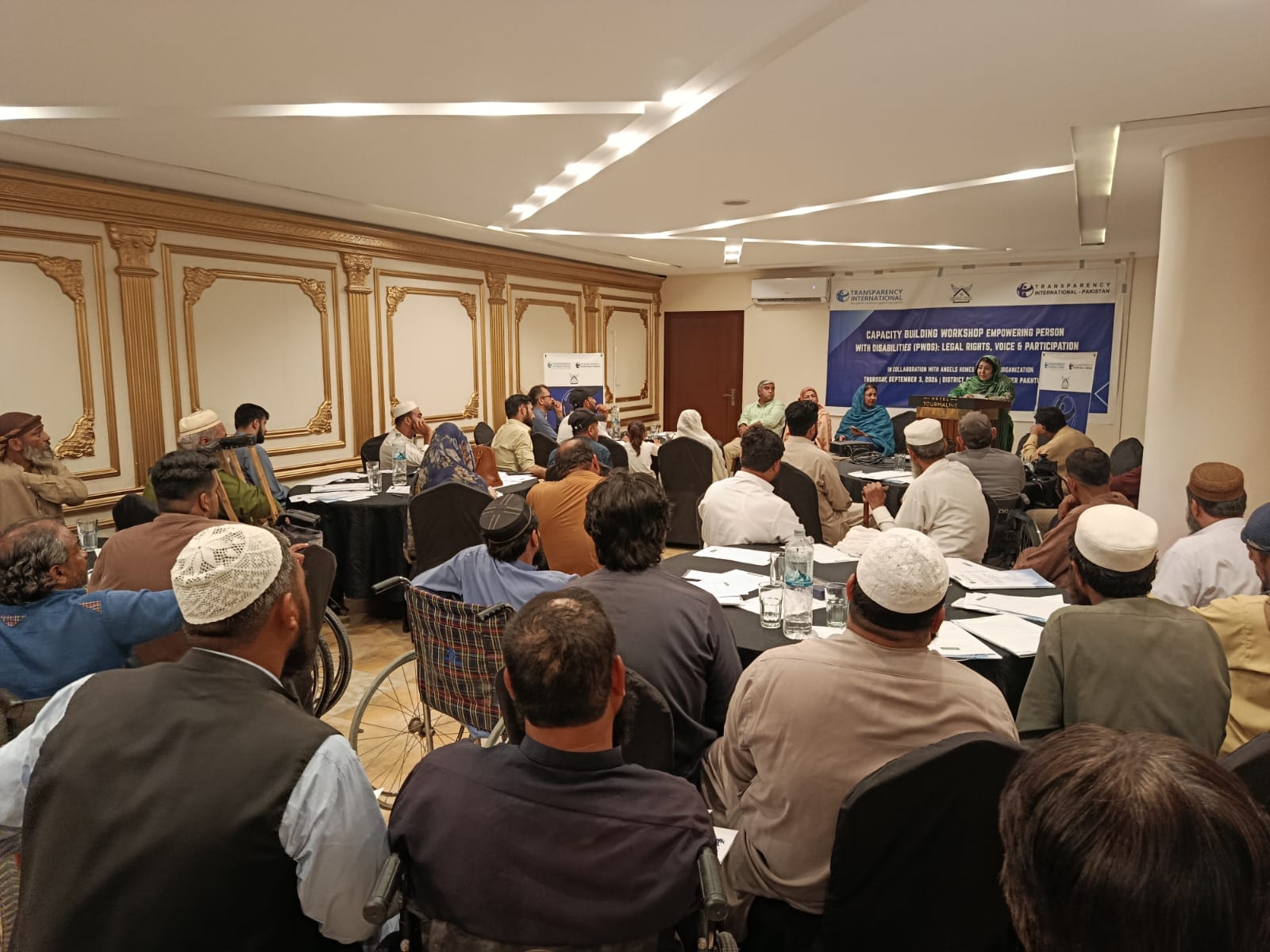
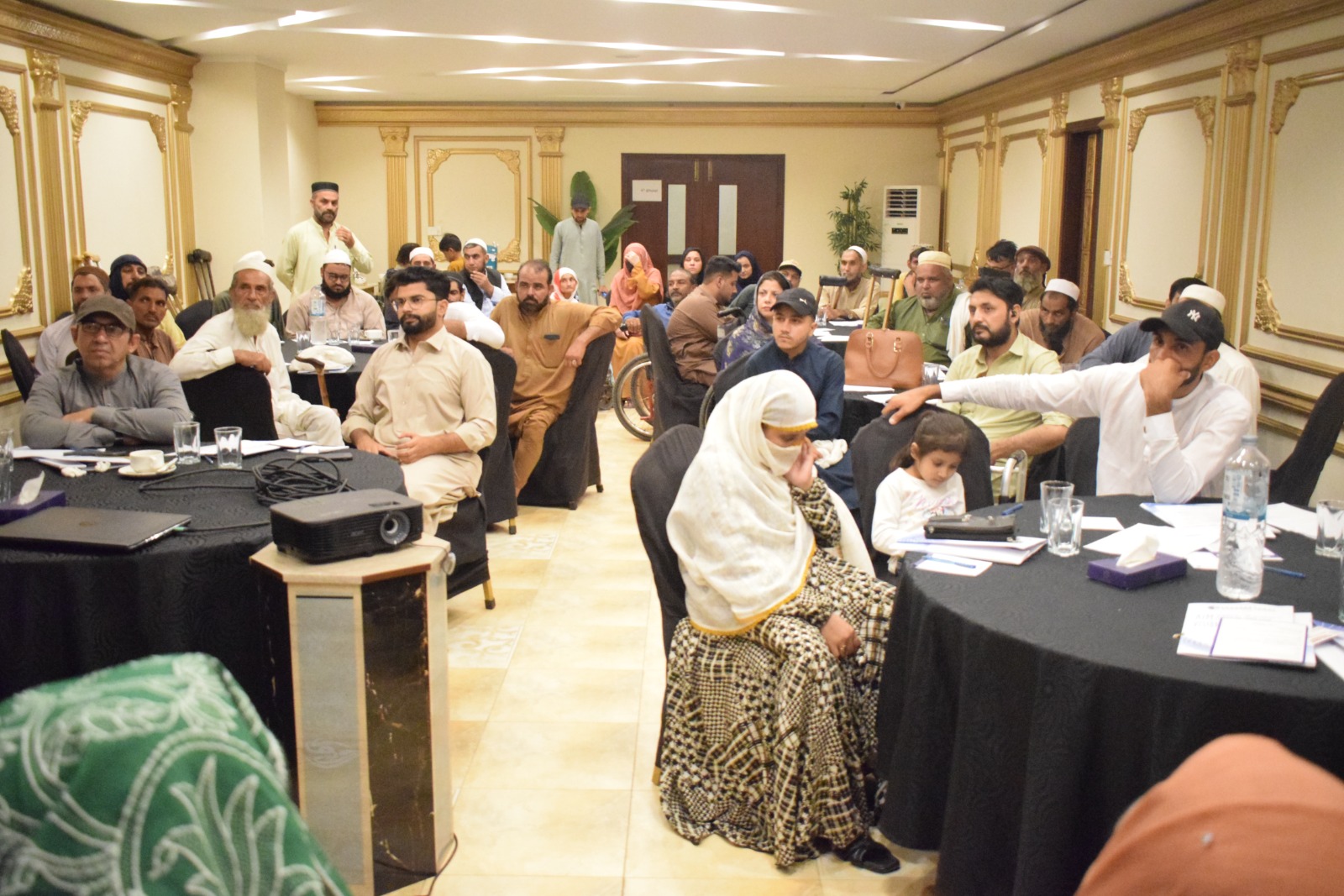
The workshop aimed to strengthen participants’ understanding of The Khyber Pakhtunkhwa Persons with Disabilities (Rights, Rehabilitation, & Empowerment of Persons with Disabilities Act, 2017 and The Khyber Pakhtunkhwa Right to Information Act, 2013. It highlighted how these laws can be used to claim rights, advocate for for inclusive and accessible public services, and promote the meaningful participation of persons with disabilities in governance and decision-making processed. The workshop brought together 41 PWDs participants, comprising of6 women and 35 men, including government representatives from the Social Welfare, Special Education & Women Empowerment Department, Khyber Pakhtunkhwa Information Commission (KPIC), and the Office of the Provincial Ombudsman, Khyber Pakhtunkhwa.
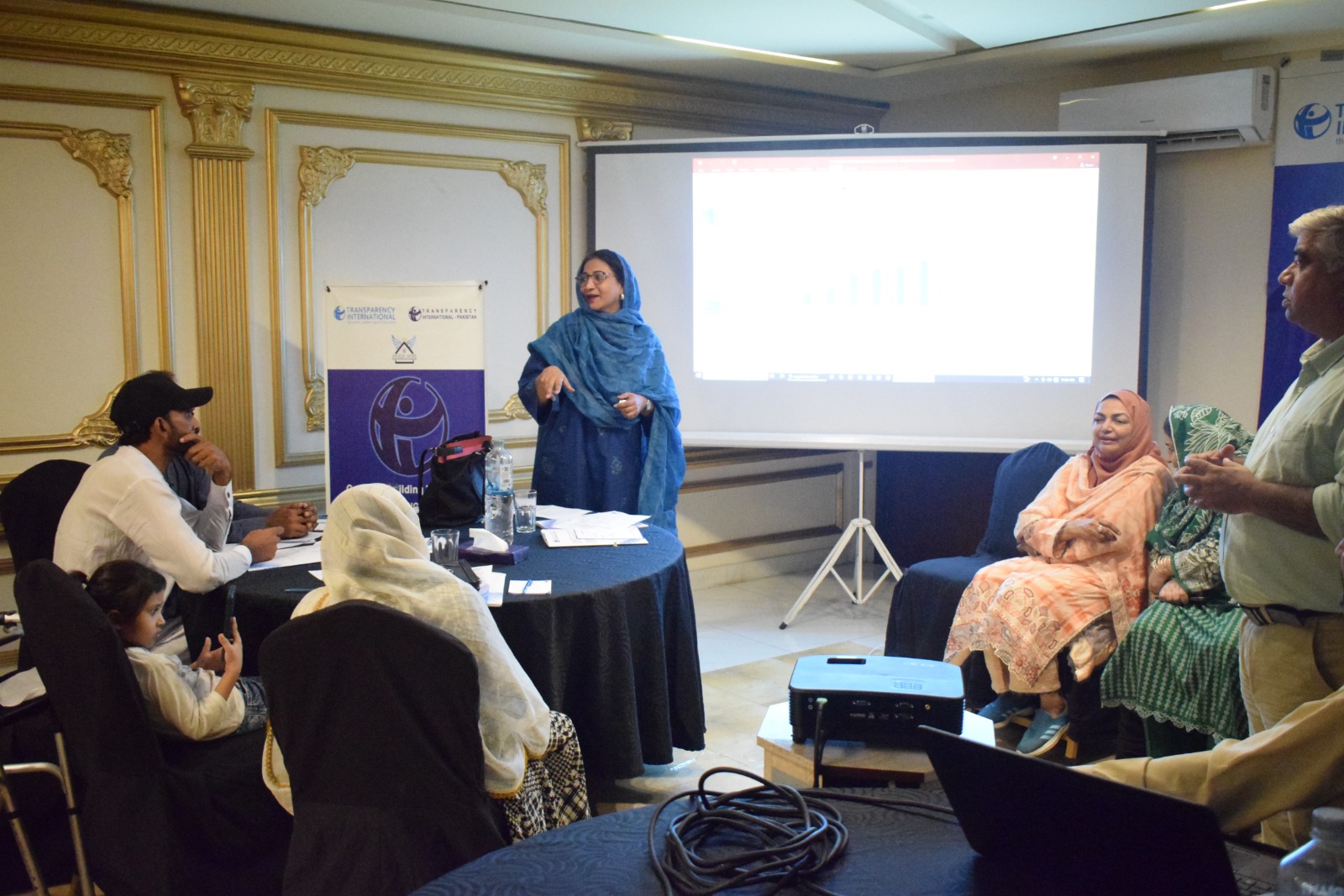
Ms. Nasreen Memon, Project Coordinator, TI Pakistan delivered the welcome remarks. She highlighted that TI Pakistan is working to raise awareness of relevant legal frameworks and strengthen citizens’ ability to engage with public institutions to ensure that the rights of persons with disabilities are respected and upheld. A pre-test was conducted to assess participants’ existing knowledge of disability rights, legal provisions, and access to information.
Thereafter, Mr. Moris Khursheed, CEO of Angels Homes Welfare Organization briefed participants on the key provisions of The Khyber Pakhtunkhwa Persons with Disabilities (Rights, Rehabilitation, & Empowerment of Persons with Disabilities Act, 2017. He explained that the Act protects the rights of persons with disabilities (PWDs) and promotes their equal participation in society.He further explained that the Disability Council monitors the implementation of the Act, coordinates with government departments and addresses complaints related to violations of the rights of persons with disabilities. The District Disability Board assesses disability, after which eligible persons can register with the Social Welfare Department to access available services and rights.
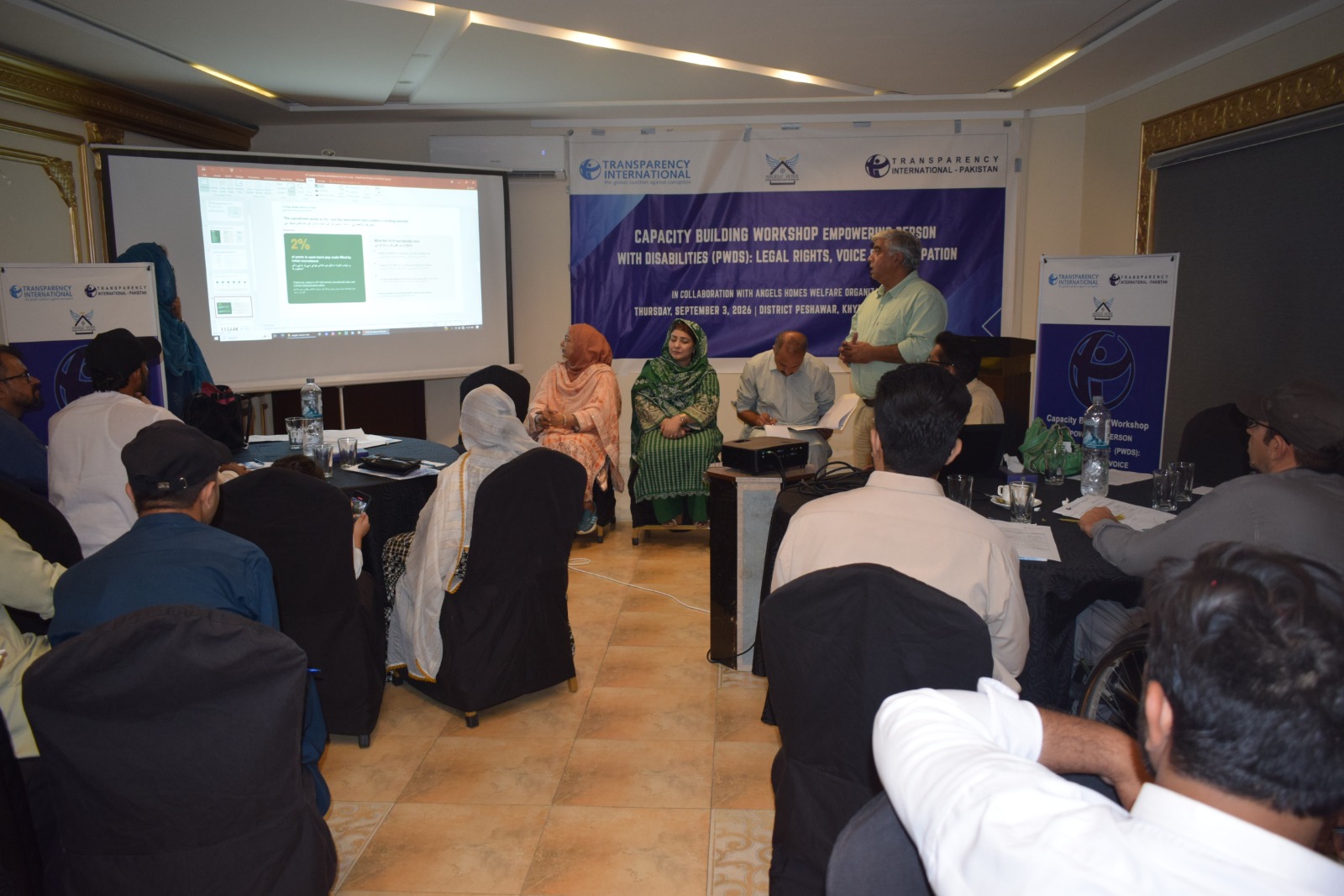
He further explained the 2% employment quota for PWDs and the role of the Employment Exchange in recording their qualifications, skills, and experience and referring them to suitable jobs.
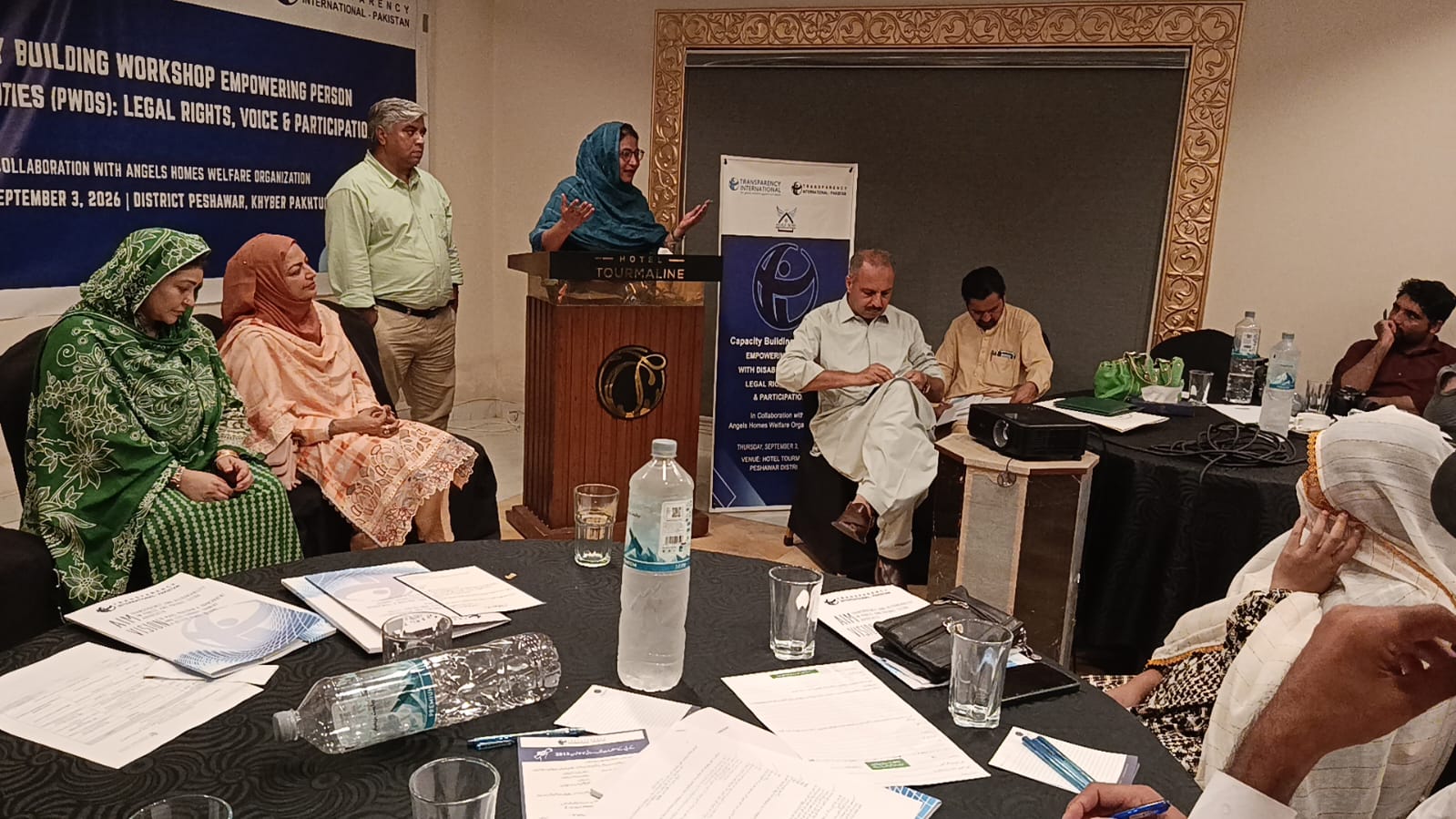
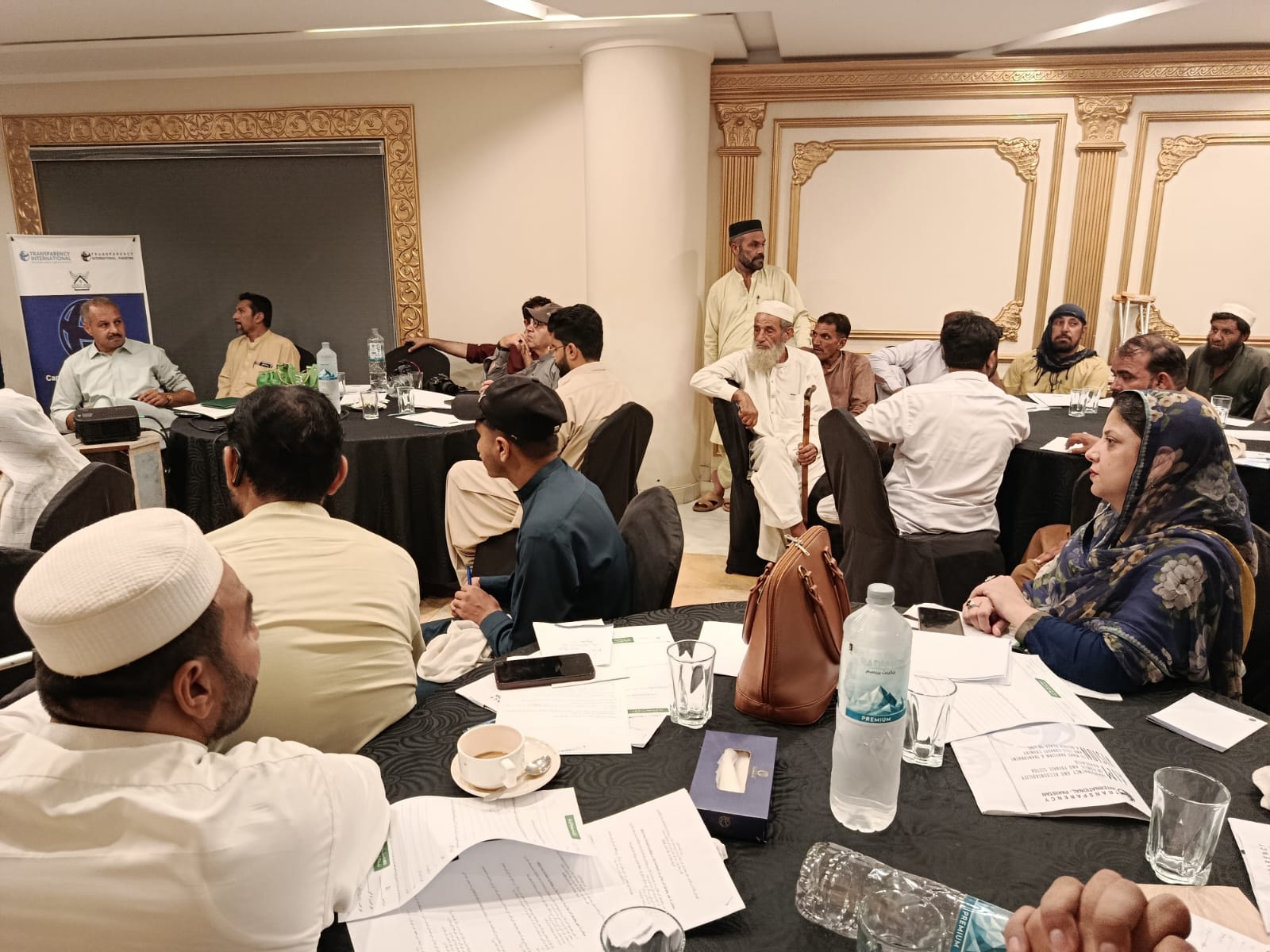
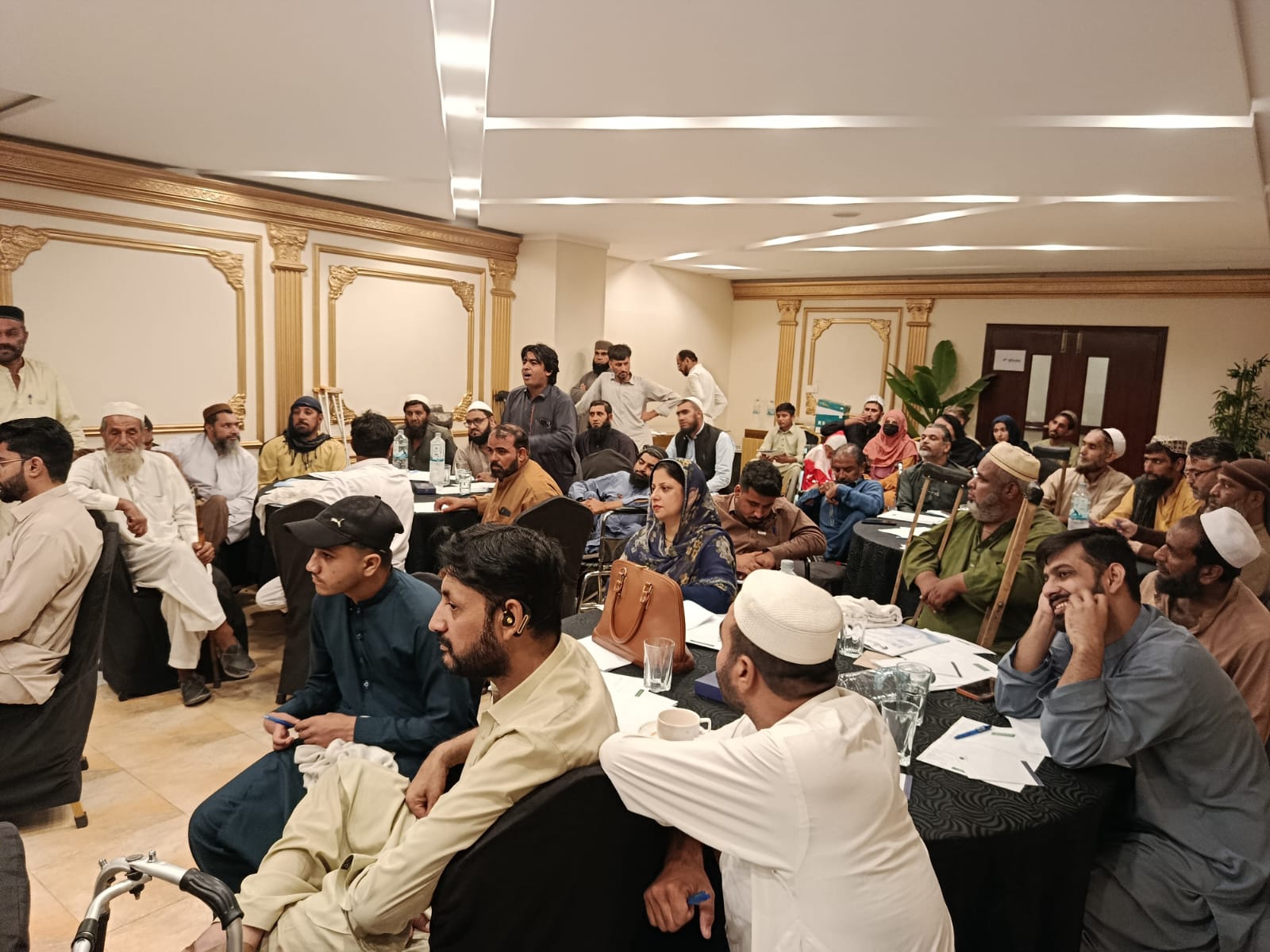
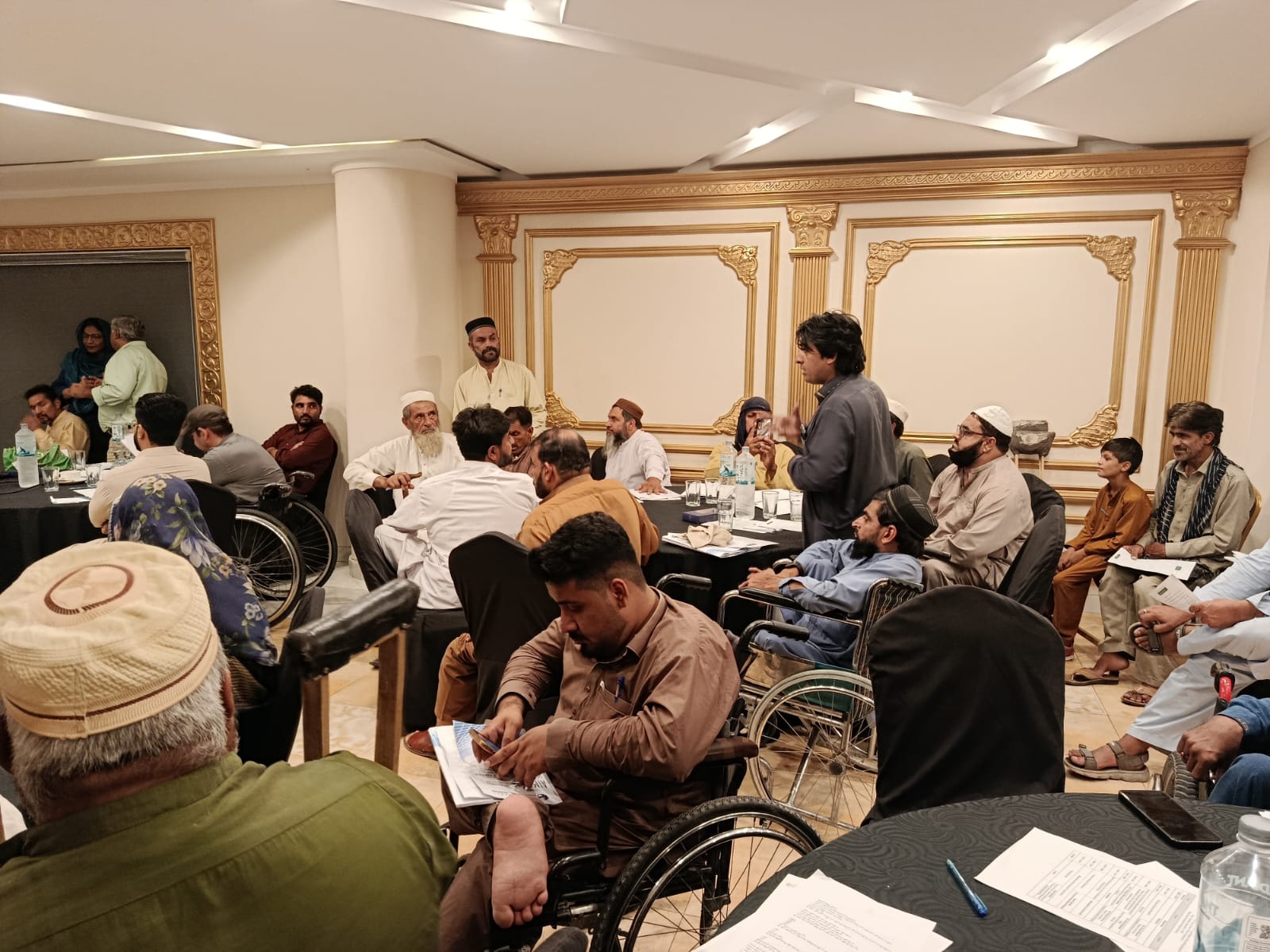
After a detailed session of the legal framework, Ms. Nasreen Memonfacilitated an open discussion where participants shared their experiences and challenges in accessing public services.As part of the discussion, participants were divided into five groups and asked, “What barriers do PWDs face in accessing public services?” Each group discussed the challenges faced by PWDs in their communities and shared recommendations.
Participants highlighted that PWDs face many problems in accessing public services. Public buildings often lack ramps, lifts, accessible toilets and proper pathways. They also face difficulties using public transport, schools and hospitals. Limited Braille and sign language support creates communication barriers. PWDs also have fewer job opportunities, limited workplace facilities, and face discrimination and negative attitudes.
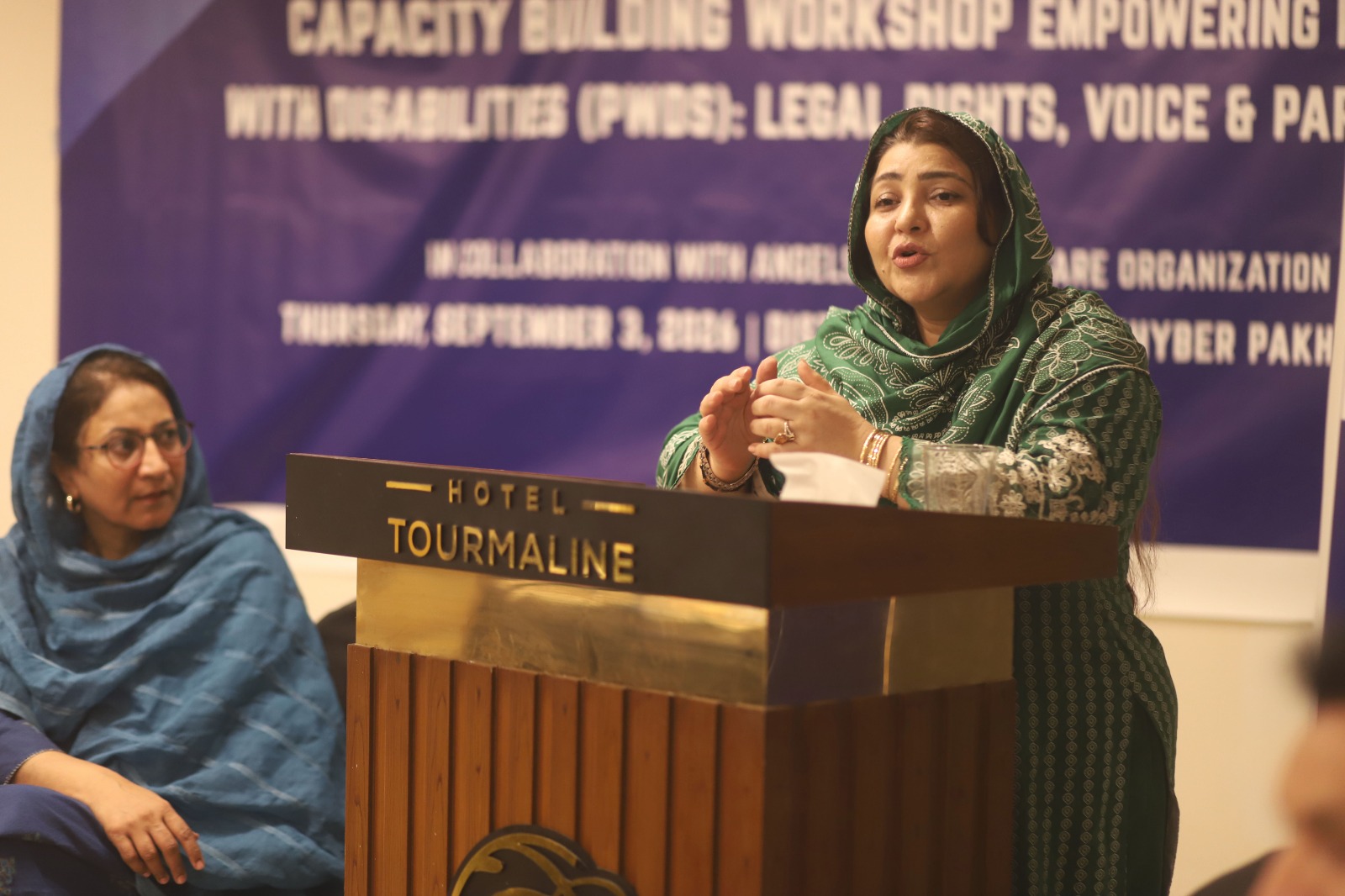
Participants requested Ms. Syeda Nudrat, Director, Social Welfare, Special Education & Women Empowerment Department to support a special relief package for PWDs in the upcoming budget. They called for increased financial assistance, stipends, and support for health, education and employment to help PWDs meet their basic needs and live with dignity.
Mr. Saadat Jehan, Deputy Director Communication, Khyber Pakhtunkhwa Right to Information Commission, KP Right to Information as a Tool for Civic Participation in Decision-Making. He explained how RTI enables Persons with Disabilities (PWDs) to access information about their rights, public services, employment quotas, education, accessibility, social protection, and government programmes.
In his session, Mr. Saadat explained that Section 8 of the RTI Act requires Public Information Officers (PIOs) to assist requesters who need support due to disability. If a requester is unable to make a written request, the PIO must record the request in writing and provide the requester with a signed and dated copy. He also explained that information may be requested from a public body through its designated PIO.He further explained that an RTI request should normally be responded to within 10 working days. In specified circumstances, this period may be extended by up to 10 additional working days. Information required to protect the life or liberty of an individual must be provided within two working days. Applicants may also indicate their preferred form of access, such as a physical or electronic copy or inspection of records.
Participants were further informed that submitting an RTI request is free, although applicable reproduction or transmission costs may be charged in accordance with the Act. If a request is not dealt with in accordance with the Act, the requester may lodge a complaint with the Khyber Pakhtunkhwa Information Commission without a fee, which is required to decide the complaint within 60 days.
Afterwards, Ms. Shabana Khan, Director Investigation, Provincial Ombudsman Peshawar, delivered a session on Grievance Redressal Mechanisms for Persons with Disabilities (PWDs). She explained that the Provincial Ombudsman provides a mechanism for citizens to seek redress when government departments fail to provide services, cause unnecessary delays, or treat citizens unfairly.She explained that PWDs can raise grievances related to disability certificates, employment, education, social protection, accessibility, public facilities, and other government services and entitlements. She encouraged participants to raise complaints when their legitimate requests are not properly addressed by the concerned department.
Participants were advised to clearly mention the concerned department, nature of the complaint, relevant dates, and the action requested, and to keep copies of applications, official letters, receipts, and other supporting documents.
She also briefed the participants on the Department’s role in supporting PWDs through special education, rehabilitation, vocational and skills training.
At the end of the workshop, a post-test was conducted, which showed an improvement in participants’ knowledge, with the average score increasing from 31.28% to 65.71%
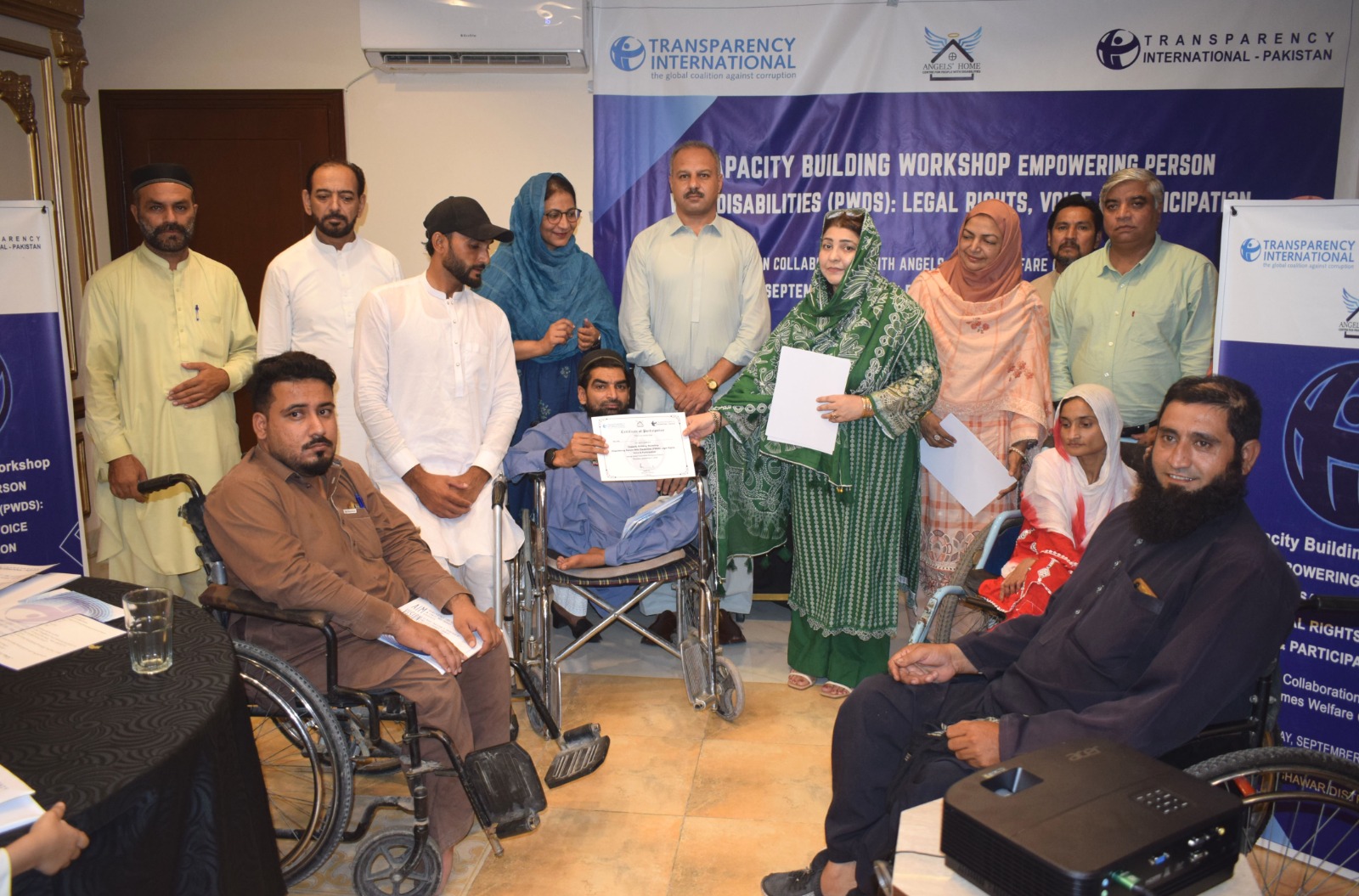
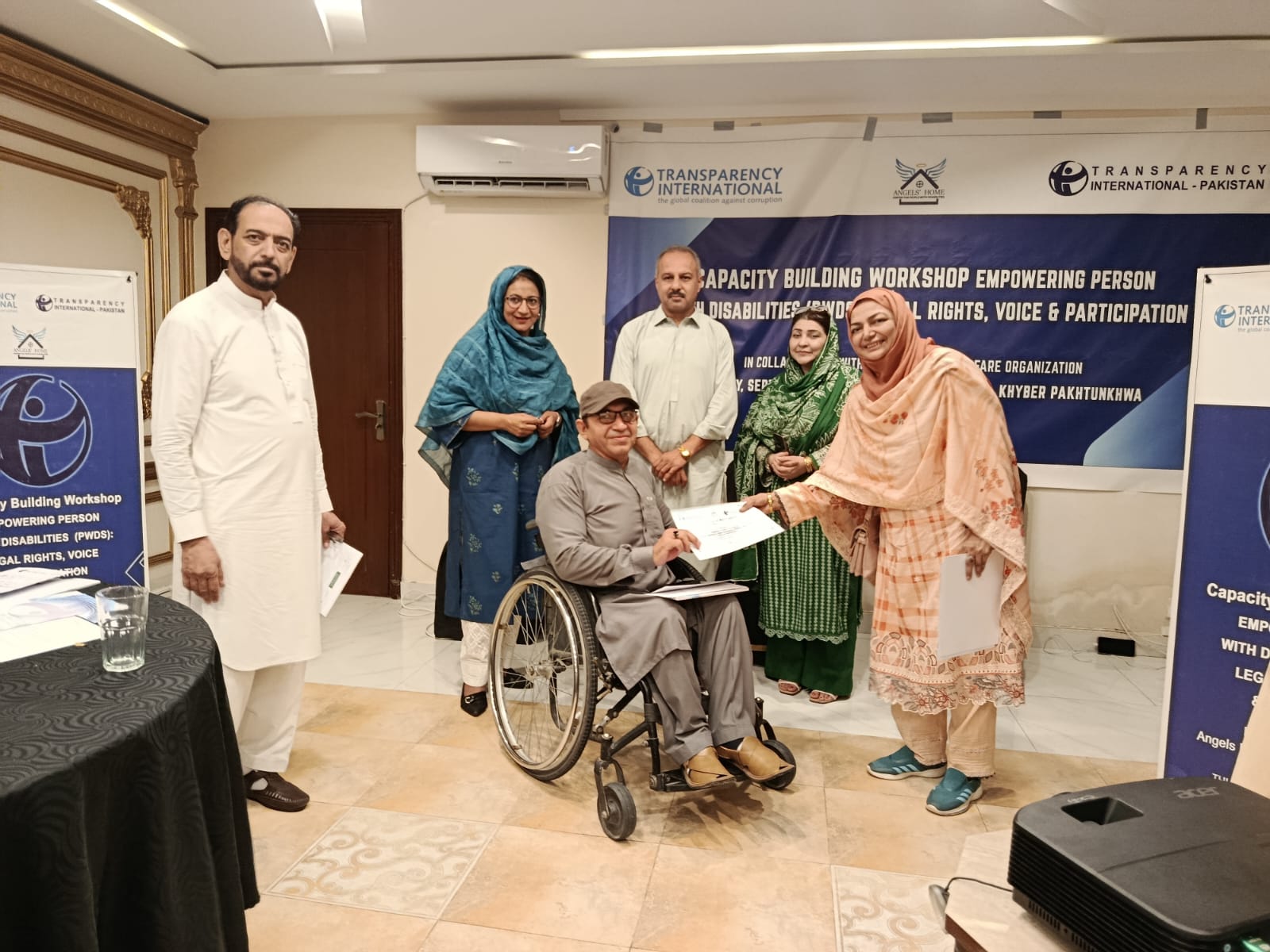
The workshop concluded with the distribution of certificates to the participants.