Consultative Meeting with Parliamentarians on Carbon Markets Governance
Consultative Meeting with Parliamentarians on Carbon Markets Governance
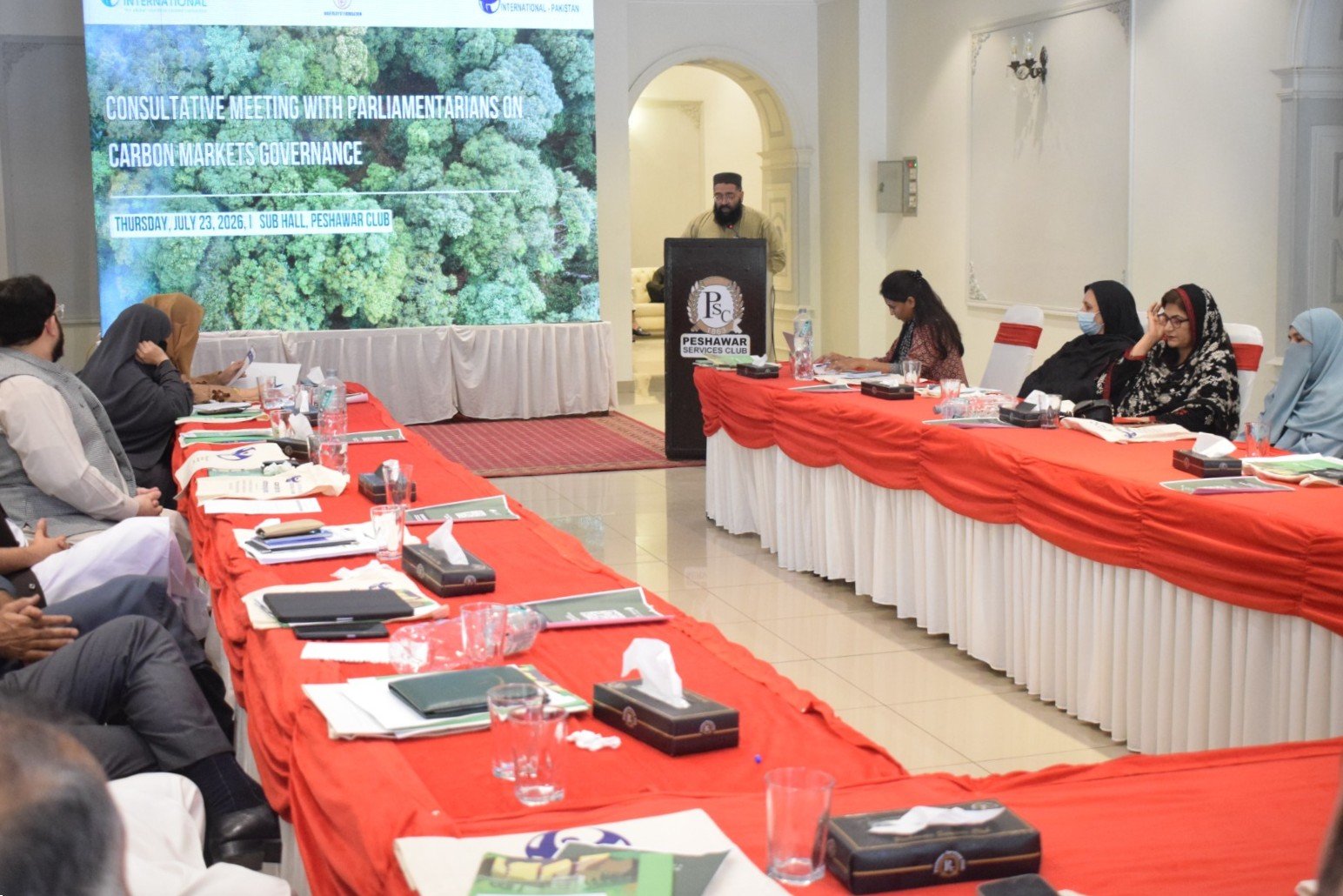
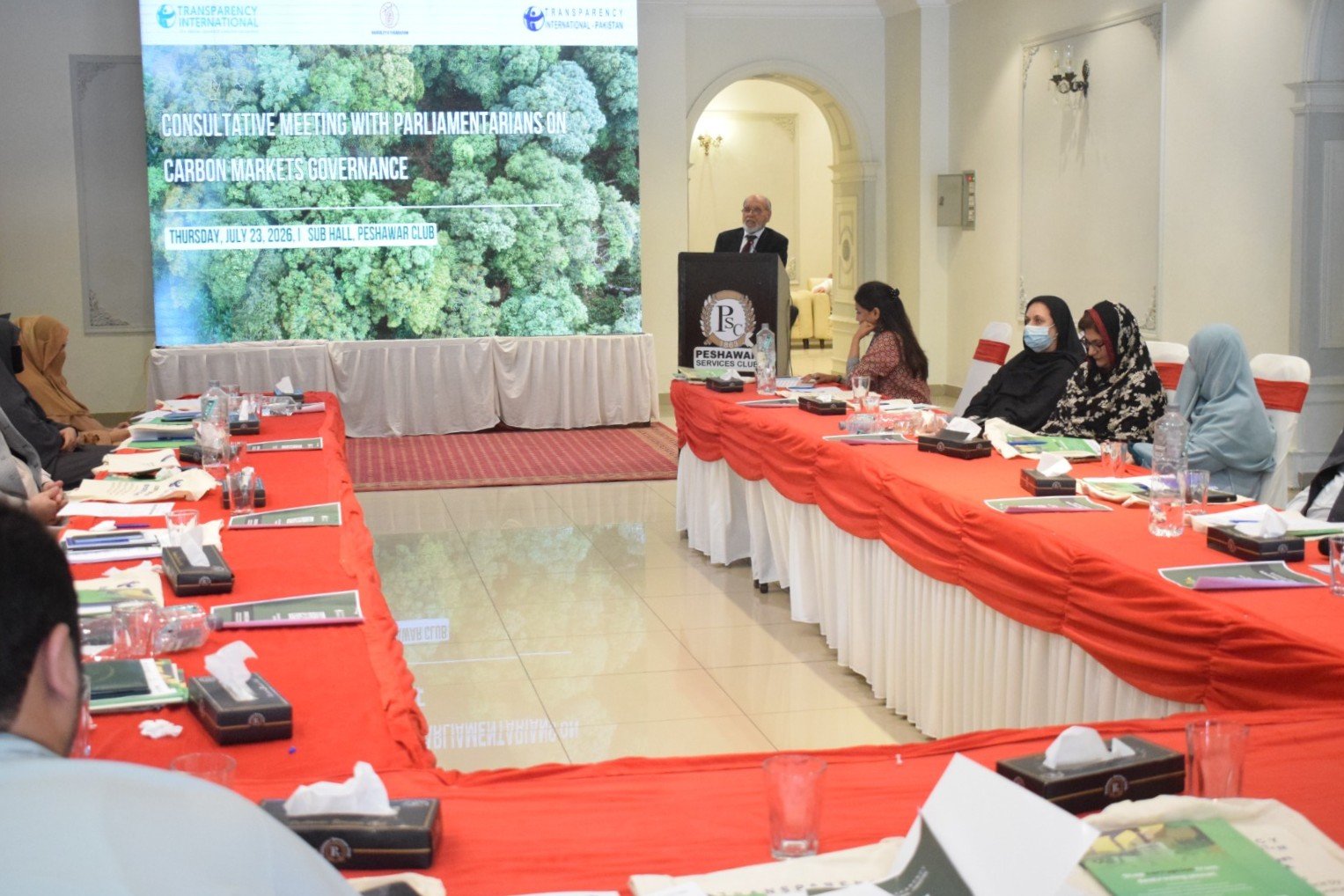
Thursday, July 23, 2026
Sub Hall, Peshawar Club, Peshawar
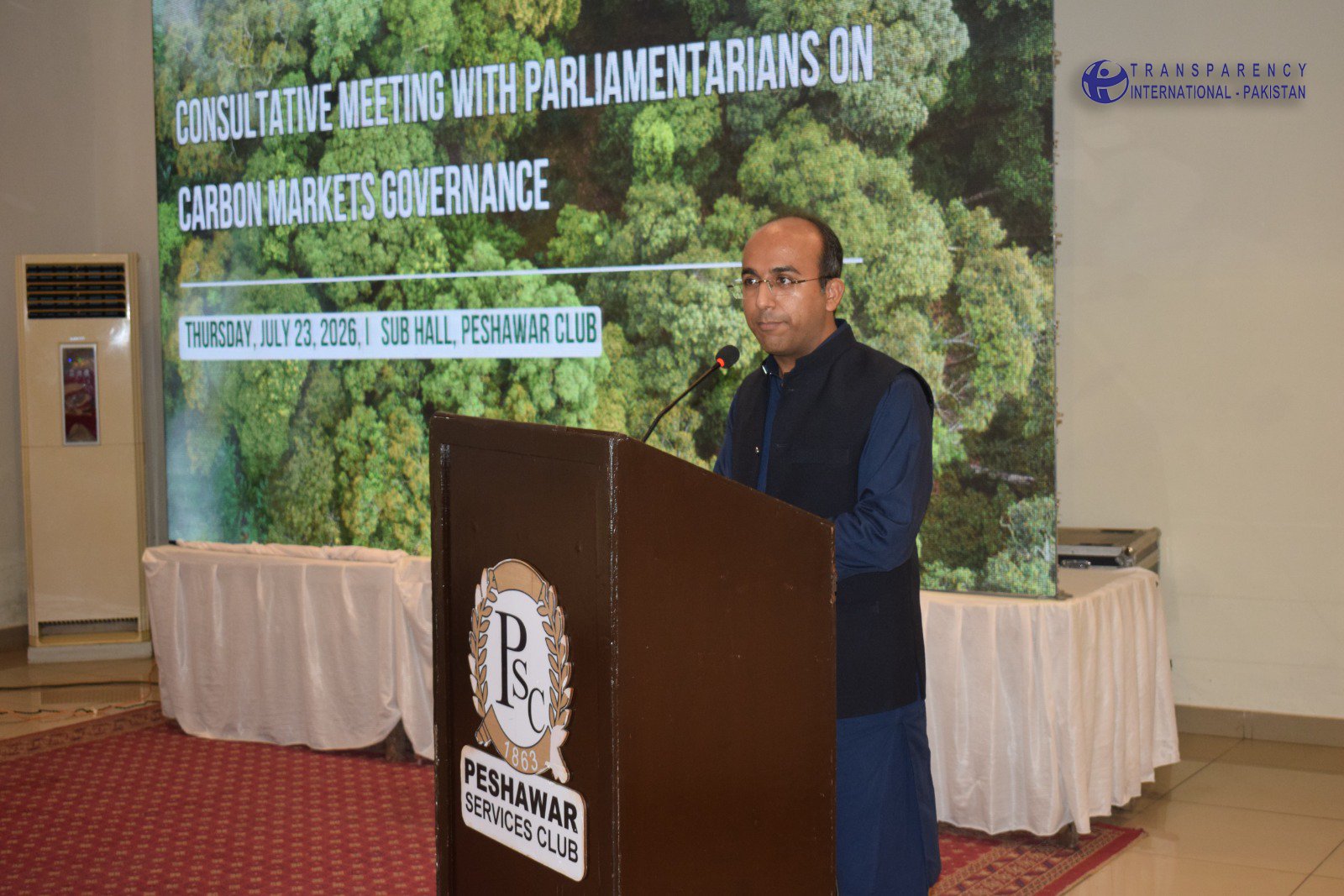
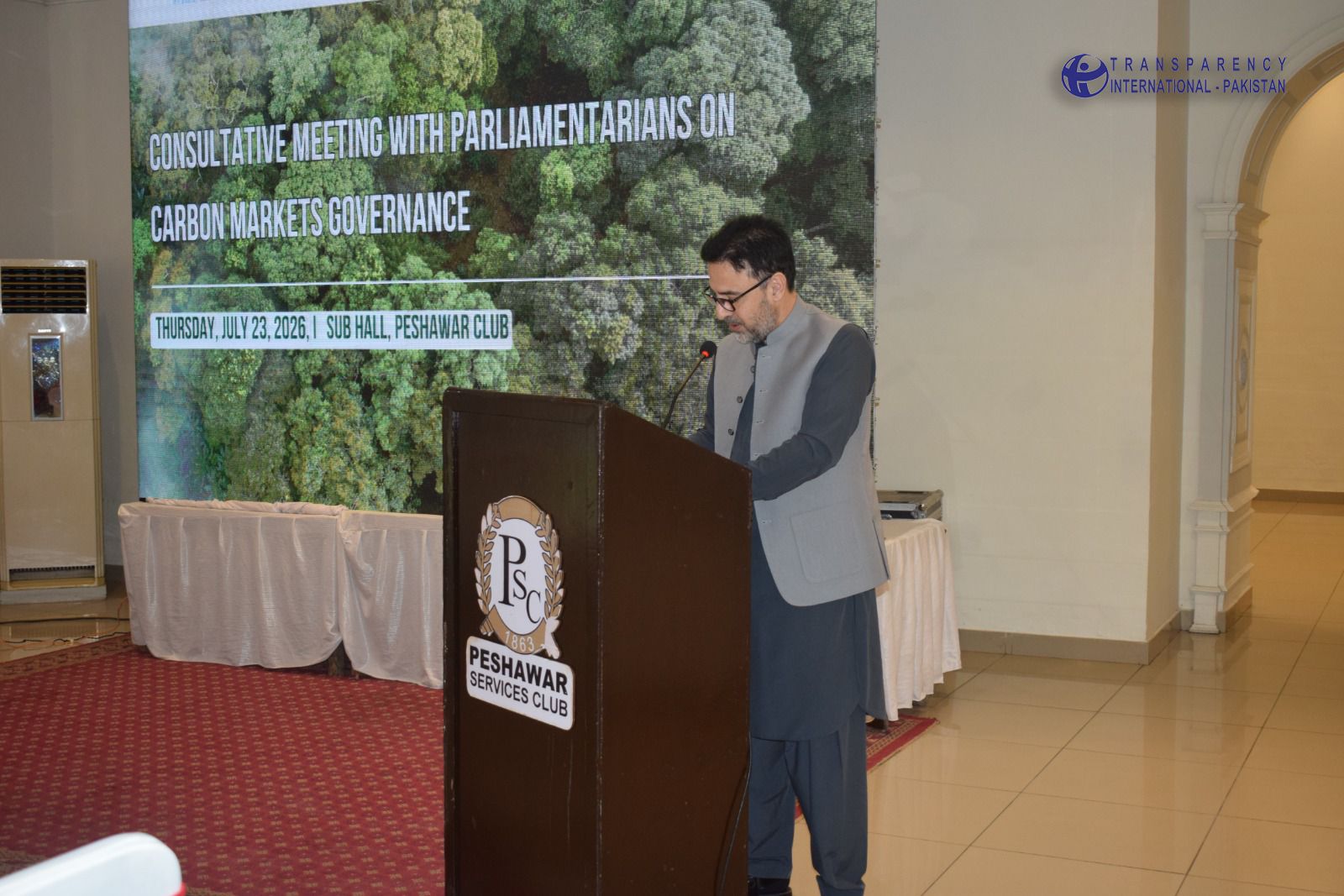
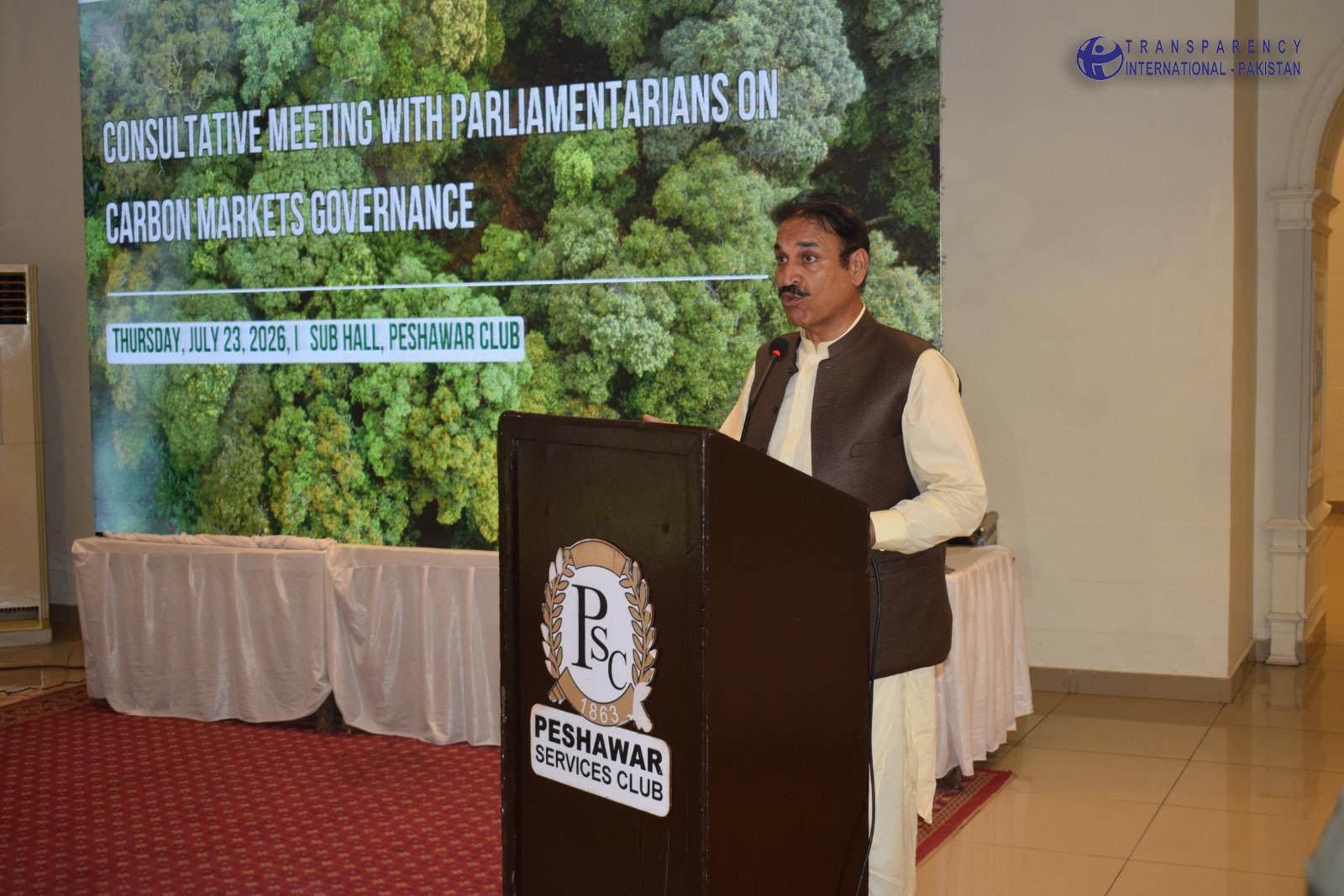
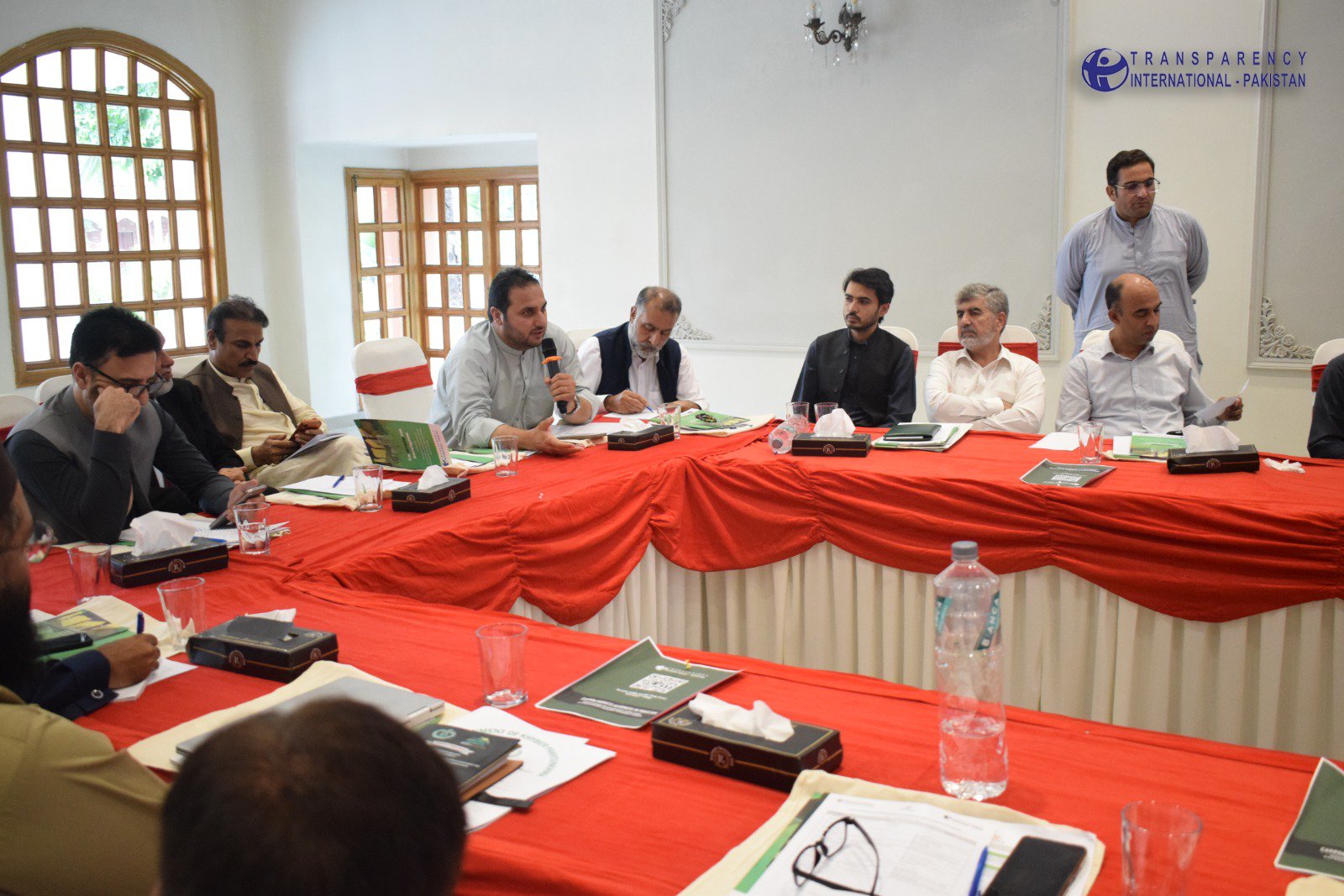
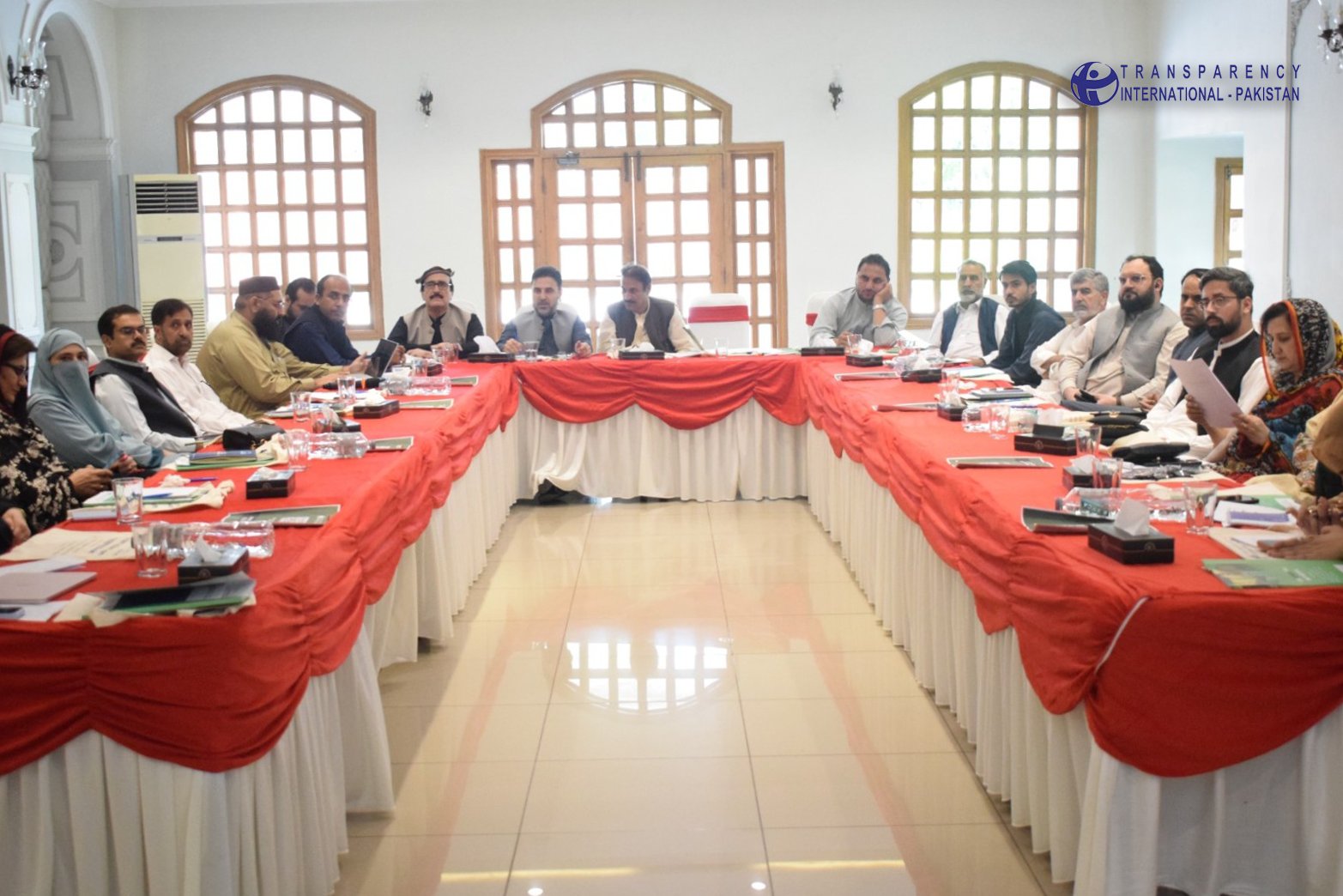
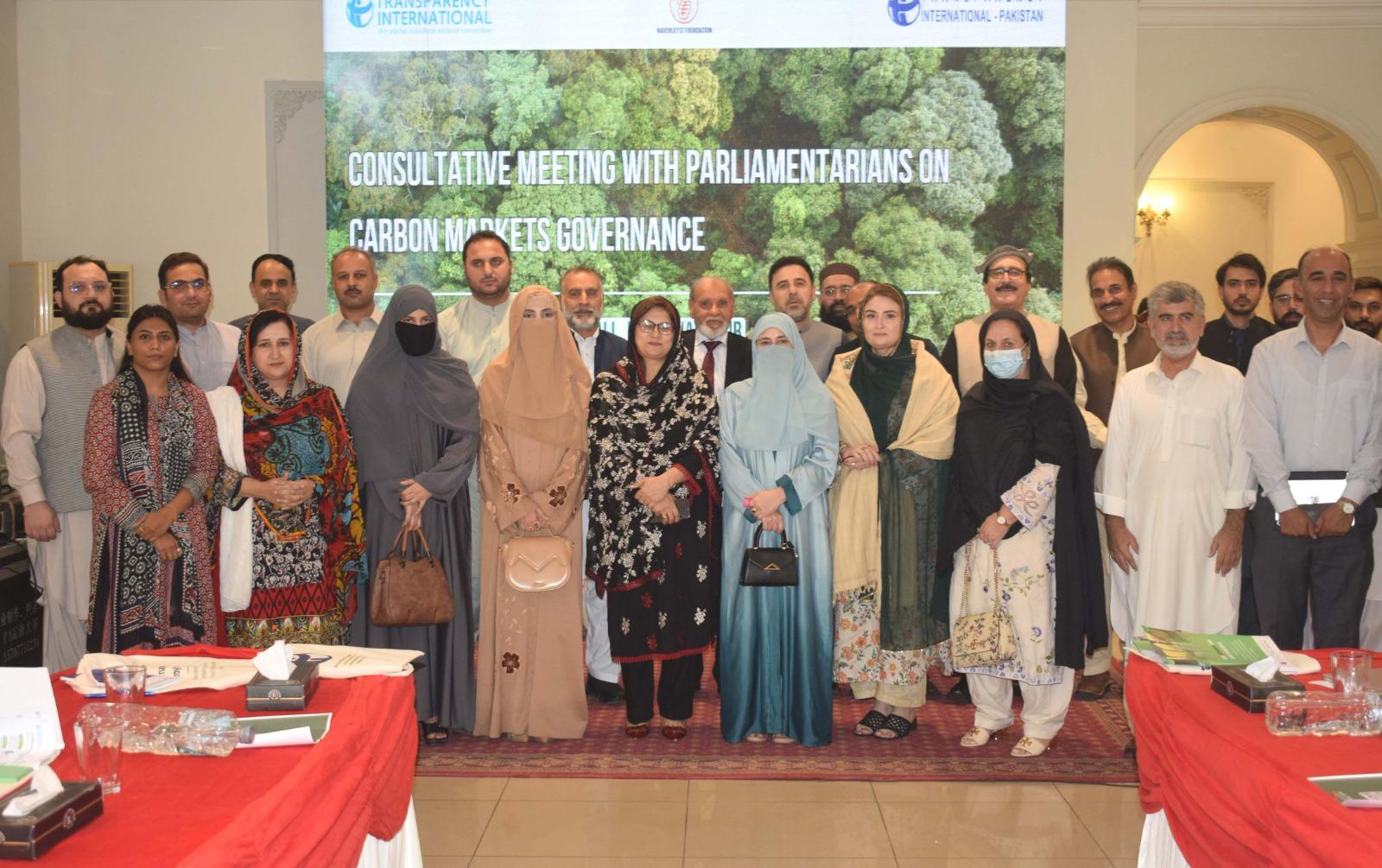
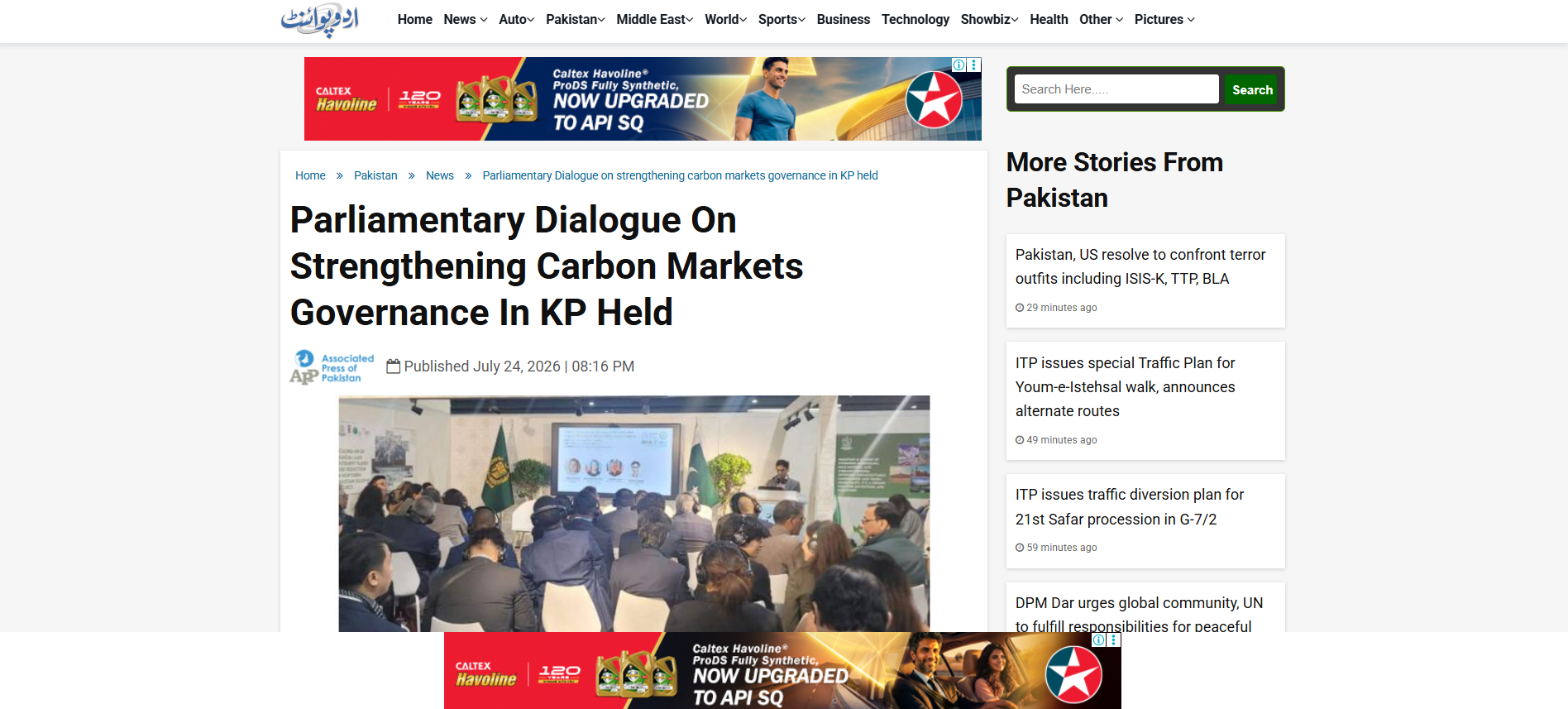
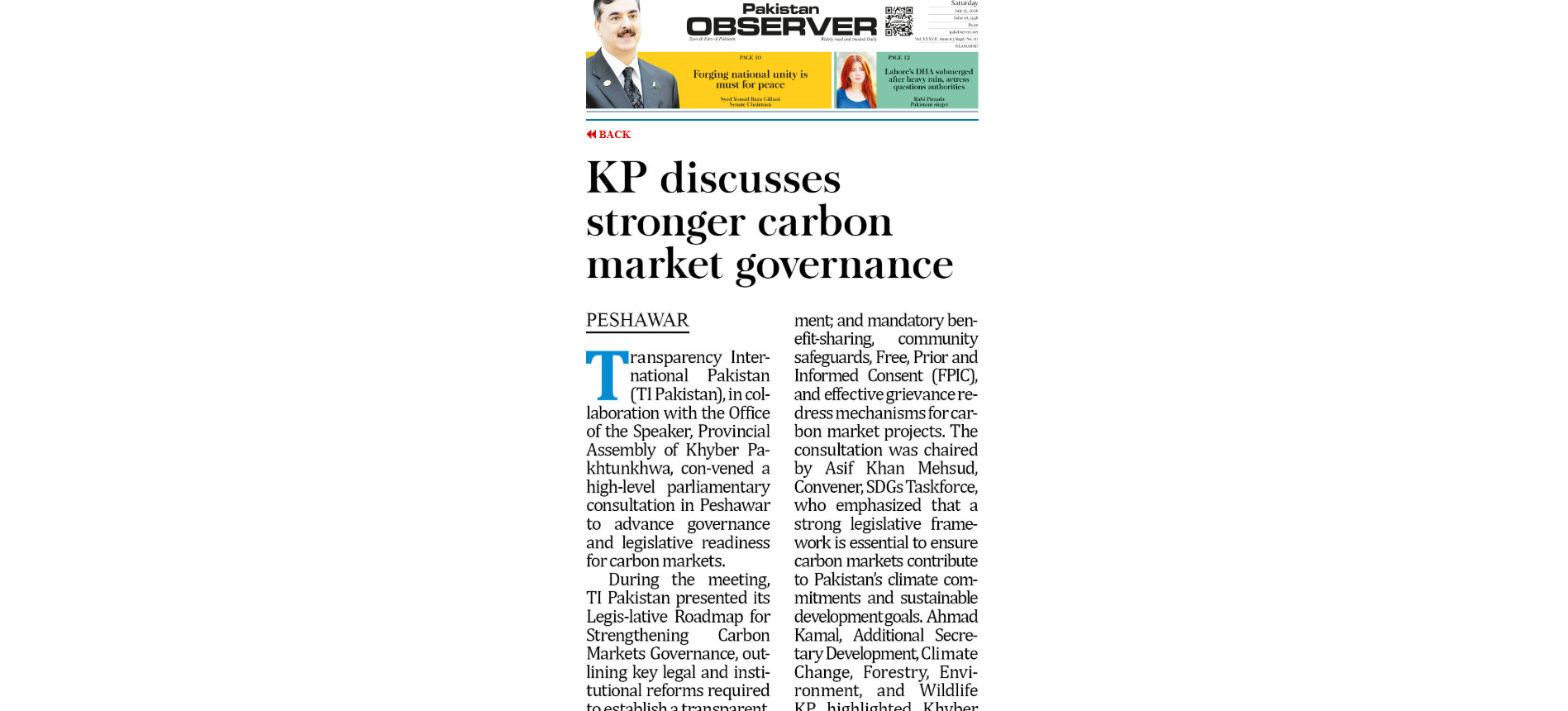
On July 23, 2026, Transparency International Pakistan, in collaboration with the Office of the Speaker, Provincial Assembly of Khyber Pakhtunkhwa, convened a consultative meeting with parliamentarians in Peshawar to discuss carbon markets governance. The session was the fourth in a nationwide series of engagements under TI Pakistan’s Climate Governance Integrity Programme. The purpose of these consultations has been to build parliamentarians’ understanding of carbon market governance and to encourage their active engagement in shaping the legislation and oversight needed for Pakistan’s carbon market to develop credibly.
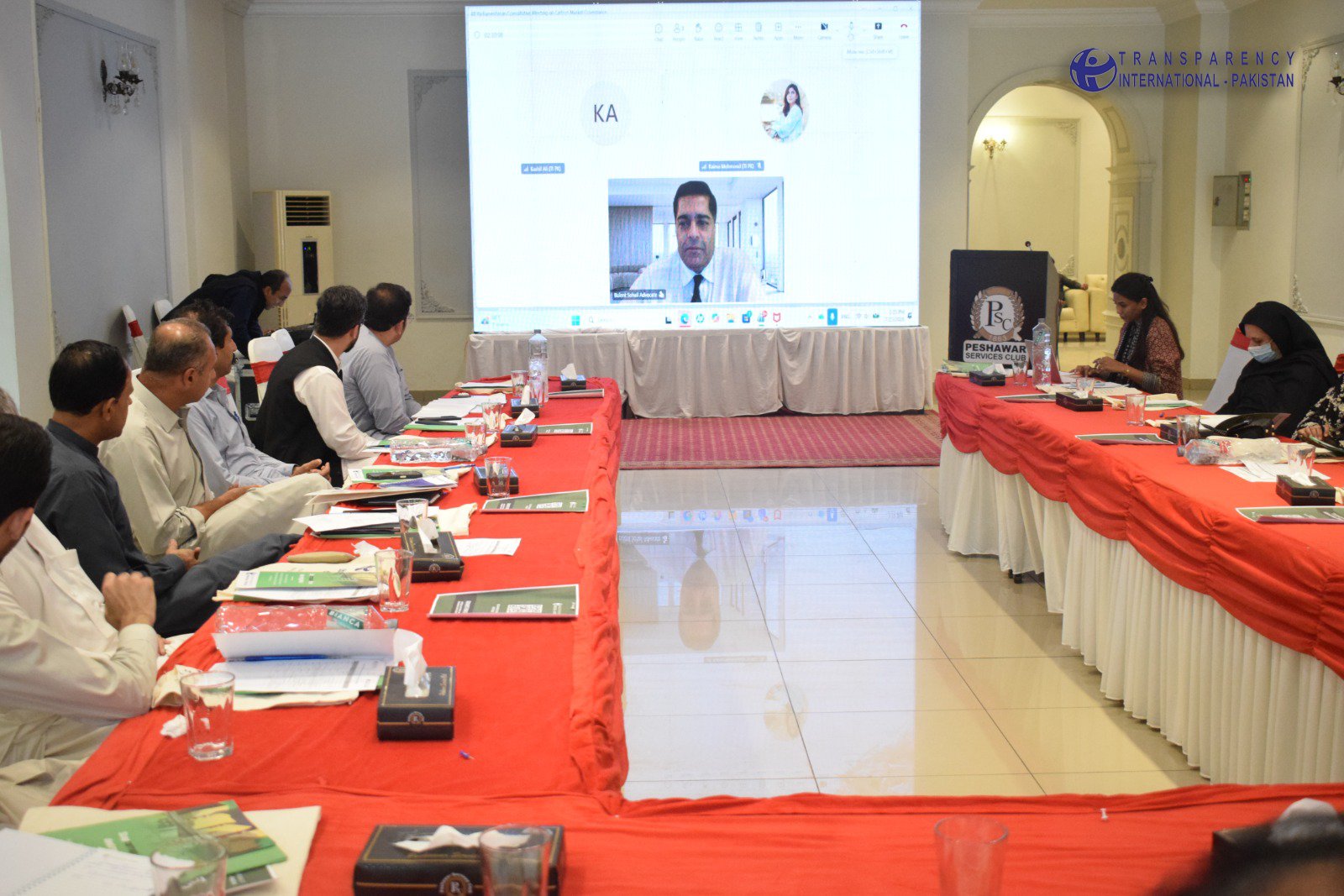
The Peshawar meeting brought together members of the Provincial Assembly of Khyber Pakhtunkhwa from across party lines, officials from the province’s Climate Change, Forestry, Environment and Wildlife Department, the Commissioner of the Khyber Pakhtunkhwa Information Commission, technical and legal experts, and TI Pakistan staff and leadership. The discussion centred on TI Pakistan’s Legislative Roadmap for Strengthening Carbon Markets Governance, developed for parliamentarians as a practical set of steps to help carry the reform agenda forward.
The session opened with welcoming remarks from Mr. Kashif Ali, Executive Director of TI Pakistan, who briefed participants on the roadmap’s four priority areas: enactment of a comprehensive Carbon Markets Framework Act; clear legal provisions on the ownership and transfer of carbon credits and Internationally Transferred Mitigation Outcomes (ITMOs); establishment of a national Monitoring, Reporting and Verification (MRV) system and emissions baseline aligned with Article 6 of the Paris Agreement; and mandatory benefit-sharing, community safeguards, Free, Prior and Informed Consent (FPIC), and grievance redress mechanisms for carbon market projects.
Mr. Asif Khan Mehsud, Convener of the SDGs Taskforce, chaired the session and gave opening remarks, emphasizing that a strong legislative framework is essential to ensure carbon markets contribute to Pakistan’s climate commitments and sustainable development goals. Mr. Daud Shah Afridi, Chairperson of the Provincial Assembly’s Standing Committee on Energy and Power, spoke on the role of standing committees in climate governance, noting that Khyber Pakhtunkhwa can build on the success of its afforestation efforts to attract climate finance while ensuring transparency, accountability, and sustainable development.
The discussion then moved into more technical territory. Mr. Hamza Rafay Butt, Climate and Nature Finance Expert, presented an overview of Pakistan’s carbon market readiness, setting out the scale of the country’s climate finance needs and the governance gaps that remain across data systems, institutional capacity, transparency, and market infrastructure. He was followed by Mr. Syed Bulent Sohail, who spoke on the legislative way forward, addressing the legal and regulatory clarity needed on questions such as carbon rights, ownership, and enforcement, and outlining what a stronger set of carbon market rules could look like for the province.
Among the specific points raised: Mr. Daud Shah Afridi called for a dedicated mechanism for carbon markets, wider public awareness, and follow-up legislative action in the Assembly, framing this as a continuation of the province’s Billion Tree Tsunami initiative. Parliamentarians also noted that climate change and the SDGs cannot be treated separately, since carbon market governance contributes directly to a number of SDGs, and that responsibility for the required legislation rests with the Provincial Assembly. Mr. Sher Afridi proposed that the National Finance Commission (NFC) award should also factor in climate considerations such as vulnerability and potential, including forest cover.
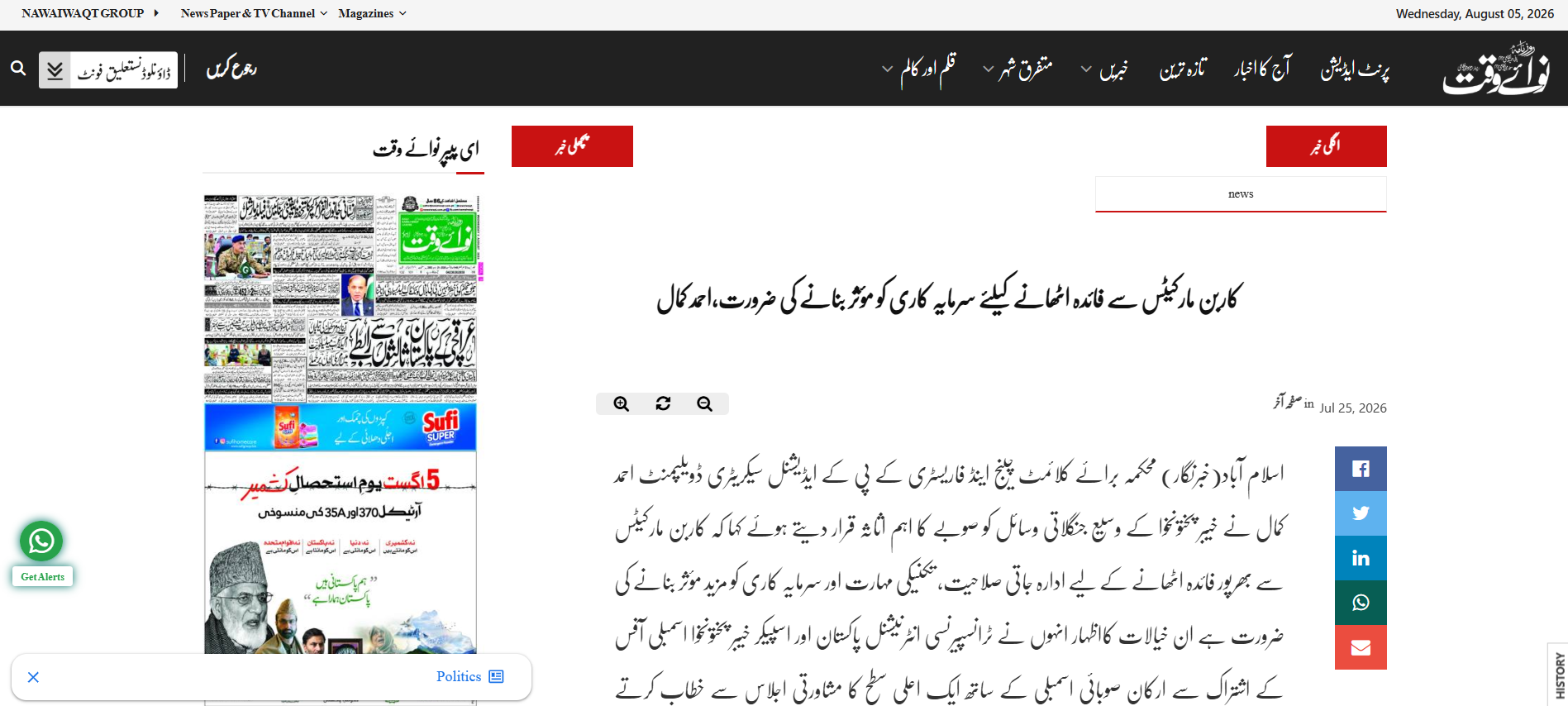
Mr. Ahmad Kamal, Additional Secretary Development for Climate Change, Forestry, Environment, and Wildlife Department Khyber Pakhtunkhwa, then set out pathways for climate finance and carbon markets in the province, highlighting its significant forest resources and stressing the need to strengthen institutional capacity, technical expertise, and investment to unlock that potential.
The meeting closed with remarks from Justice (R) Zia Perwez, Chairman of TI Pakistan, who reflected on how far Pakistan’s carbon market journey has come, from early Clean Development Mechanism projects to nature-based initiatives such as the Delta Blue Carbon project and the growing momentum around Article 6 implementation. He reiterated that ambition alone is not enough, and that it must be matched by strong governance, integrity, and inclusivity, with Parliament playing a central role in that effort going forward. TI Pakistan will continue to engage parliamentarians on the adoption of the report’s recommendations and the legislative roadmap in the period ahead.