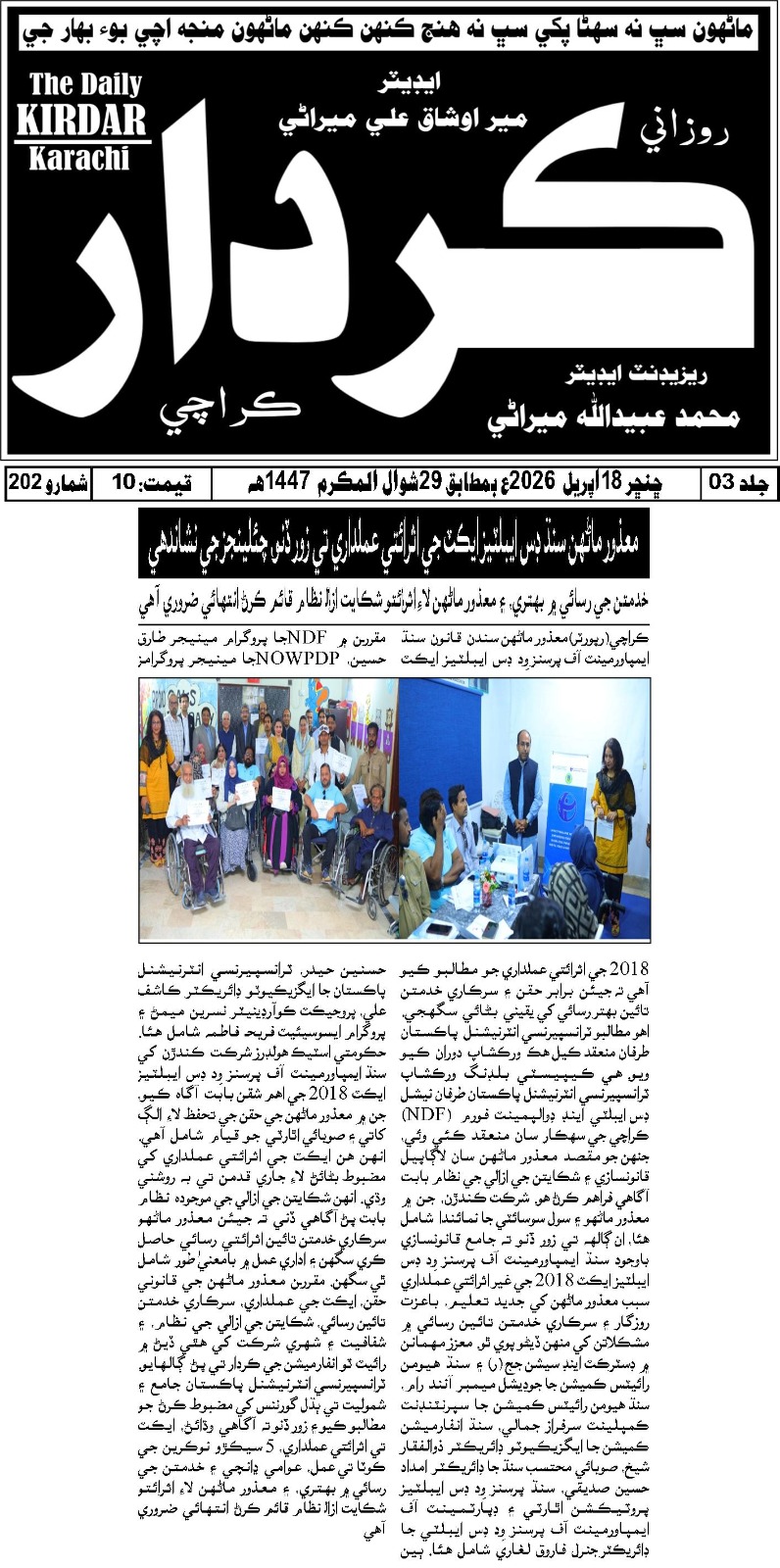
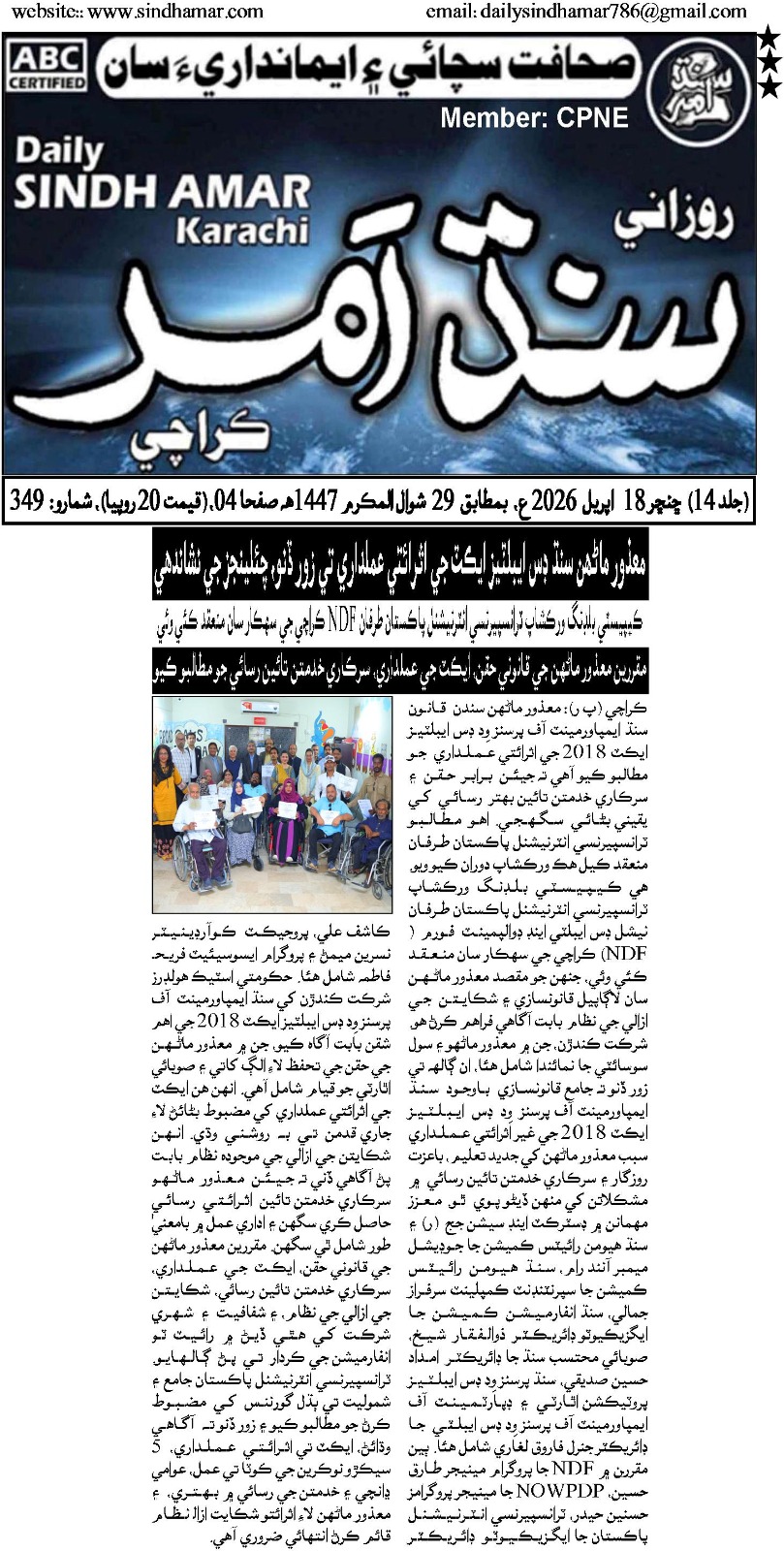
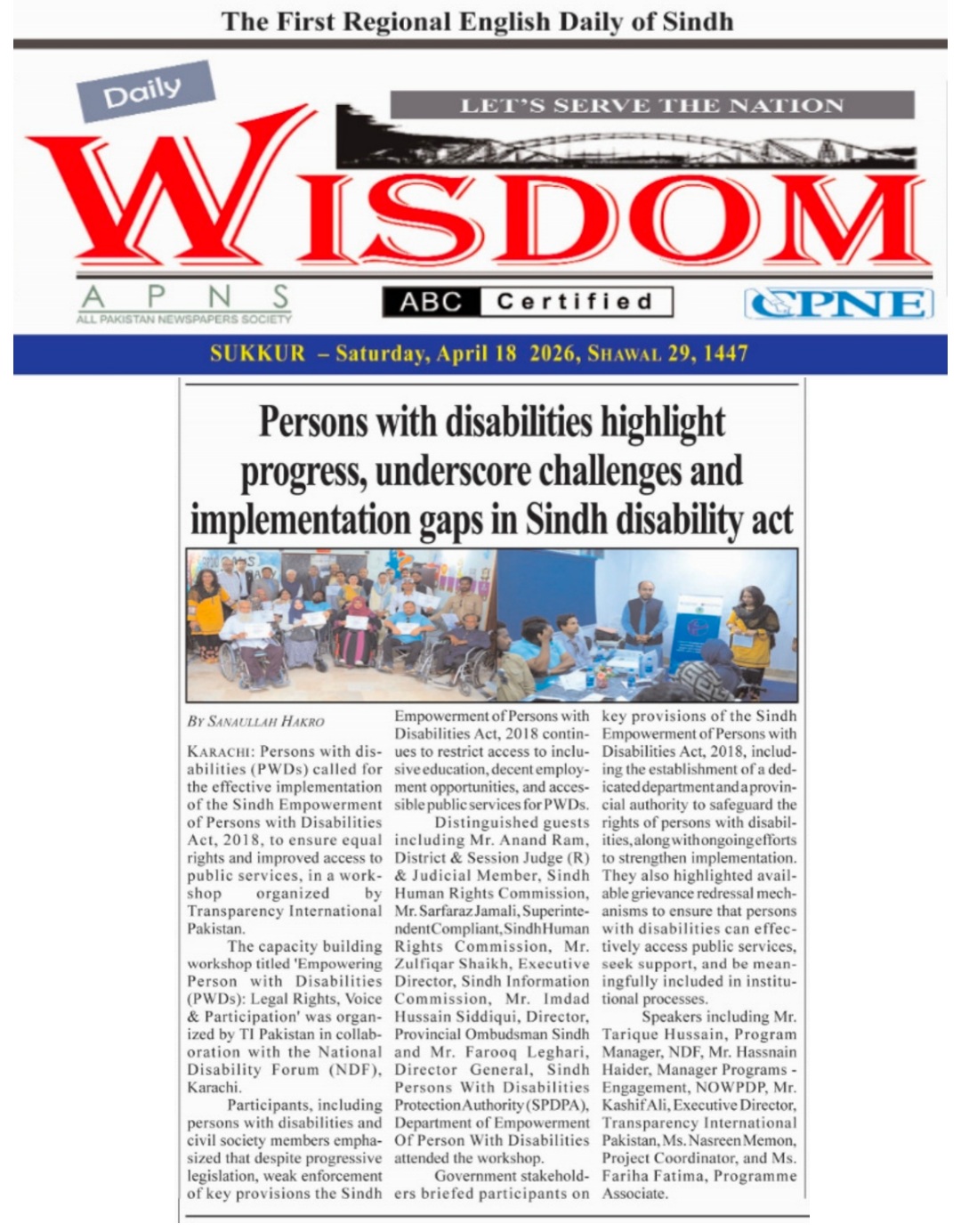
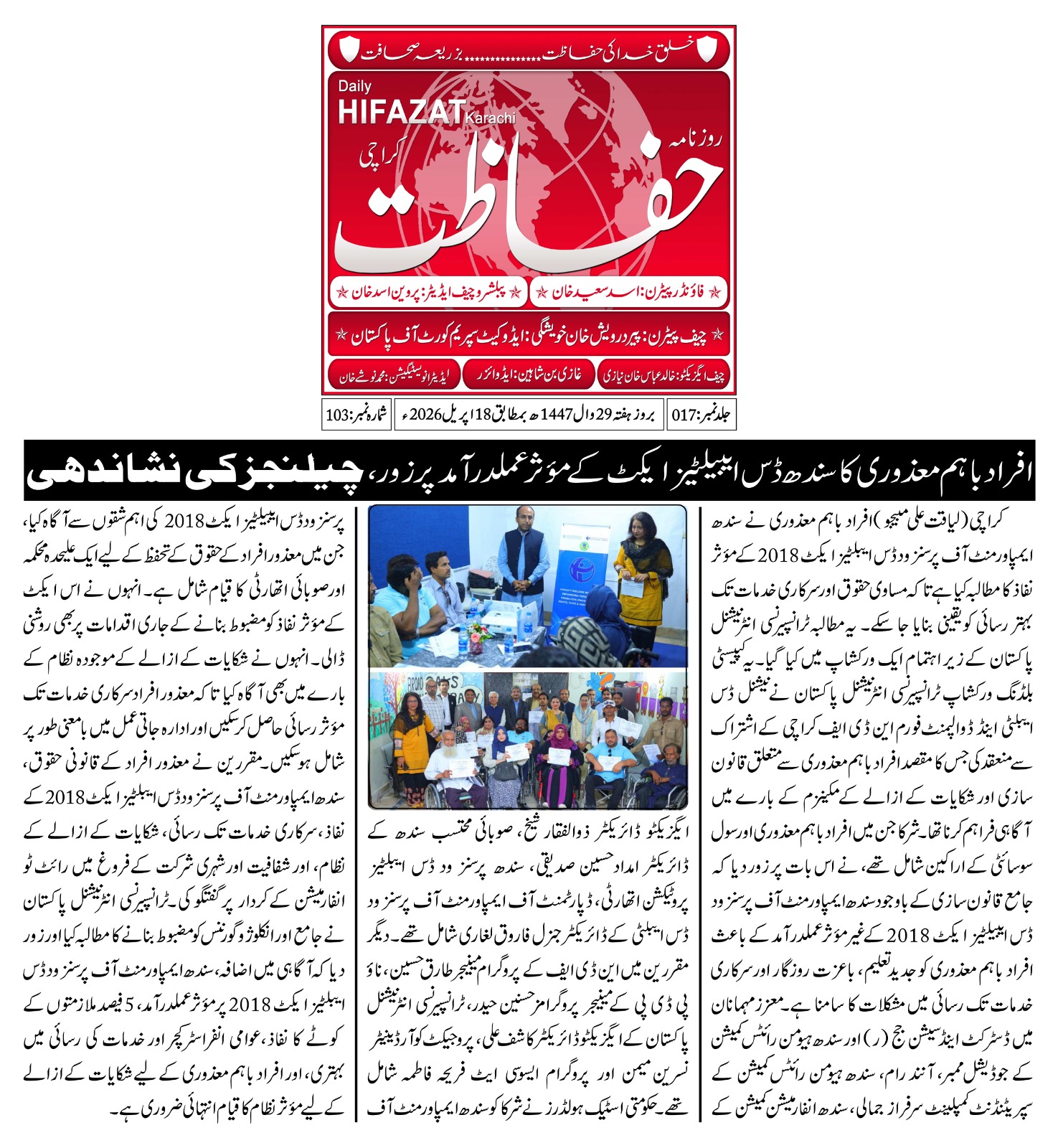
Capacity Building Workshop - Empowering Person with Disabilities (PWDs): Legal Rights, Voice & Participation
Capacity Building Workshop – Empowering Person with Disabilities (PWDs): Legal Rights, Voice & Participation
In Collaboration with National Disability Forum (NDF)
Venue: NDF Rehabilitation Center, Karachi
Date: Wednesday, April 15, 2026
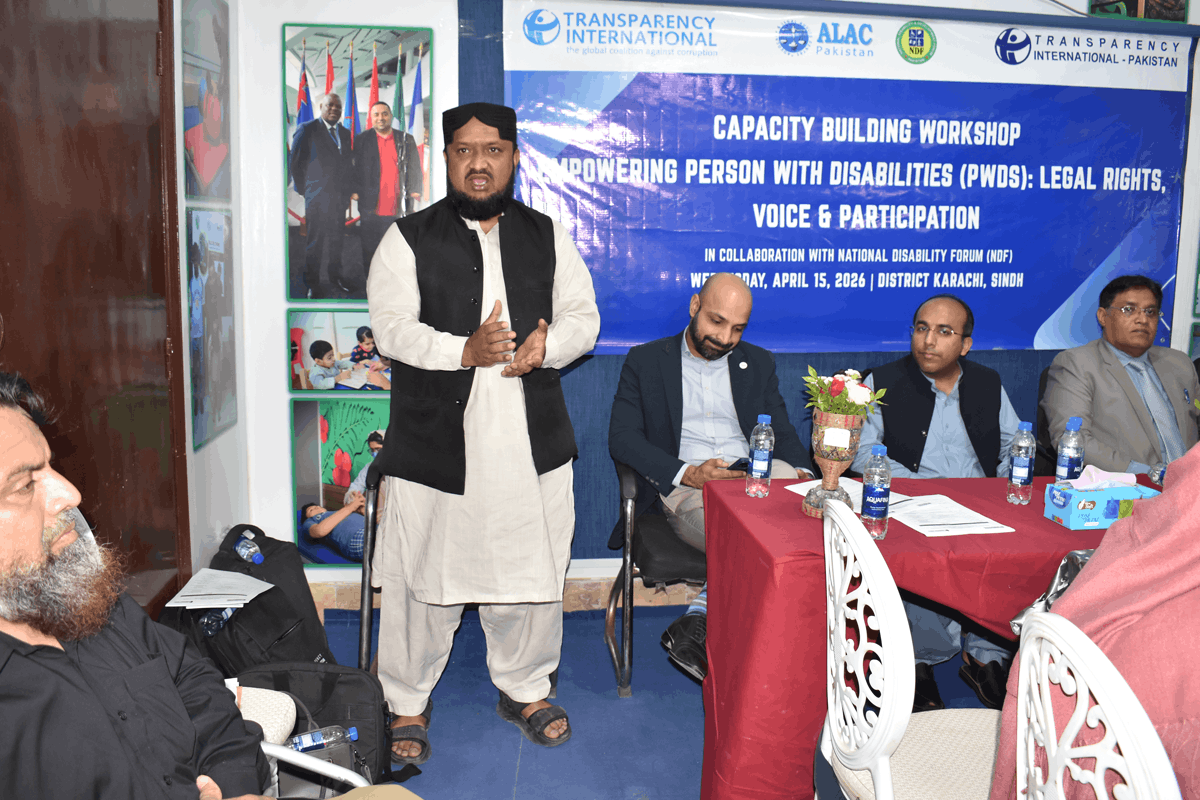
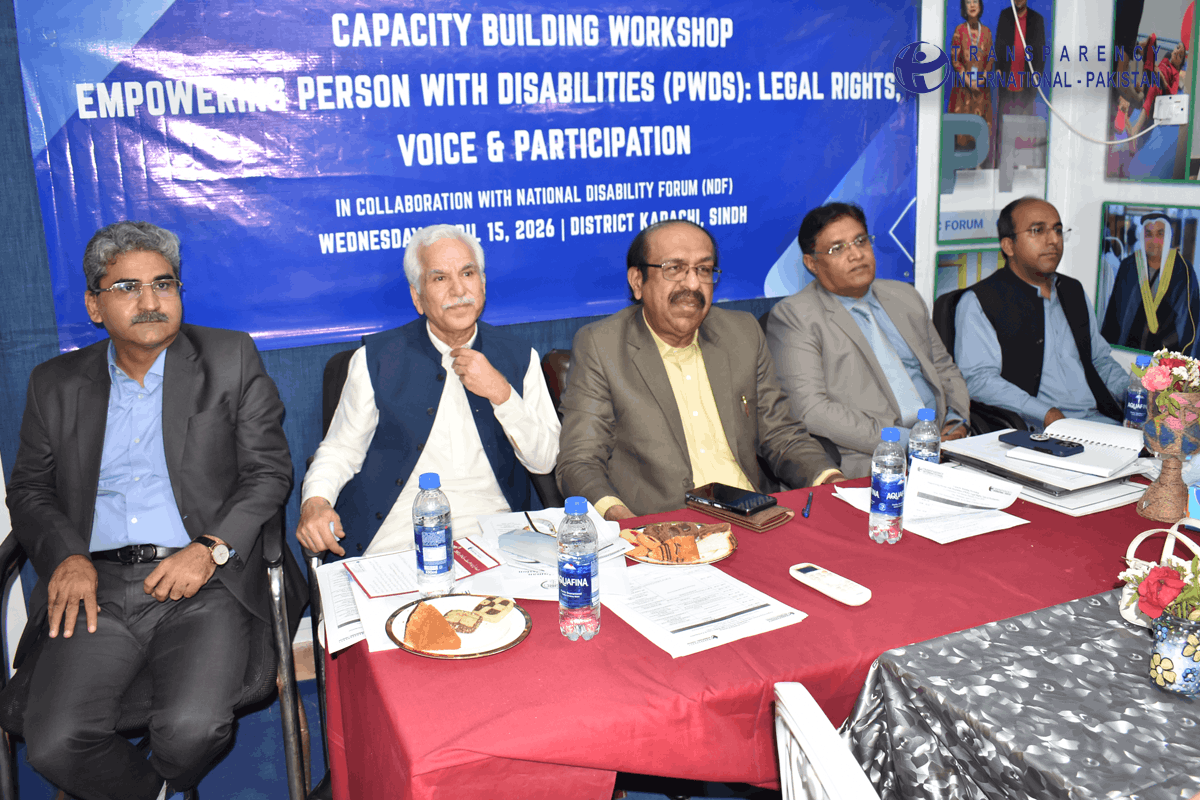
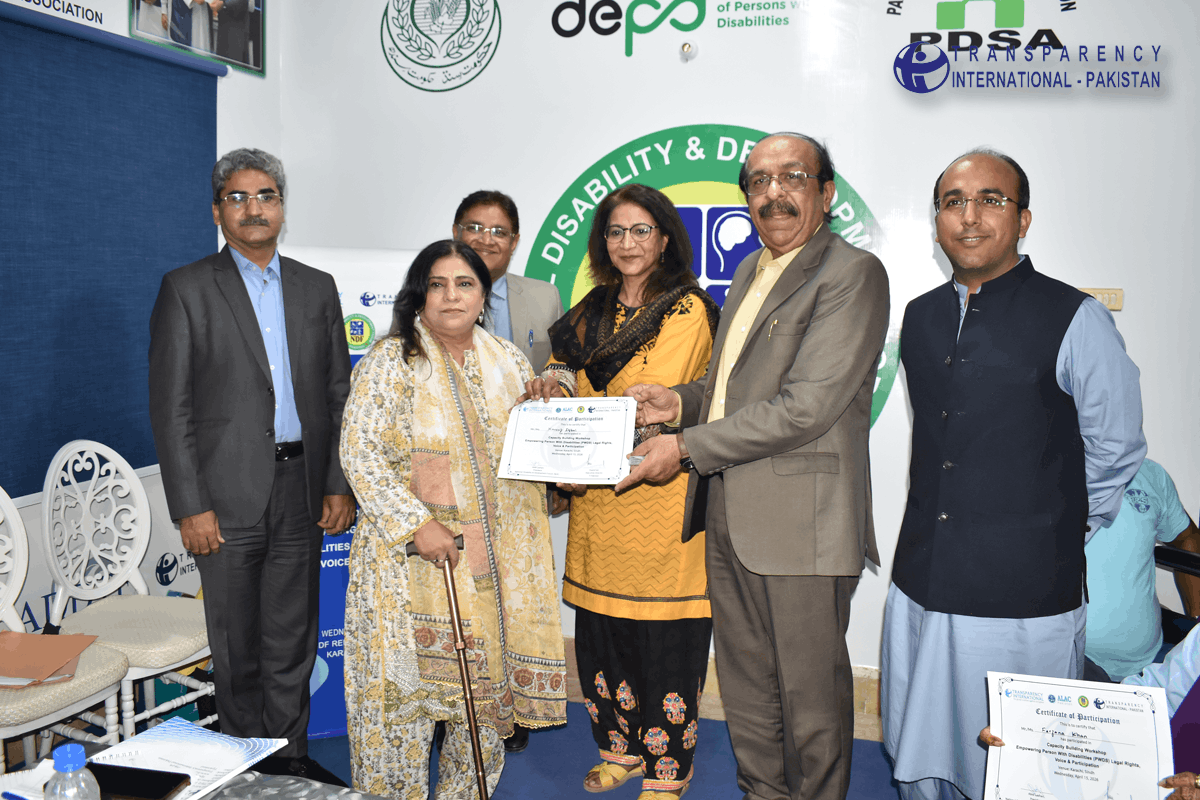
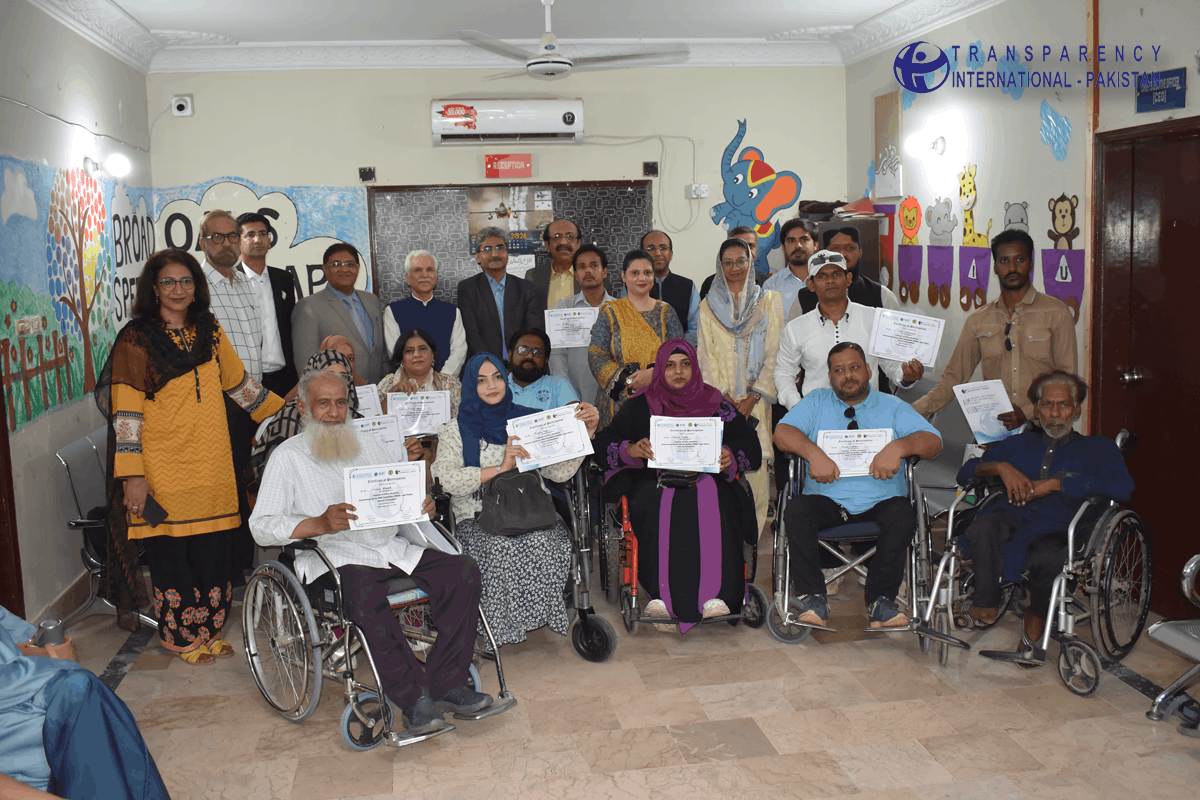
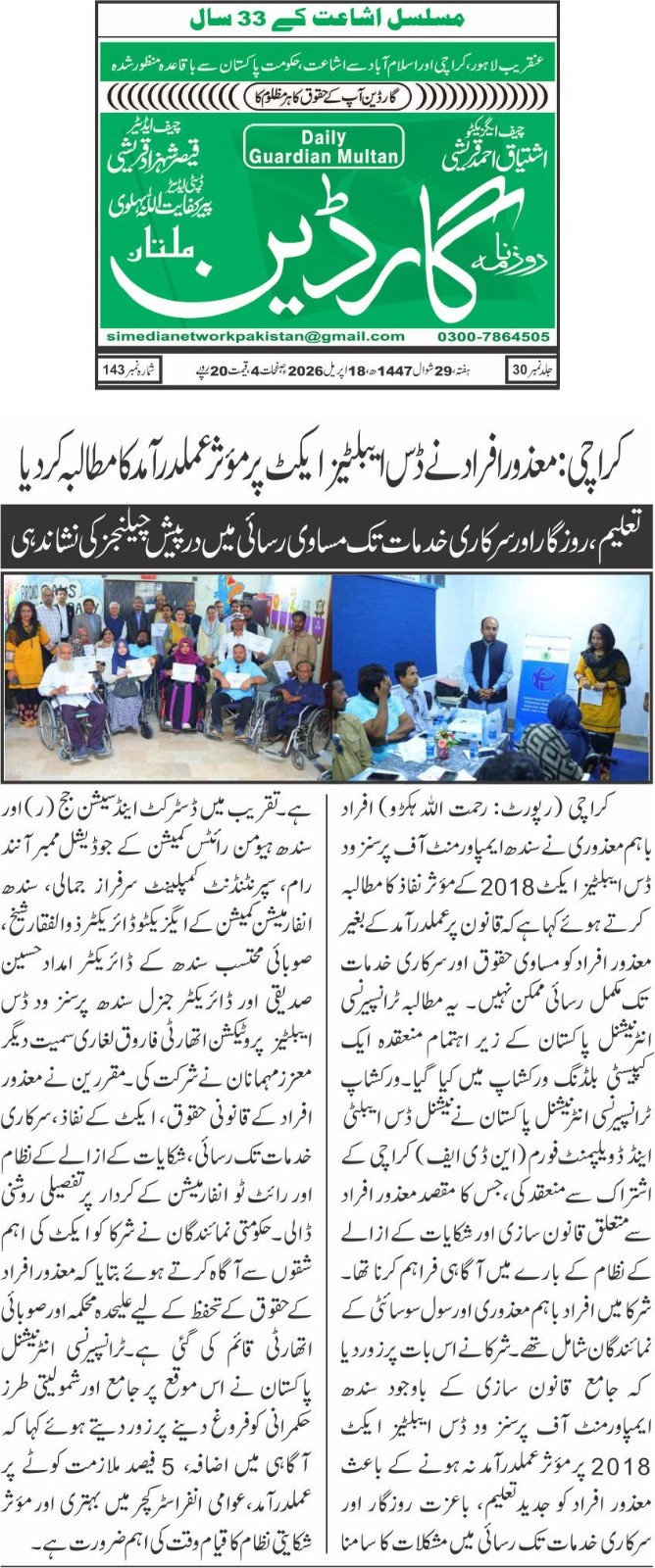
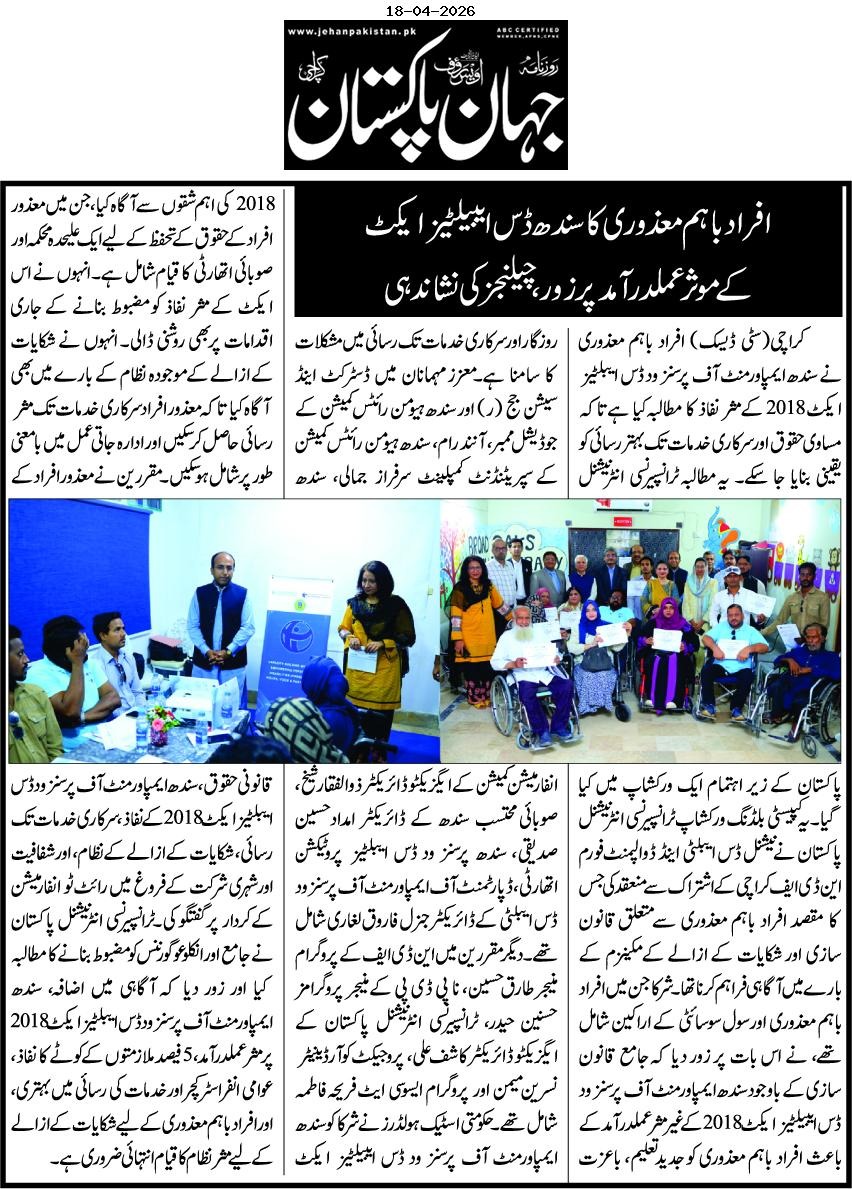
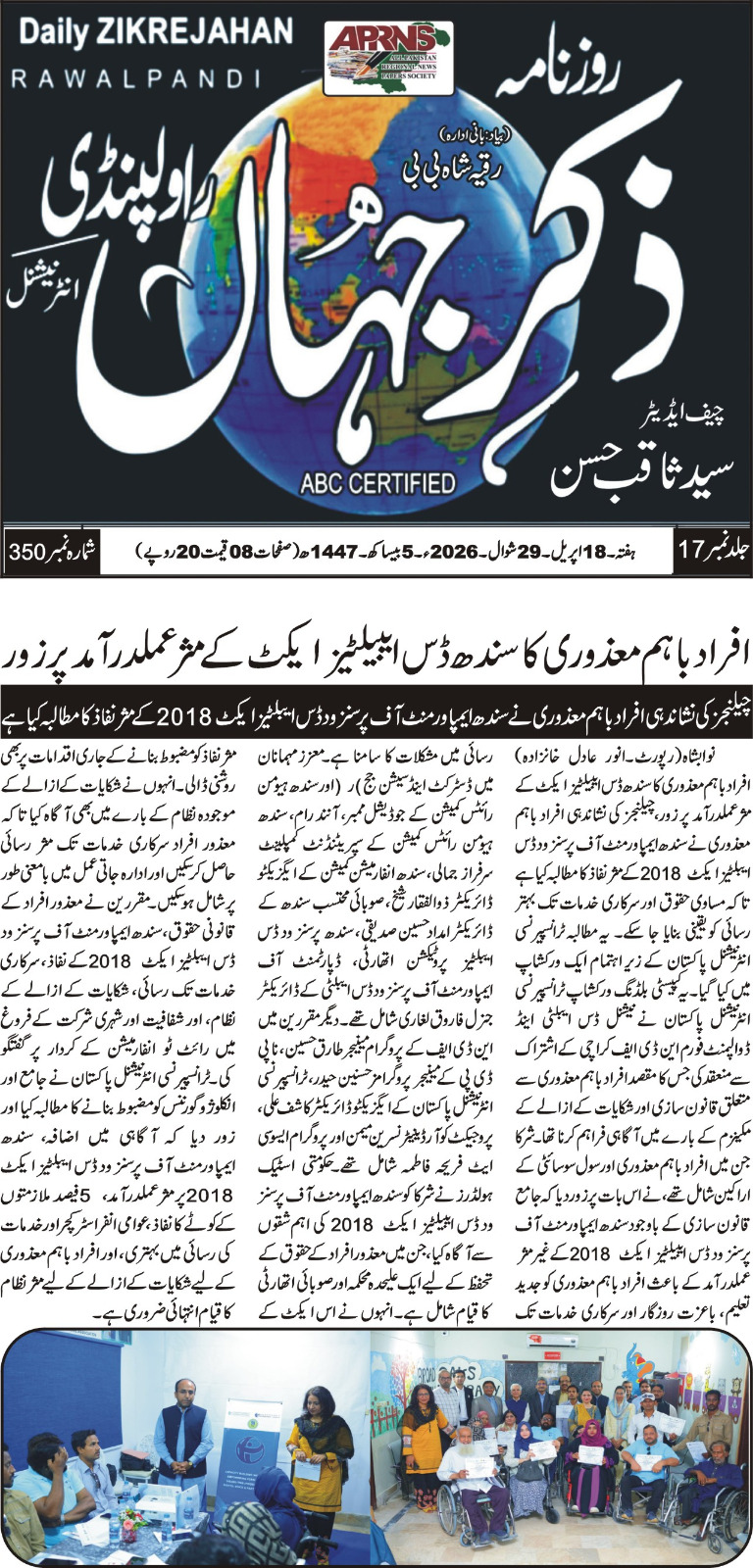
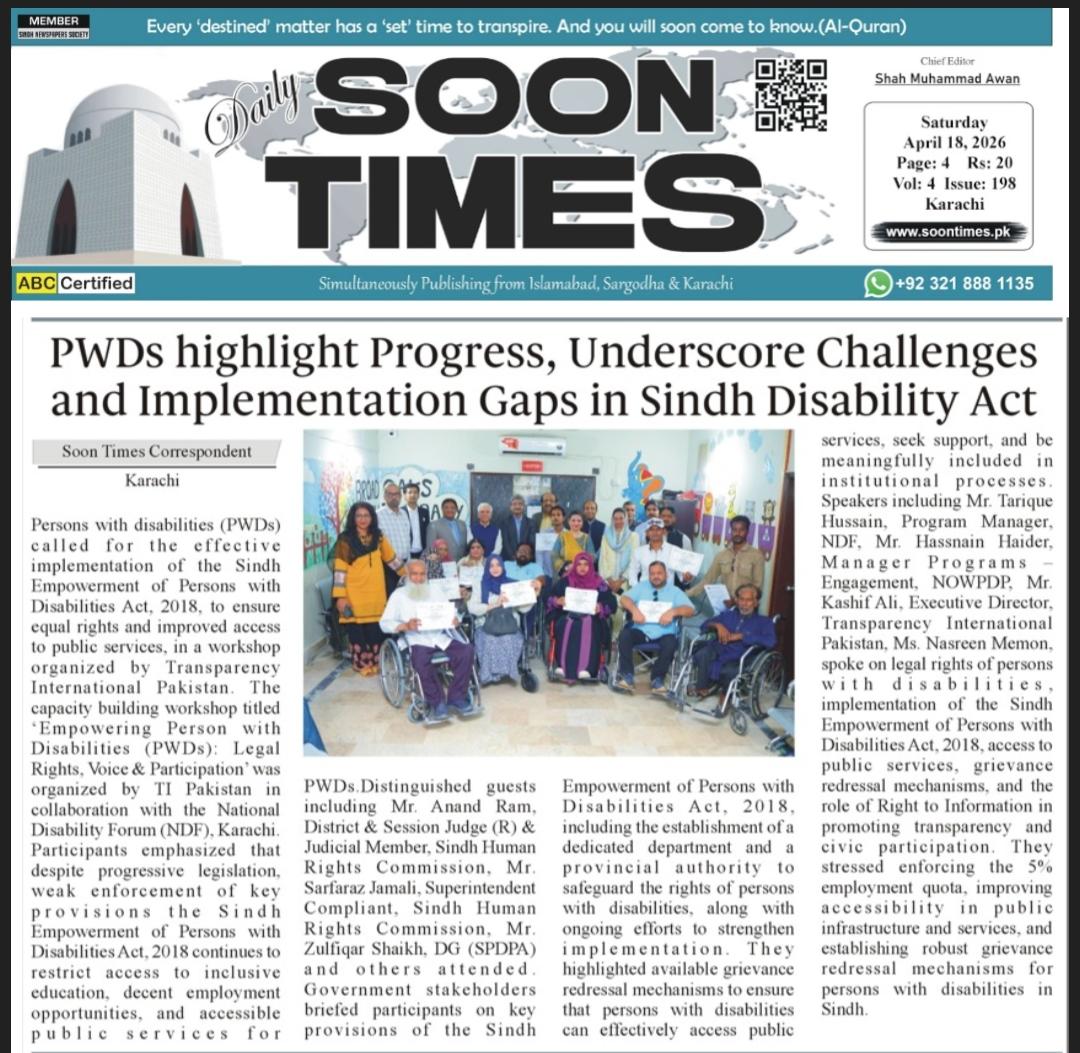
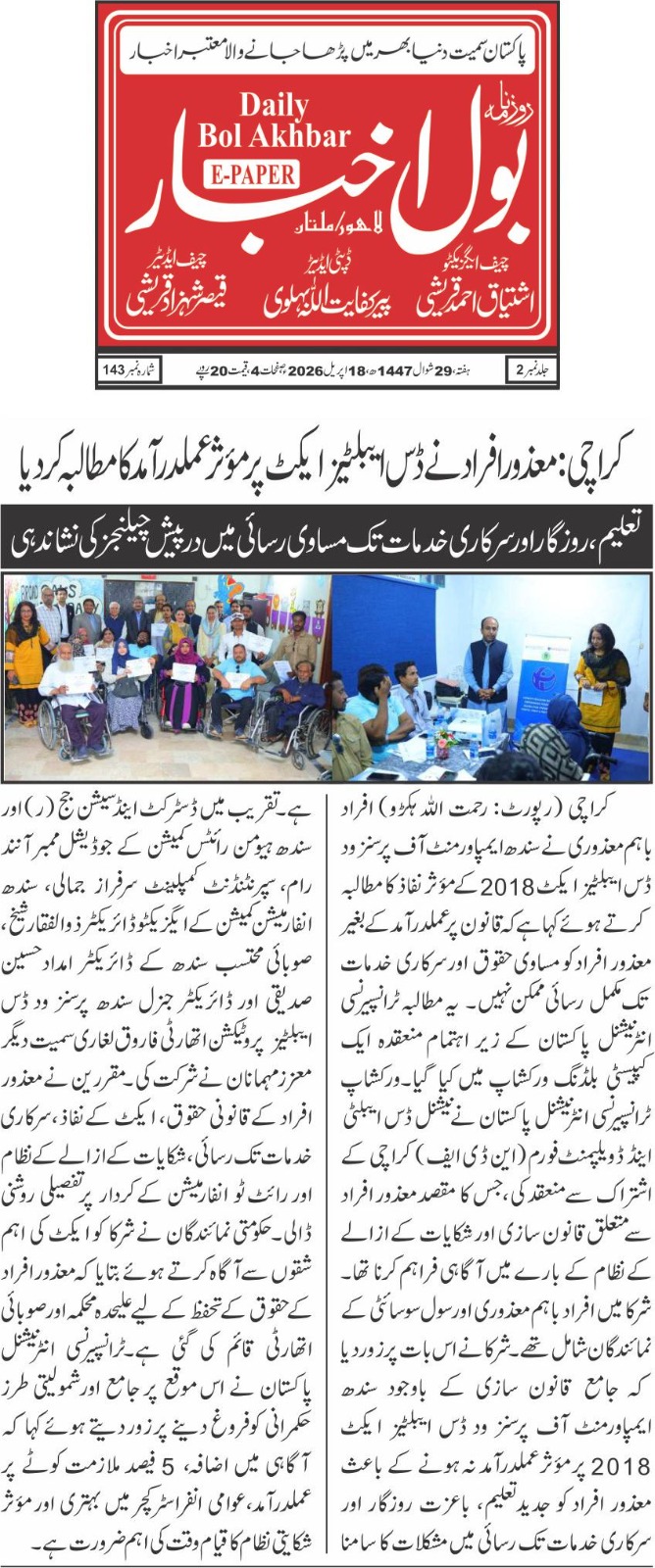
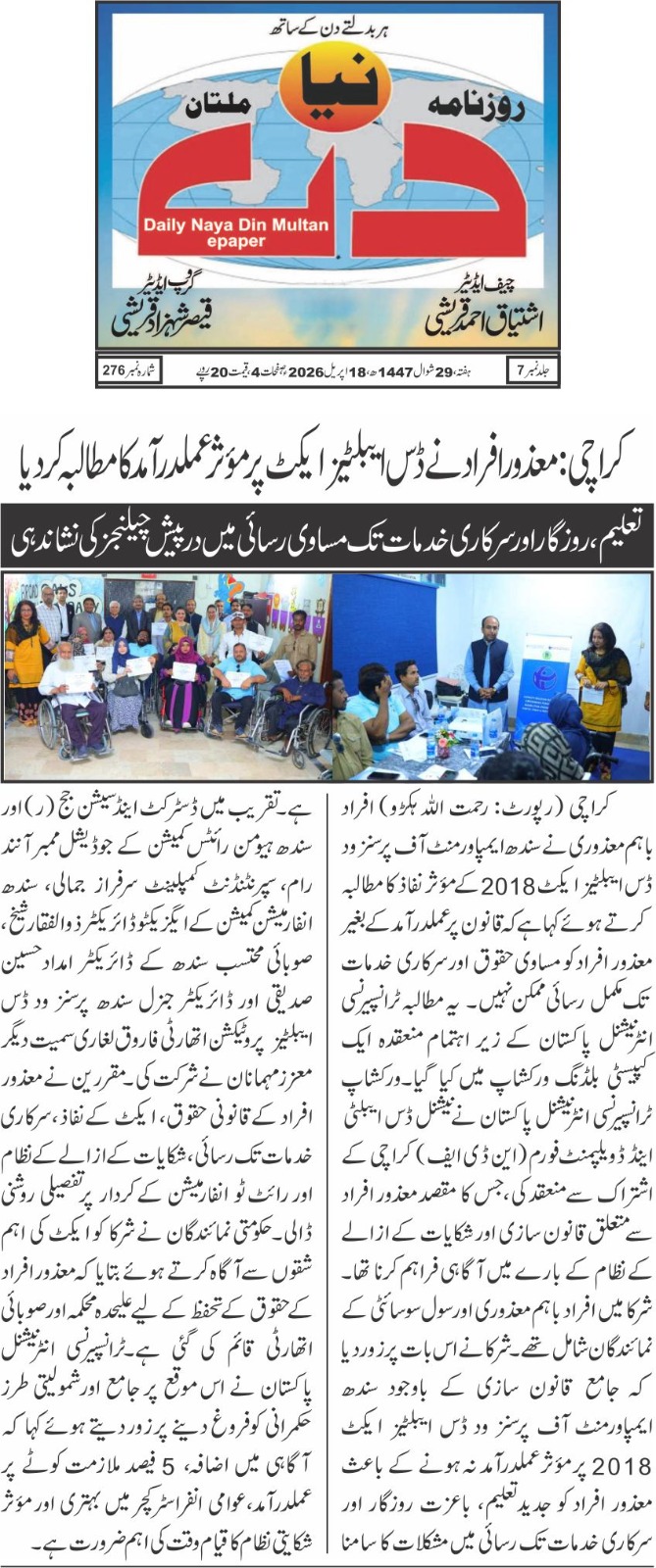
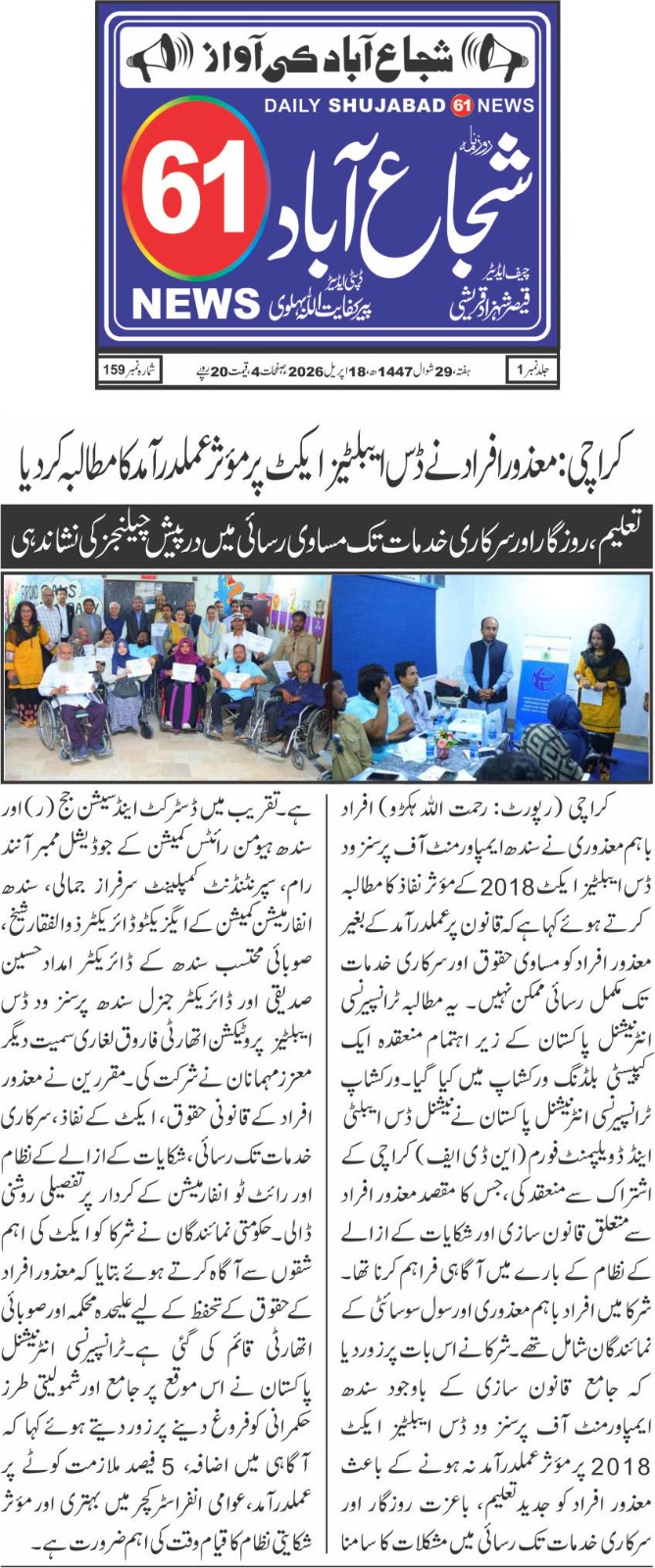
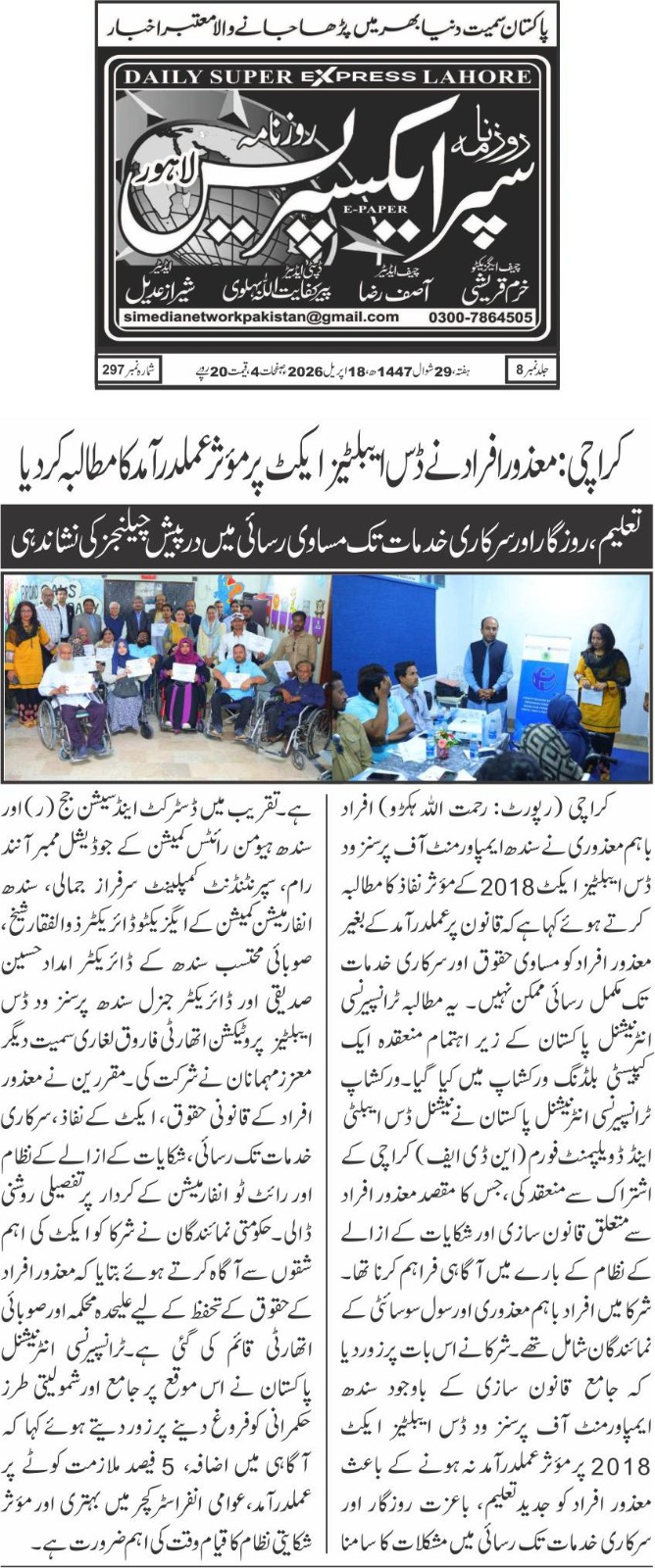
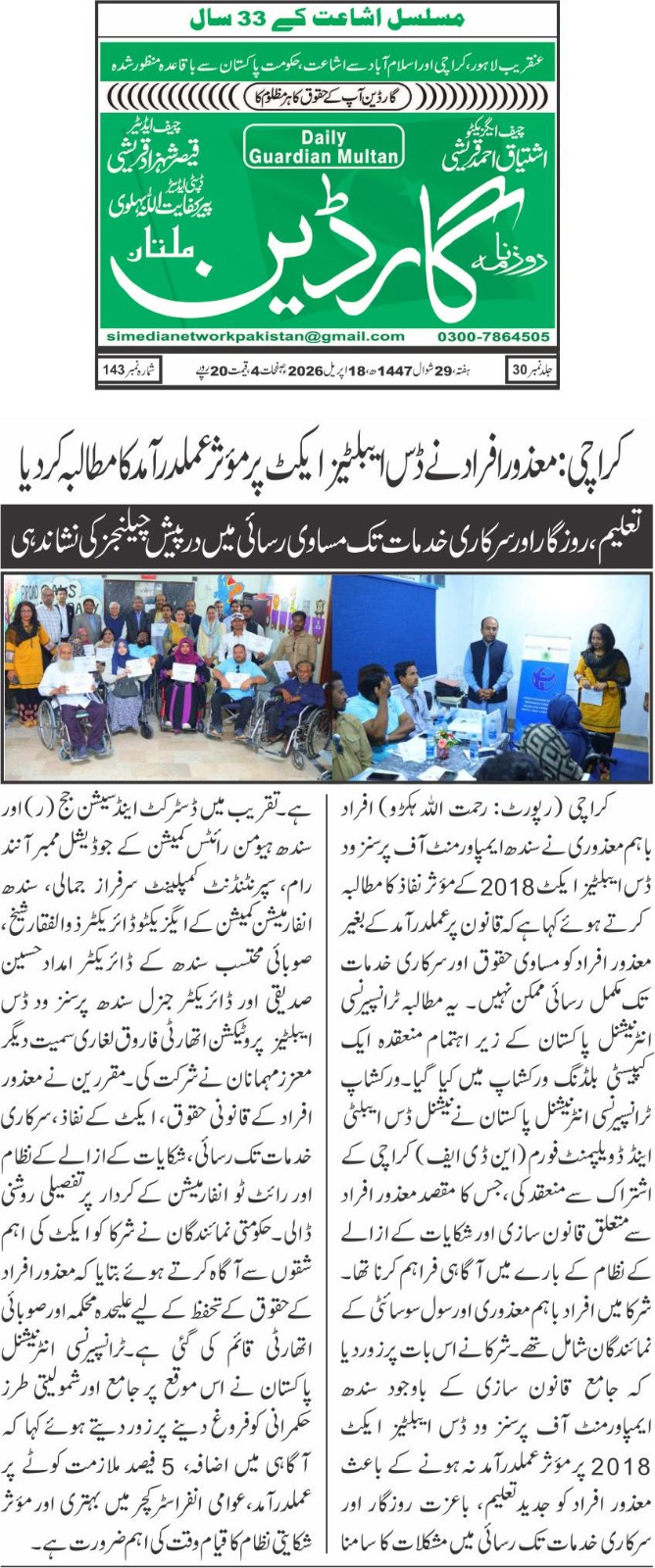
Transparency International Pakistan in Collaboration with National Disability Forum (NDF) organized a Capacity Building Workshop, titled “Empowering Person with Disabilities (PWDs): Legal Rights, Voice & Participation”, on Wednesday, April 15, 2026, in Karachi. The workshop aimed to strengthen the understanding of Sindh Empowerment of Persons with Disabilities Act, 2018 and Sindh Transparency & Right to Information Act 2016, enhance their ability to advocate for inclusive and accessible public services, and promote meaningful participation in governance and decision-making processes, A total of 22 participants (8 female and 14 male), including persons with disabilities, representing diverse backgrounds such as civil society, took part in the workshop.
Speakers including Mr. Farooq Leghari, Director General, Sindh Persons with Disabilities Protection Authority (SPDPA), Mr. Anand Ram, District & Session Judge (R) & Judicial Member, Sindh Human Rights Commission, Mr. Zulfiqar Shaikh, Executive Director, Sindh Information Commission, and Mr. Imdad Hussain Siddiqui, Director, Provincial Ombudsman. Speakers from key government and oversight institutions represented their respective departments, including the Sindh Persons with Disabilities Protection Authority (SPDPA), Sindh Human Rights Commission, Sindh Information Commission, and the Provincial Ombudsman Secretariat.
Mr. Tarique Hussain, Program Manager, National Disability Forum (NDF), delivered the welcoming remarks and opened the session. He outlined the objectives of the workshop, focusing on strengthening awareness of the legal rights of persons with disabilities and the importance of the Right to Information (RTI) in promoting transparency, improving access to public services, and enhancing meaningful participation in governance processes.
Mr. Kashif Ali, Executive Director, Transparency International Pakistan, delivered the opening remarks. He highlighted that inclusive governance requires ensuring that citizens have participation in the decision-making processes. He highlighted that while Sindh has taken important steps in form of Sindh Empowerment of Persons with Disabilities (SEPD) Act 2018, establishment of authority, provincial council and other key initiatives, however, persons with disabilities continue to face challenges due to lack of implementation such as ensuring public buildings and transport is accessible and enforcement of 5% employment quota in public and private sector.
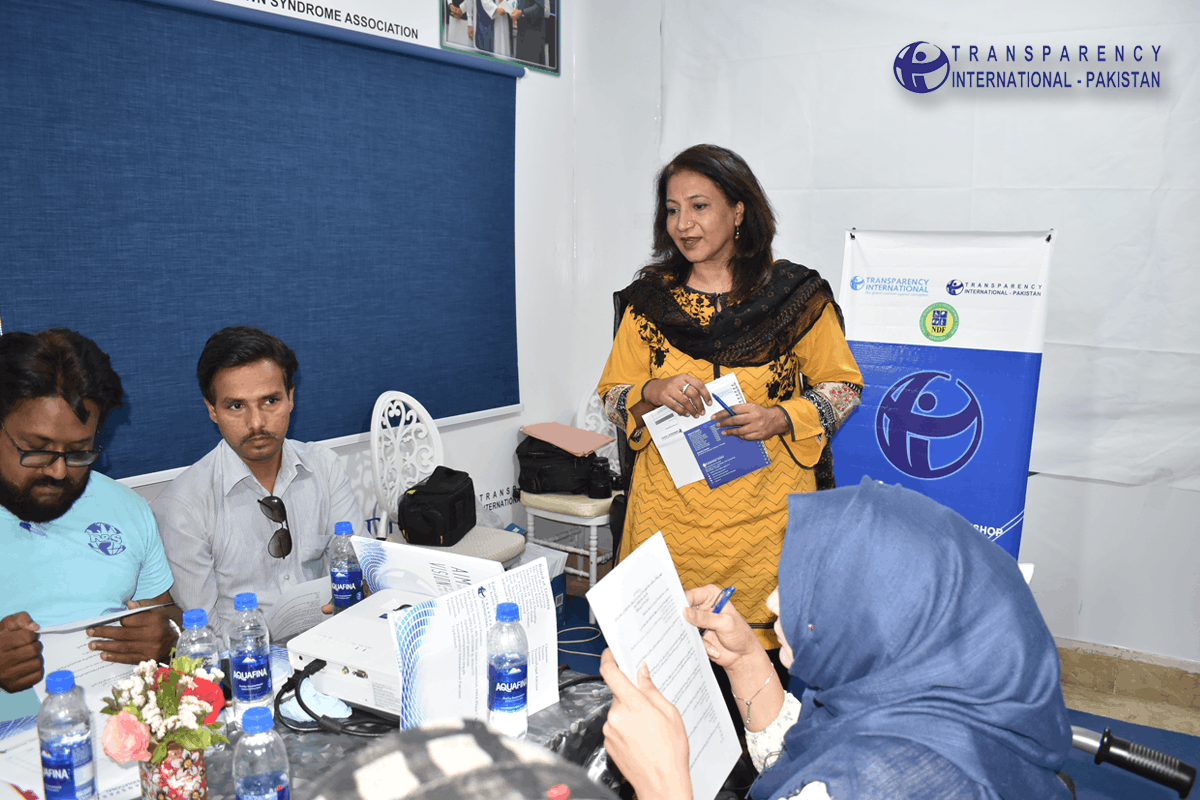
A pre-test was conducted at the beginning of the workshop to assess the participants’ existing knowledge and understanding of the key concepts, including legal rights and access to information.
Moving on, Mr. Hassnain Haider, Manager Programs – Engagement, Network of Organizations Working for People with Disabilities Pakistan (NOWPDP), delivered a detailed session on the Sindh Empowerment of Persons with Disabilities Act, 2018 and highlighted key provincial standards and regulations relevant to disability inclusion. He discussed key frameworks including the Pakistan Disabled Persons Ordinance 1981, Accessibility Code of Pakistan 2006, State Bank of Pakistan Guidelines on Financial Inclusion of Persons with Disabilities, and Deaf Licensing Sindh 2019. He also highlighted the salient features of the Sindh Empowerment Act, which mandates respect for dignity, accessibility, inclusive education, reasonable accommodation, skills development, equitable employment opportunities, certification of persons with disabilities, and enforcement through offences and penalties.
The session concluded with Mr. Hassnain Haider emphasizing the importance of effective implementation of disability-related laws and strengthening coordination among institutions to ensure meaningful inclusion of persons with disabilities.
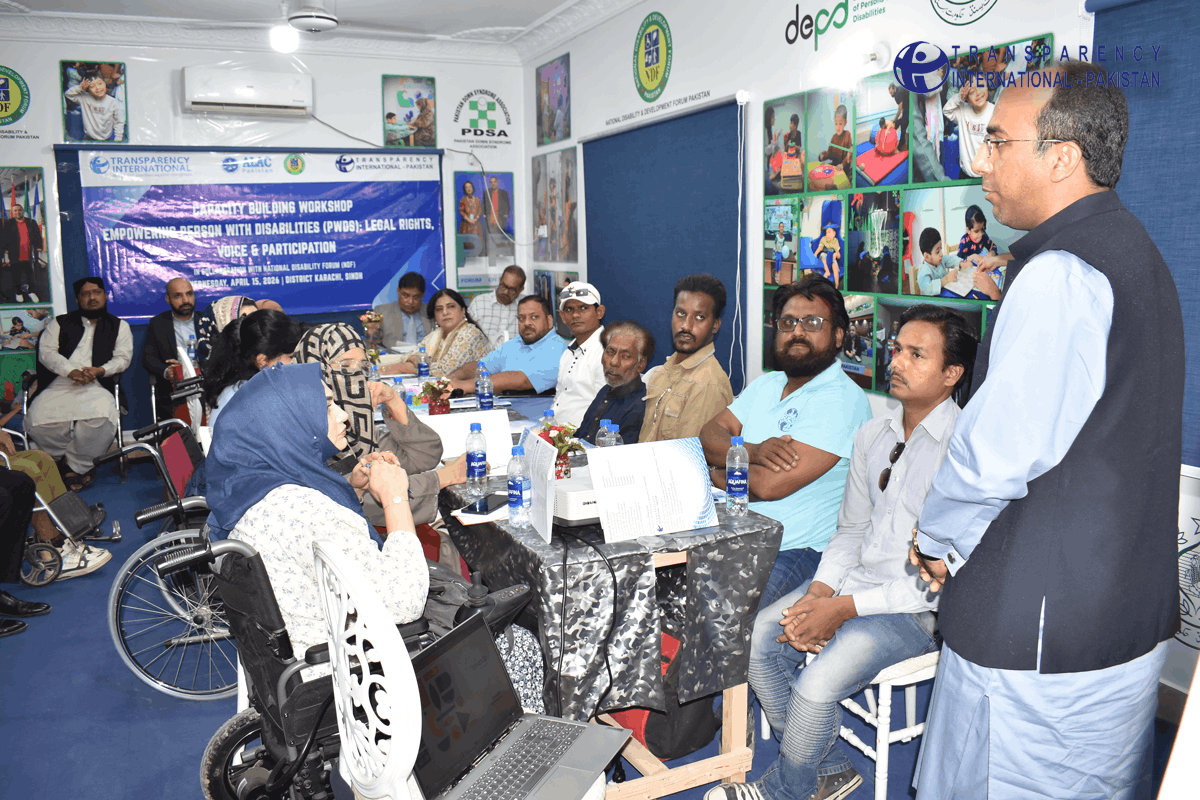
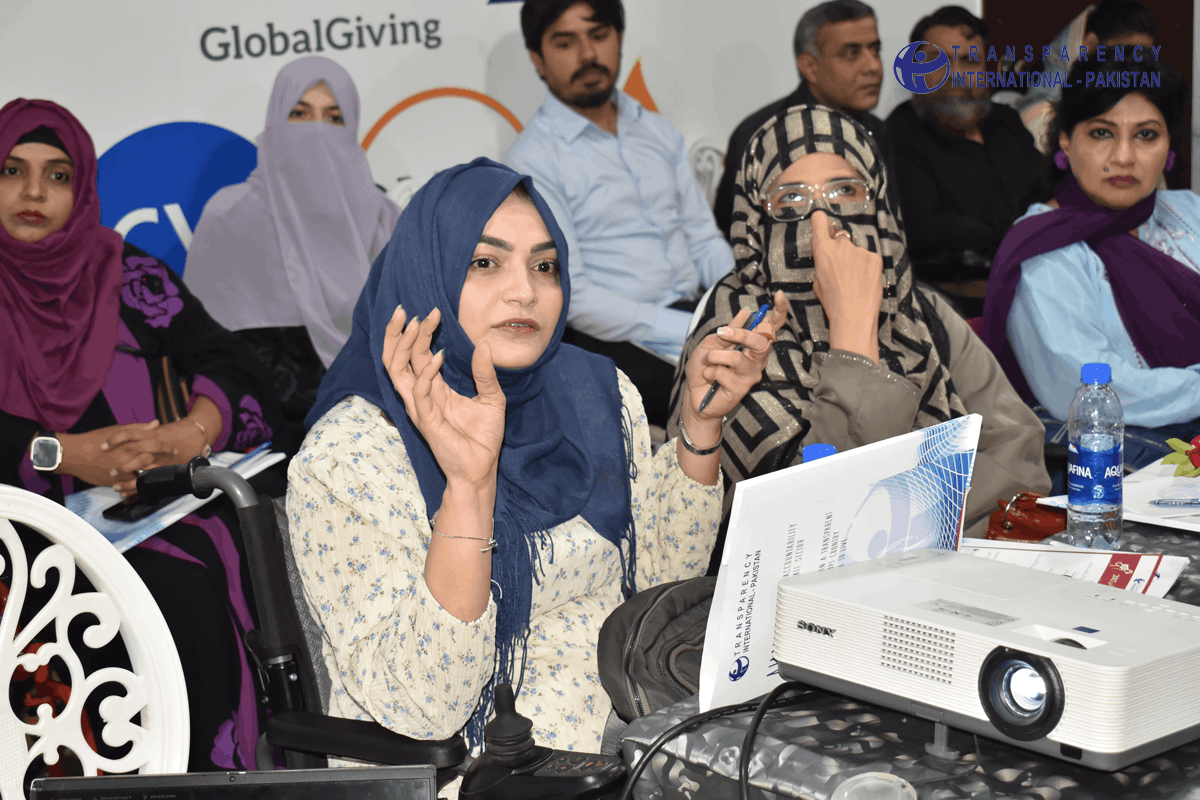
The session continued with an open discussion facilitated by Ms. Nasreen Memon, Project Coordinator, TI Pakistan, where participants further shared their experiences and challenges in accessing public services.
Participants raised key concerns regarding barriers faced by persons with disabilities in accessing public services, that includes the refusal of ride-hailing and taxi services to accommodate them, limited accessibility in public transport systems such as the Green Line Bus Service where facilities exist but are not adequately extended to bus stops. Participants also pointed out the negative attitudes and discriminatory behavior from staff in public spaces, including shopping malls and public transport services. The major concern emphasized was the lack of basic accessibility infrastructure, particularly ramps, which significantly restrict mobility and access for persons with disabilities. The government offices also lack PWD-friendly infrastructure, making it difficult for persons with disabilities to access public services effectively.
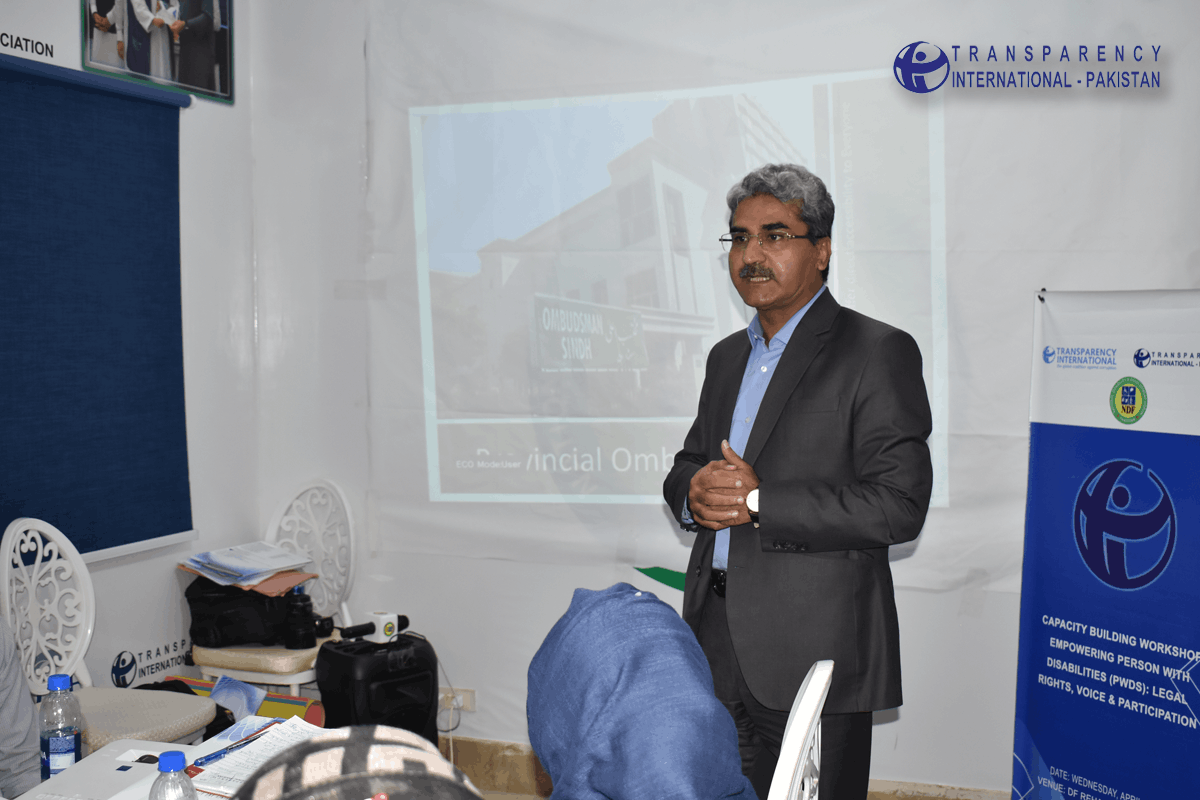
Next, Mr. Imdad Hussain Siddiqui, Director, Provincial Ombudsman Sindh, delivered a session on the role of the Provincial Ombudsman in addressing public grievances and ensuring administrative justice. He highlighted that the Provincial Ombudsman Sindh, established under the Ombudsman Act 1991, provides citizens with accessible complaint redressal services through 19 regional offices across Sindh. He explained that complaints can be lodged online, by post, in person, or by phone, with online submissions being the most commonly used method. He emphasized that persons with disabilities have an equal right to file complaints and are entitled to priority handling and facilitation through the Ombudsman’s complaint mechanism. He highlighted the institution’s commitment to inclusive governance by ensuring accessible complaint systems for persons with disabilities and encouraged participants to report issues related to inaccessible public services, lack of PWD-friendly infrastructure, delays in service delivery, and discrimination in government institutions.
Moving forward, Mr. Anand Ram, District & Session Judge (R) and Judicial Member, Sindh Human Rights Commission, delivered a session on the role of the Sindh Human Rights Commission in protecting and promoting fundamental rights across the province. He highlighted the Commission’s mandate to address complaints related to human rights violations, monitor implementation of human rights laws, and advocate for equal treatment of marginalized groups, including persons with disabilities. He emphasized the importance of ensuring dignity, non-discrimination, and equal access to public services for persons with disabilities, and encouraged participants to raise concerns regarding rights violations through the Commission’s complaint mechanism.
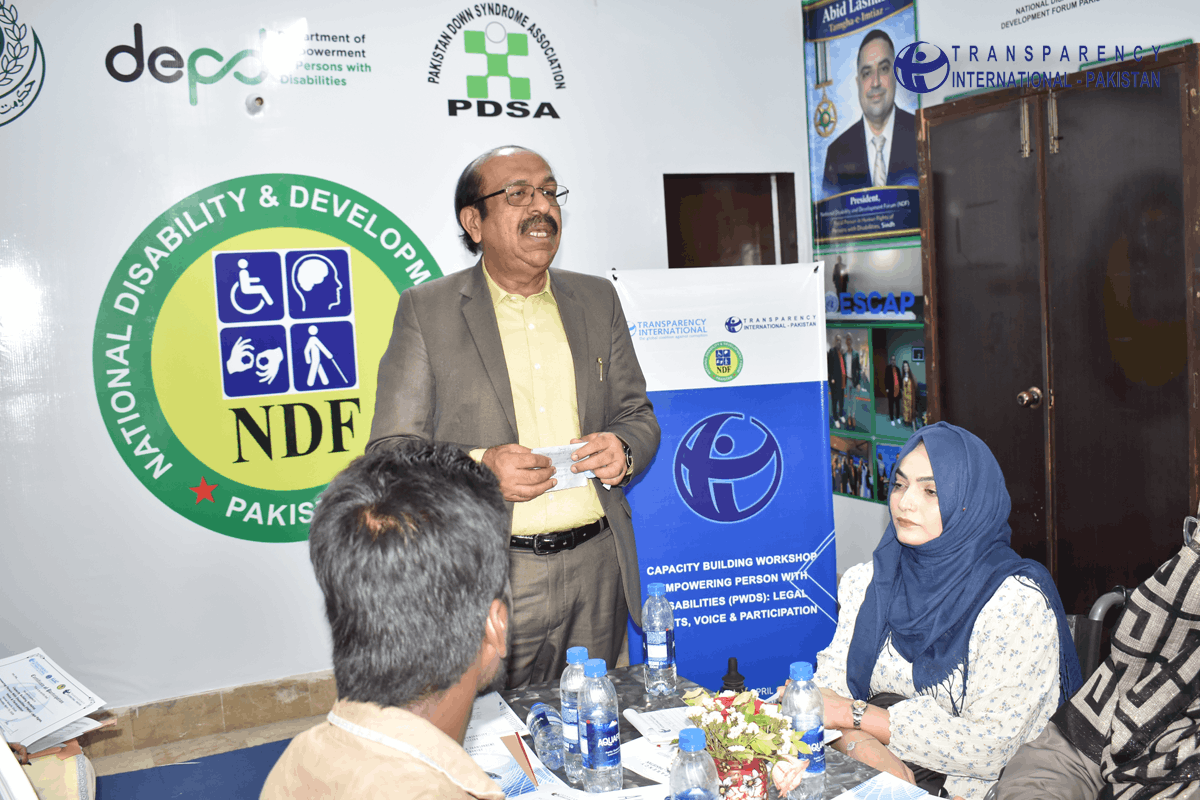
Mr. Zulfiqar Shaikh, Executive Director, Sindh Information Commission, delivered a comprehensive session on the Sindh Transparency and Right to Information Act 2016, highlighting its importance in empowering persons with disabilities to access information and advocate for their rights. He provided an overview of the key provisions of the Act and explained the types of information that may be accessed or exempted under the law. He informed participants that persons with disabilities can use the RTI law to obtain information related to disability rights, accessibility measures, public schemes, and services available to them.
He explained the three steps for filing an RTI request: identifying the required information, determining the relevant department or public body, and submitting the application to the Designated Official of the concerned institution. He further highlighted that under Section 6(1) of the Sindh RTI Act, public bodies are required to proactively disclose information, and emphasized that RTI serves as an important tool for persons with disabilities to promote transparency, demand accountability, and ensure inclusive governance.
A post-workshop survey conducted at the conclusion of the session indicated a significant improvement in participants’ knowledge of disability rights, the Sindh Empowerment of Persons with Disabilities Act 2018, and the Sindh Transparency and Right to Information Act 2016.
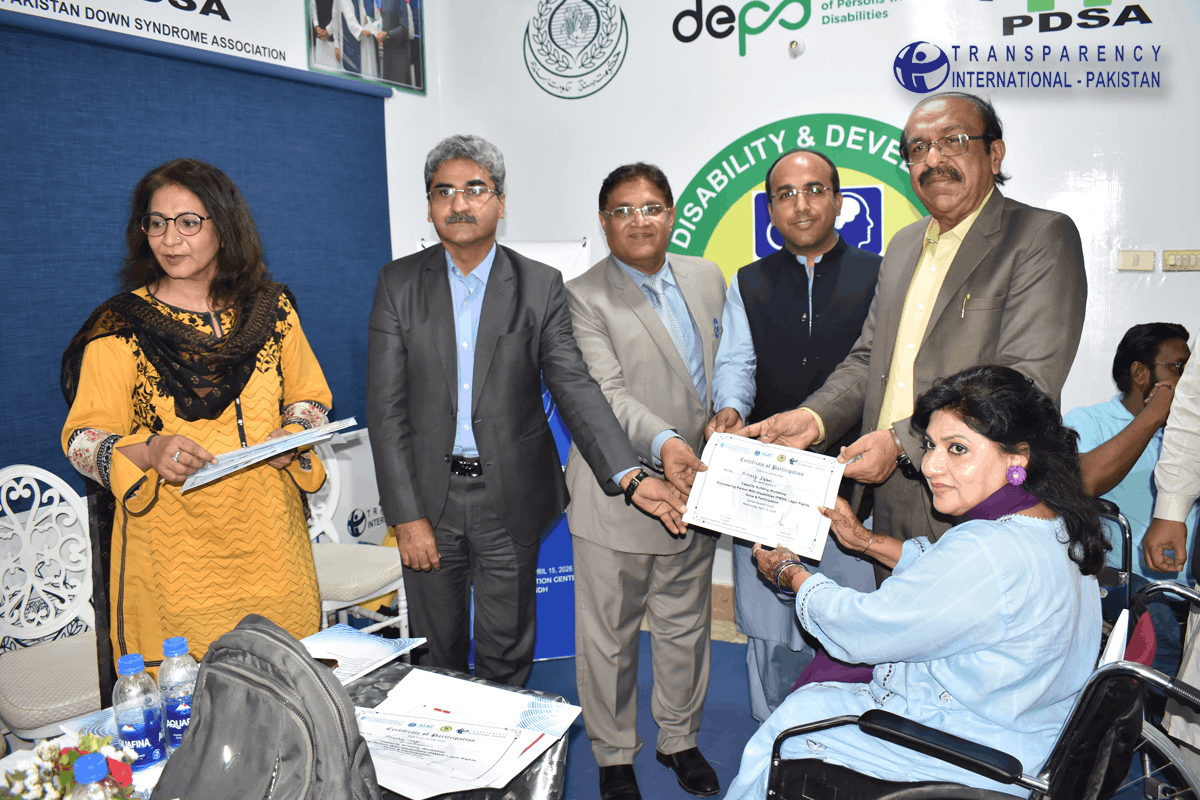
Mr. Farooq Leghari, Director General, Sindh Persons with Disabilities Protection Authority (SPDPA), Department of Empowerment of Persons with Disabilities, Government of Sindh, delivered the closing remarks. He acknowledged the importance of such capacity-building initiatives and reiterated the government’s commitment to safeguarding the rights of persons with disabilities. He stated that the Authority is undertaking ongoing efforts to ensure facilitation and protection of the rights of persons with disabilities, and to improve access to services through strengthened implementation of relevant laws and policies.