Webinar: Women in Civic Life: Barriers, Opportunities, and Policy Recommendations
Webinar: Women in Civic Life: Barriers, Opportunities, and Policy Recommendations
Venue: Online
Date: Thursday, March 05, 2026
To mark International Women’s Day 2026, Transparency International Pakistan hosted a webinar, “Women in Civic Life: Barriers, Opportunities, and Policy Recommendations” on Thursday, March 05, 2026. The discussion aimed to examine the challenges women face in civic, political, and economic participation, while highlighting practical policy recommendations to enhance their leadership and strengthen their role in governance and decision-making.
Speakers from the Sindh Commission on the Status of Women, UN Women Pakistan and Pakistan Institute of Legislative Development and Transparency (PILDAT) shared insights on socio-cultural, institutional, and structural barriers limiting women’s participation. A total of 20 people including women leaders, representatives from the civil society organizations, academia, journalists and other stakeholders attended the session.
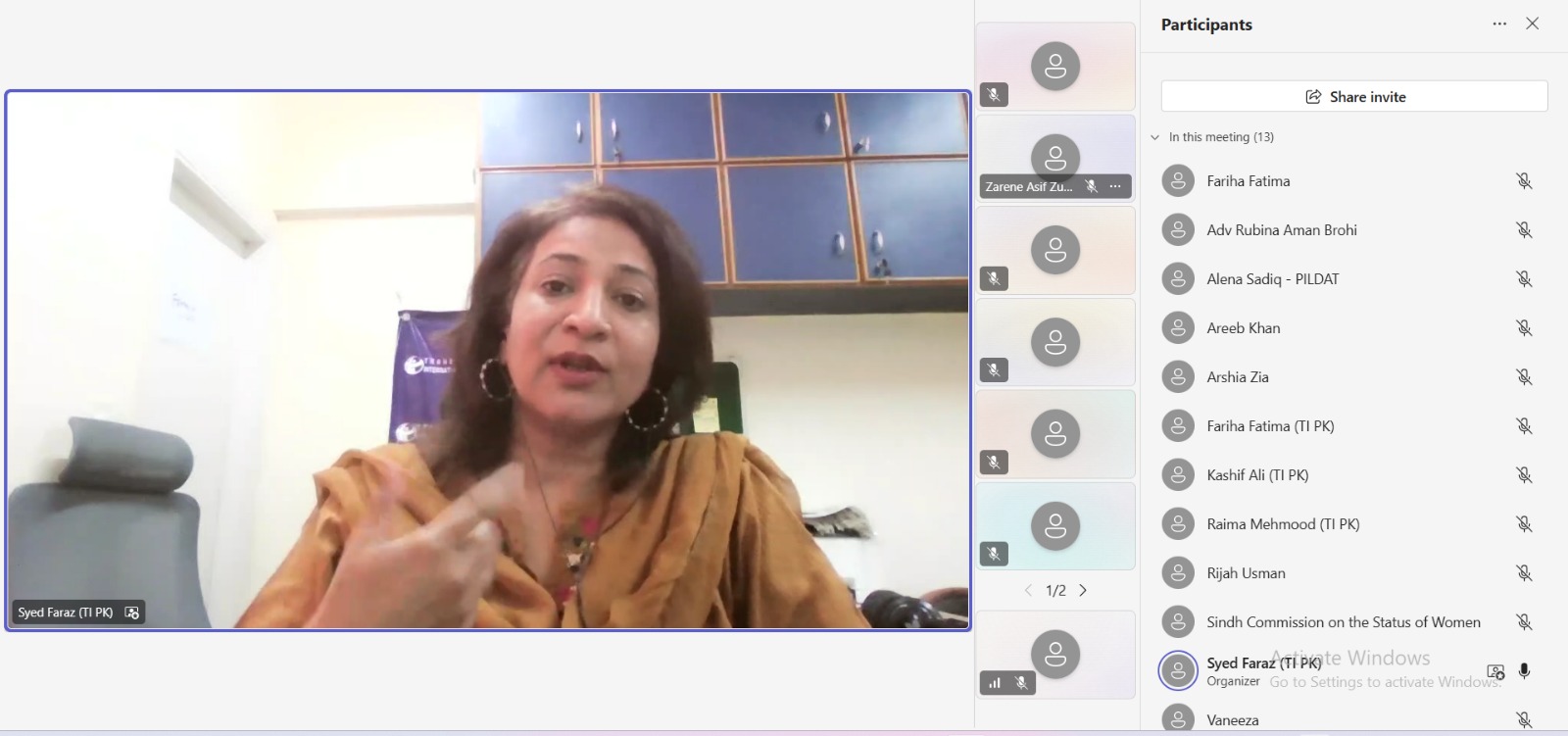
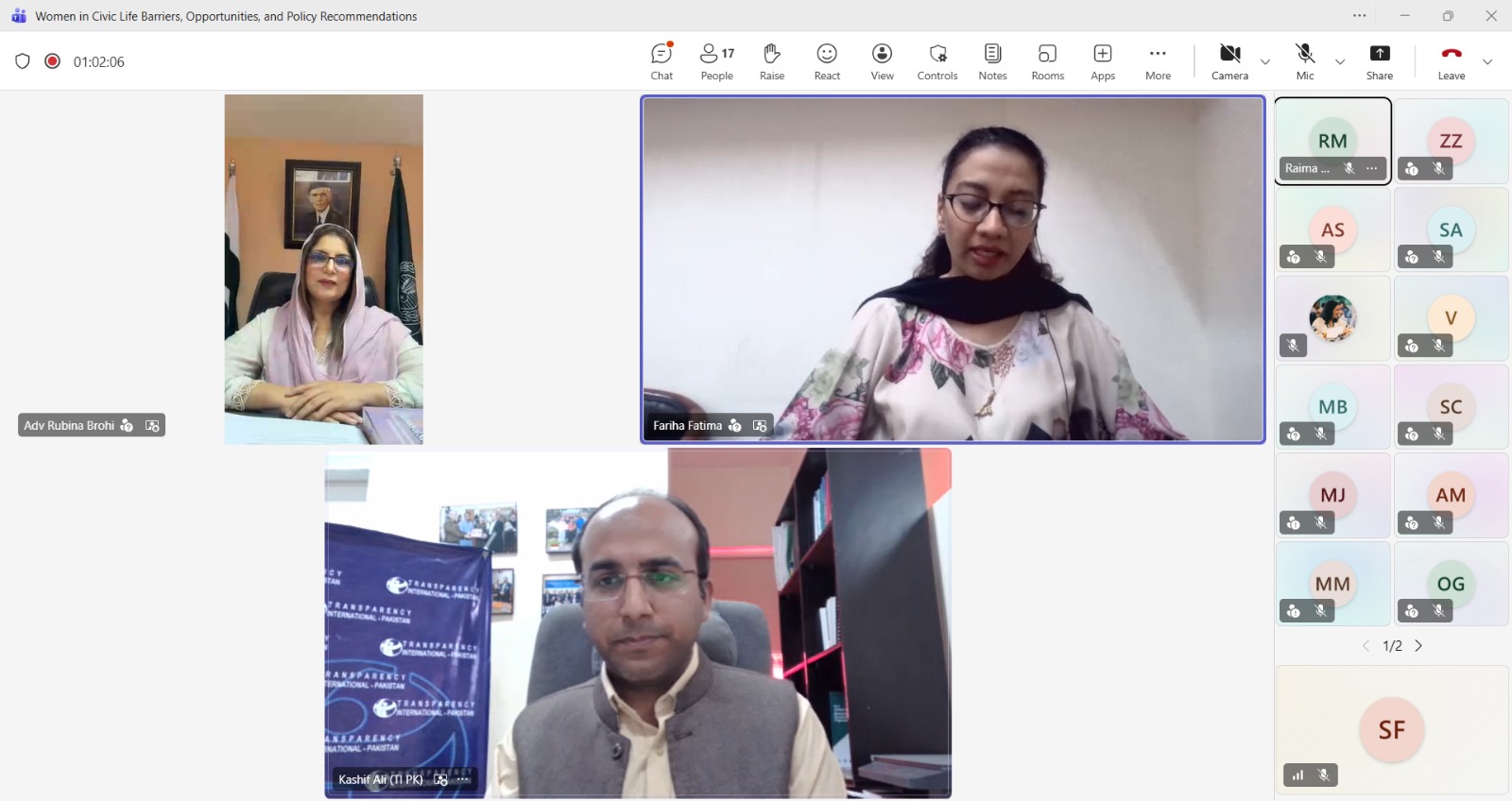
The webinar was moderated by Ms. Fariha Fatima, Programme Associate, Transparency International Pakistan who welcomed participants and provided an overview of the webinar. She shared key statistics on gender inequality in Pakistan, noting that female literacy is 52%, only just 8% attain higher education, according to Pakistan Economic Survey 2024-25. According to The Pakistan Labour Force Survey 2024-25, conducted by the Pakistan Bureau of Statistics, women make up 23–25% of the workforce, earning 30% less than men. On the other hand 32,617 cases of gender-based violence were reported in 2024, including over 5,000 rape cases and 547 honor killings, as noted in a news report. She highlighted that despite strong legal frameworks, implementation gaps and socio-cultural barriers remain significant.
Ms. Nasreen Memon, Project Coordinator, TI Pakistan delivered the opening remarks. She noted that Transparency International Pakistan has been working for decades to promote good governance and inclusive governance, with women’s empowerment as a key focus. She highlighted the organization’s efforts across federal, provincial, and local levels, engaging communities, journalists, and youth, while ensuring women’s active participation in accountability and decision-making processes. She also mentioned that TI Pakistan conducts advocacy workshops to raise awareness about laws protecting women and provides legal guidance through its Legal Advice Centre to support women facing corruption, injustice, domestic violence, or other social and legal challenges.
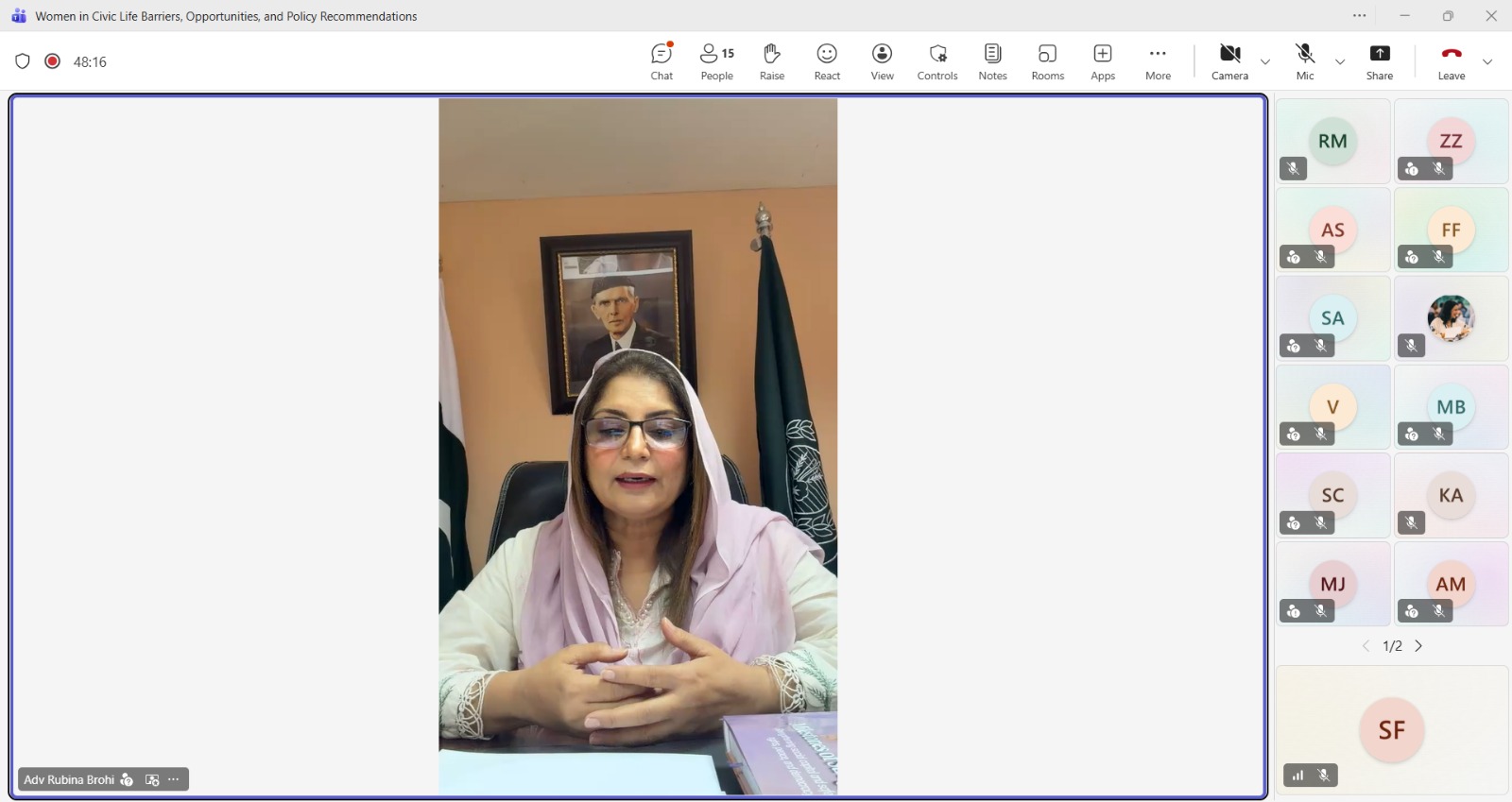
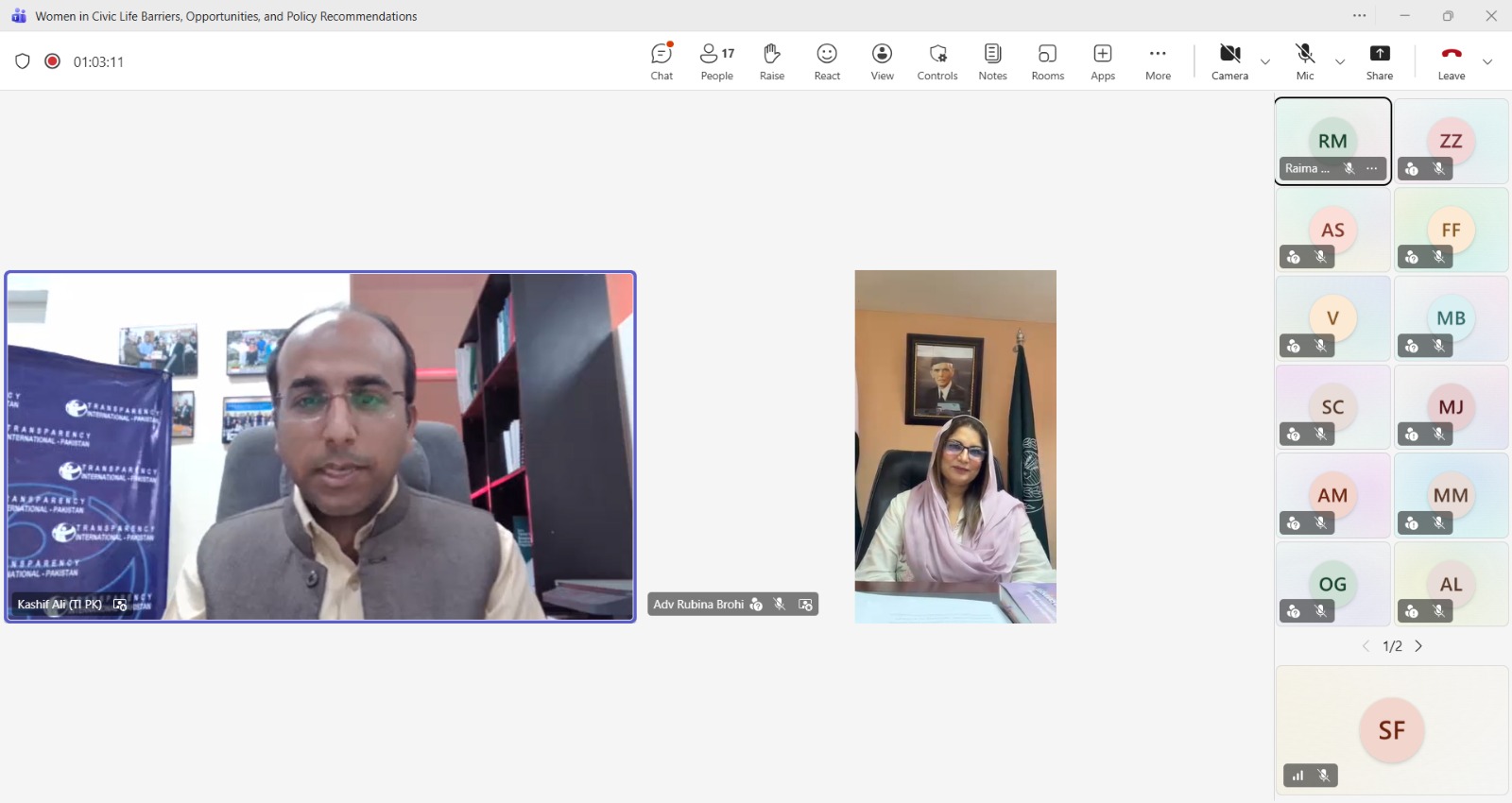
Next, Ms. Rubina Aman Brohi, Chairperson of the Sindh Commission on the Status of Women, highlighted Pakistan’s progress in advancing women’s rights. She emphasized the Commission’s role in promoting women’s empowerment by advising the provincial government on gender-related policies, monitoring the implementation of laws, and conducting research on women’s social and economic status.
She noted that Sindh was the first province to pass The Domestic Violence (Prevention and Protection) Act, 2013 a historic milestone, which now extends to the federal level. She also highlighted other key legislations in the province, including the Protection Against Harassment of Women at the Workplace (Amendment) Act, 2022, and the Sindh Child Marriages Restraint Act, 2013, which address gender-based discrimination and provide vision for gender inclusive workplaces and processes.
She emphasized that women’s participation in the workforce remains low, which makes the Commission’s work crucial in taking measures to facilitate women, including the establishment of daycare centers and other family-friendly initiatives. She informed the participants that the provincial government of Sindh has established One-Stop Protection Centers for survivors and victims of gender-based violence, providing legal, social, and state-supported assistance to ensure timely protection and access to justice. She noted that while women’s representation in Sindh Assembly through reserved seats is generally 17%, in this tenure it stands at 22.6% (according to the website of Provincial Assembly of Sindh) and 33% in local government. She stressed that there is a need for political parties to nominate women for general seats instead of relying on reserved seats to ensure meaningful participation and leadership in politics.
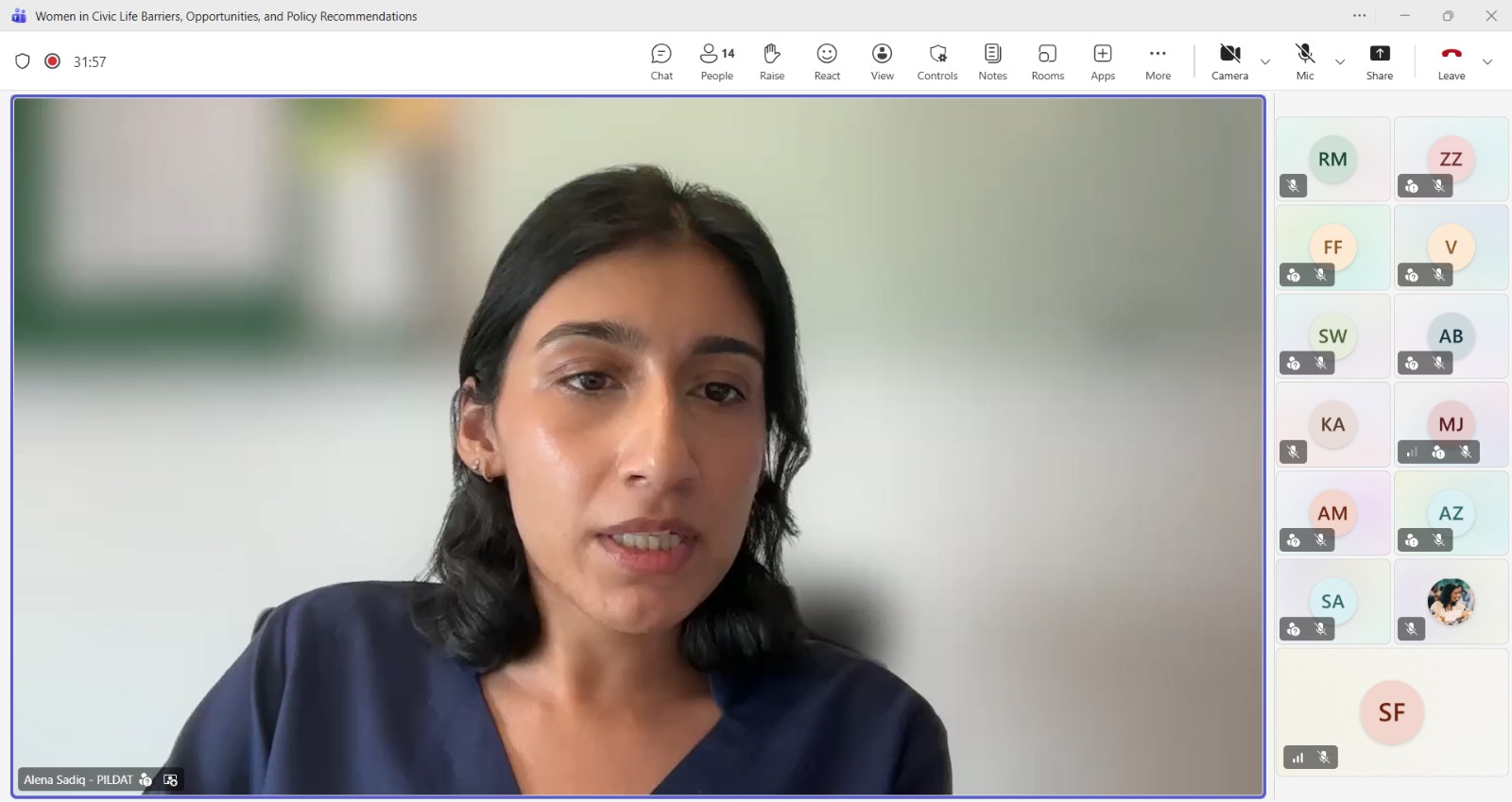
Moving on, Ms. Alena Sadiq, Projects Manager, PILDAT shared insights from a recently released report by PILDAT titled Women in Public Service in Pakistan: Barriers and Recommendations. She highlighted that although women make up 49% of the population, their representation in public service careers remains very low: around 20% in the National Assembly, 19% in the Senate, only one woman in the federal cabinet, 5% in civil service officer grades, and 5% in superior courts. She identified the major challenges women face, including harassment and weak implementation of workplace safety policies, and work-life balance issues due to lack of family-friendly workplaces, such as daycare facilities. She emphasized the need for effective policy implementation, supportive workplace reforms, and societal attitude shifts to enable women to advance in their careers without bearing the disproportionate burden of home responsibilities.
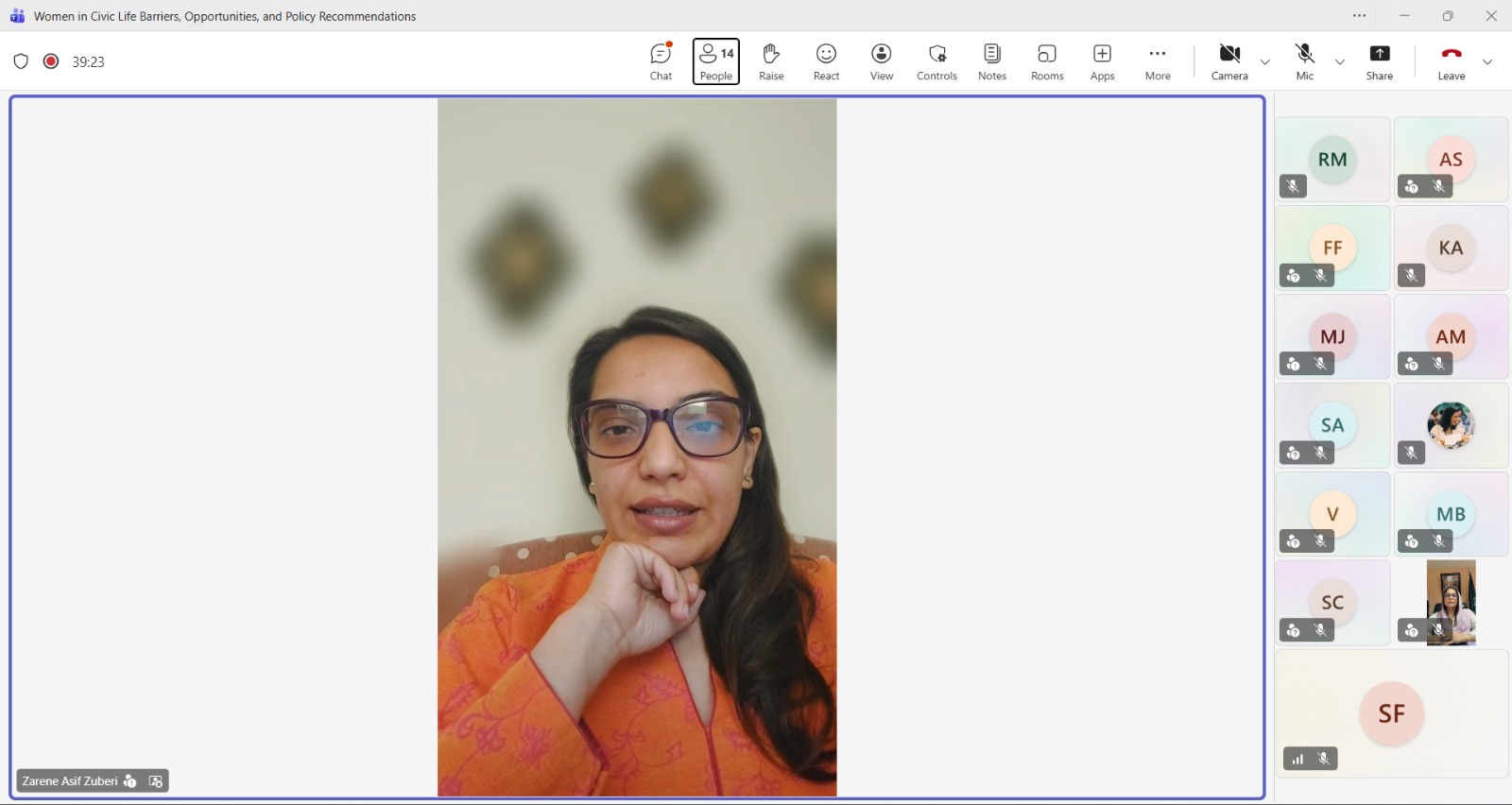
Ms. Zarene Zuberi, Programme Officer, Women’s Economic Empowerment, UN Women, then continued the conversation discussing the challenges and opportunities for women’s economic participation and how financial empowerment strengthens their decision-making. She pointed out that a major challenge is supporting informal and home-based female workers, who are often unregistered and excluded from social protection schemes. Even in the formal sector, enforcement of policies remains weak, limiting women’s economic opportunities.
Ms. Zarene emphasized that financial independence is closely linked to agency, enabling women to participate in household decision-making, including choices related to children’s education and family welfare. She also shared insights from UN Women’s 2023 research conducted in Karachi and Swabi, demonstrating how economic empowerment initiatives must be tailored to different local contexts to effectively enhance women’s participation in both the household and wider economy.
Towards the end, Mr. Kashif Ali, Executive Director, TI Pakistan delivered the closing remarks. He emphasized that it is essential to sensitize men on women’s rights so that they can act as allies in promoting gender equality, supporting women’s participation in decision-making, and helping create inclusive workplaces and communities. He noted that women in Pakistan are generally less aware of their legal rights and constitutional entitlements. However, government and civil society efforts have increased awareness, as reflected in the rising number of reported cases of gender-based violence, which serves as evidence of growing knowledge among women about their rights.
He highlighted that the Federal Ombudsperson Secretariat for Protection Against Harassment (FOSPAH) has received an increasing number of complaints and has issued landmark judgments in cases of workplace harassment. However, these developments are mostly concentrated in urban areas. He emphasized the need to extend such awareness and access to justice to grassroots and rural communities.
He also discussed Transparency International Pakistan’s TRAC Assessment Report, assessing top public-listed companies on measures such as non-gender discriminatory practices, inclusive promotion policies, equitable wages, and public disclosure of such policies. Based on these findings, TI Pakistan has recommended that the Securities and Exchange Commission of Pakistan (SECP) make mandatory reporting on gender policies for companies, to ensure transparency and accountability in promotion of inclusive practices.
The webinar concluded by emphasizing the need to remove barriers, strengthen laws and their implementation, and promote inclusive policies to enhance women’s participation in civic, political, and economic life. The session reaffirmed the commitment of all stakeholders to creating an enabling environment for women’s leadership and equal participation.