Closing Ceremony Journalist Fellowship on Climate Governance, Finance, and Transparency
Closing Ceremony
Journalist Fellowship on Climate Governance, Finance and Transparency
Venue: Ramada Creek Hotel, DHA Karachi
Date: Tuesday, December 30, 2025
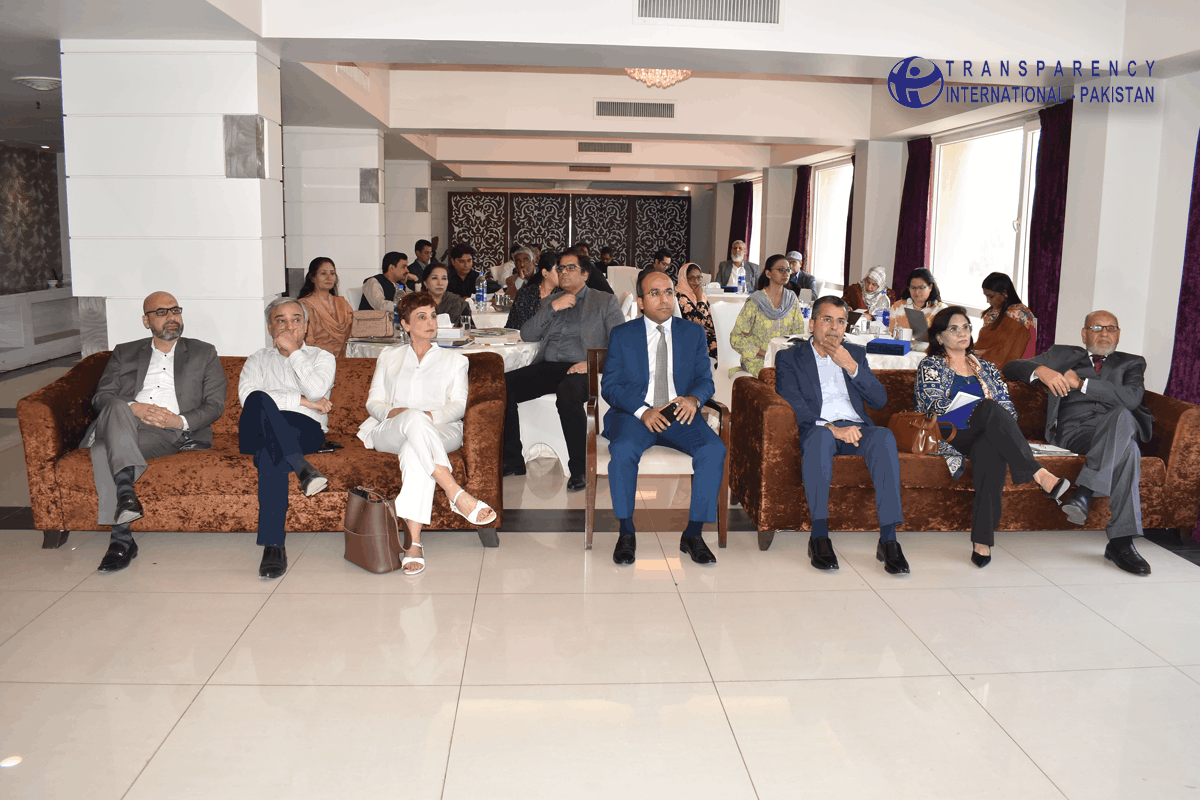
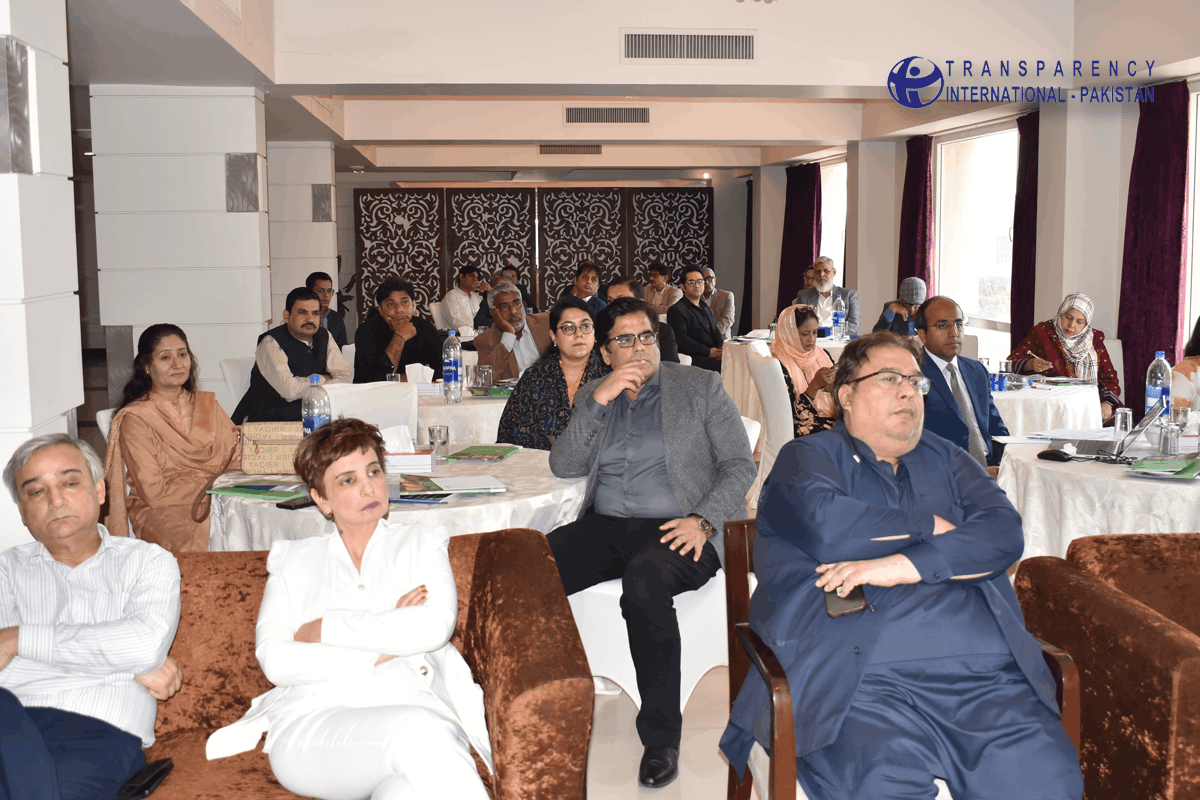
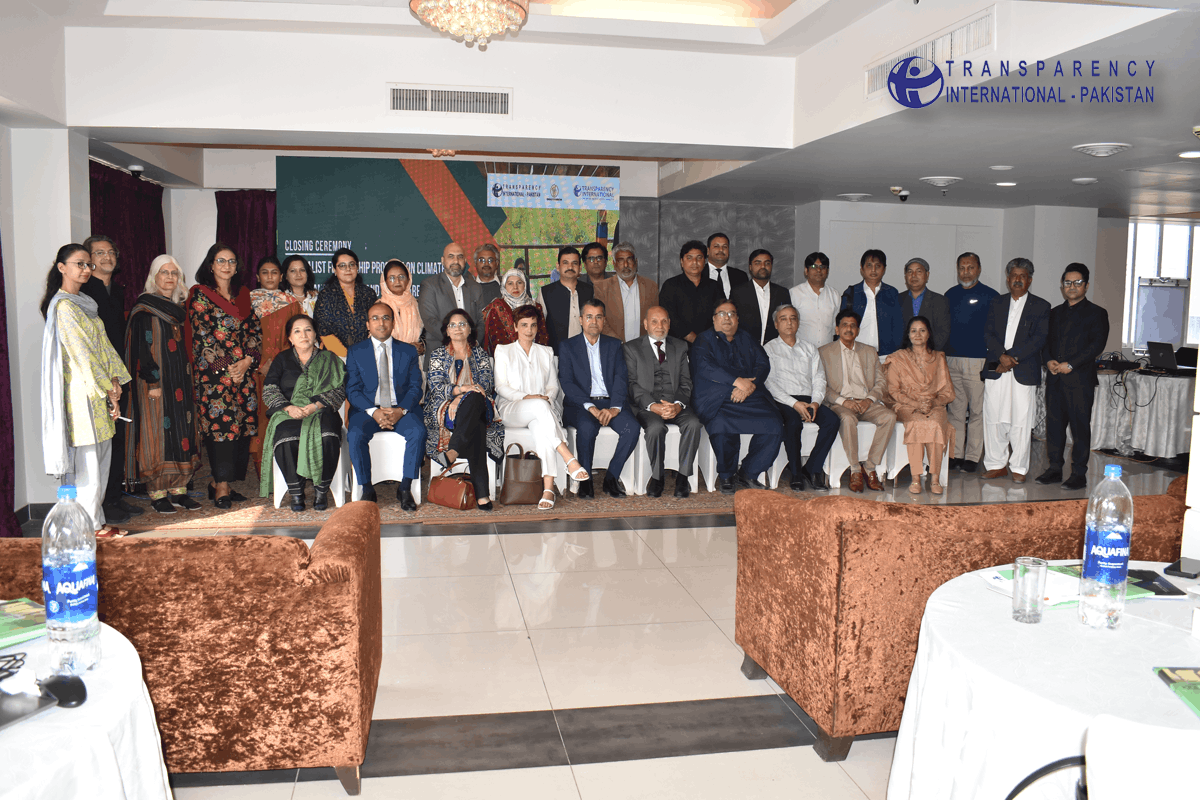
Transparency International Pakistan formally concluded the Journalist Fellowship on Climate Governance, Finance and Transparency with a closing ceremony, on December 30, 2025 in Ramada Creek Hotel, Karachi. The event was attended by 35 participants (26 male and 9 female) including the Director General of the Environment Protection Agency (EPA), Sindh, representatives from the Environment, Climate Change & Coastal Development Department and Sindh Information Commission, senior journalists, and journalist fellows
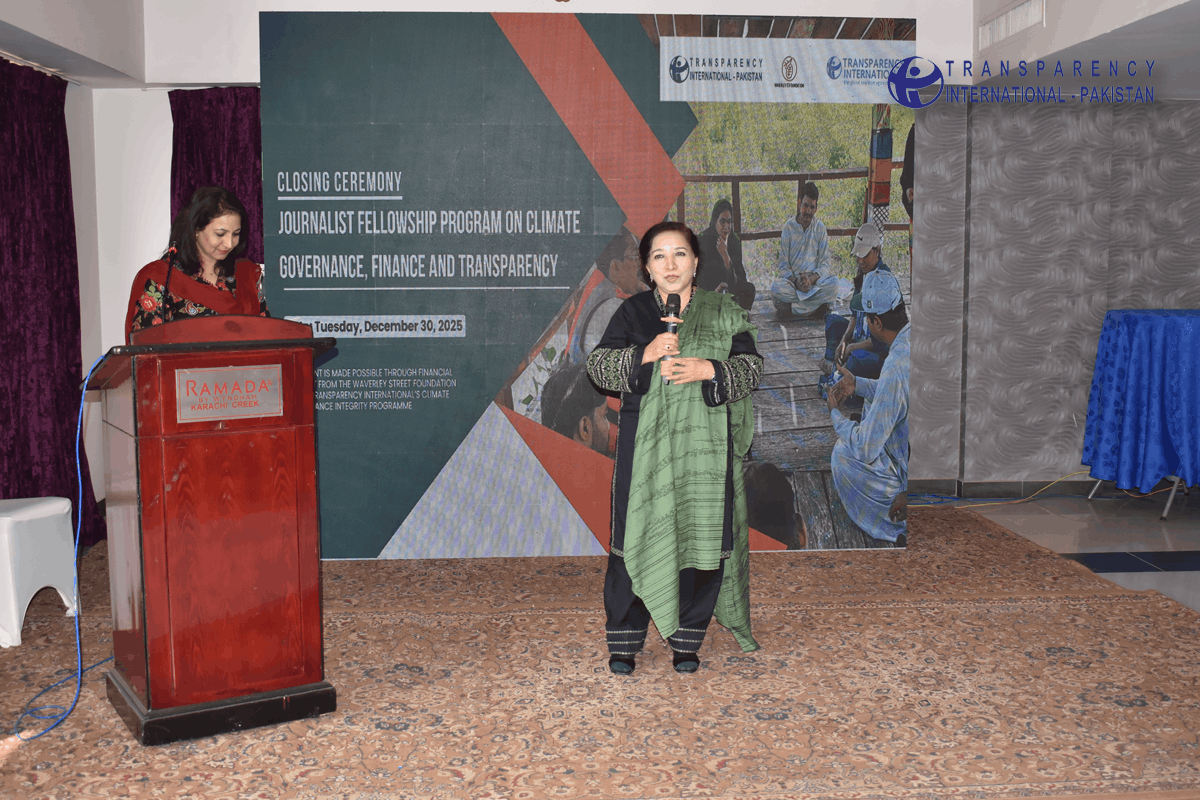
The session commenced with the welcoming remarks by Justice (R) Zia Perwez, Former Judge of the Supreme Court of Pakistan and Chairman of TI Pakistan. He highlighted the critical role of journalism in promoting climate transparency, accountability, and informed public engagement, emphasizing how well-equipped journalists can transform climate narratives and ensure policies translate into real impact.
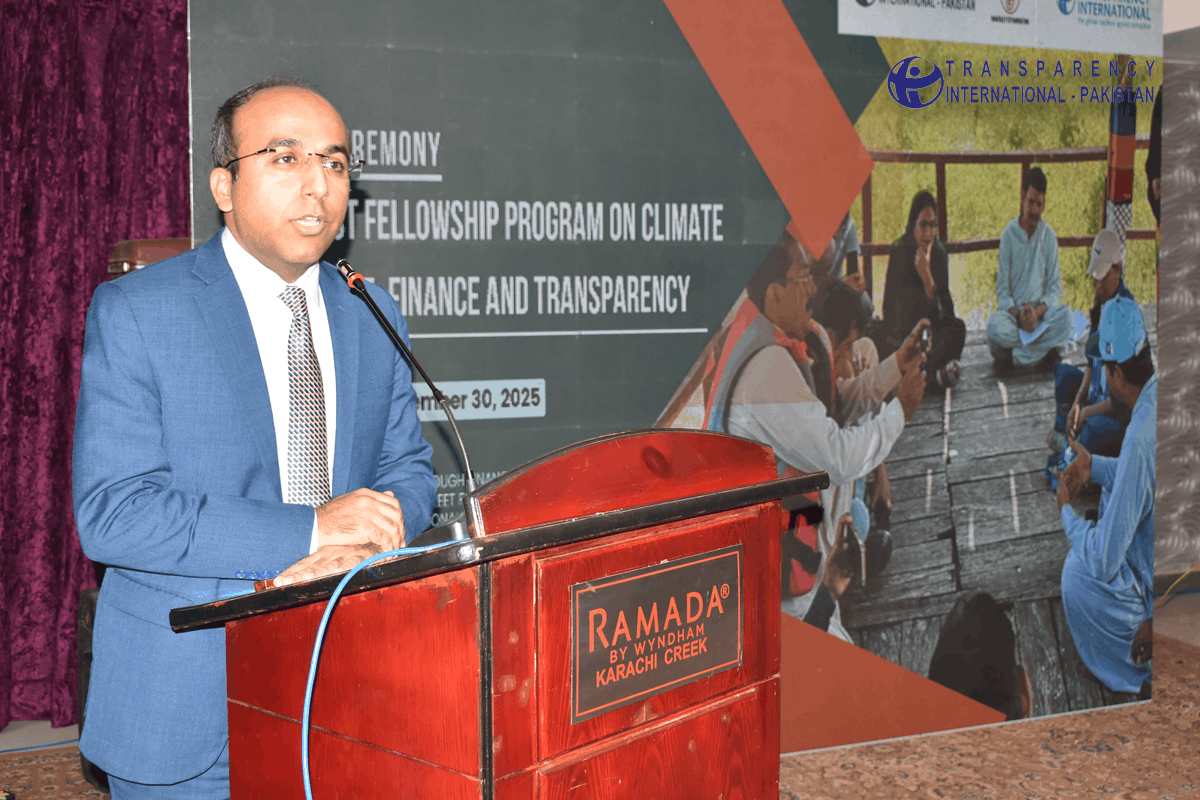
Next, Mr. Kashif Ali, Executive Director, TI Pakistan, presented the objectives and key highlights of the fellowship program, reflecting on its mission to build journalists’ capacity in climate governance, finance, and transparency. He stated that the program strengthened their skills in evidence-based reporting, policy analysis, and storytelling to enhance public understanding and accountability in climate action.
Moving on, Mr. Waqar Hussain Phulpoto, Director General, Environment Protection Agency (EPA), Government of Sindh presented the highlights from the Government of Sindh efforts on tackling climate change in the Province. He shared that the Sindh government has approved the Nationally Determined Contributions (NDC 3.0) policy under the Paris Agreement, aiming to reduce greenhouse gas emissions by 50% by 2030, with 15% financed provincially and 35% through international support. Key sectoral strategies include energy, transport, agriculture, forestry, water, waste management, and urban infrastructure. He highlighted flagship projects such as BRT system expansion, phasing out diesel public transport, promoting electric vehicles, large-scale tree plantation, and mangrove restoration, which are designed to improve air quality, enhance resilience, and create employment opportunities. Mr. Phulpoto emphasized that these provincial reforms are aligned with national priorities, ensuring Sindh’s observations and recommendations are represented at the federal level.
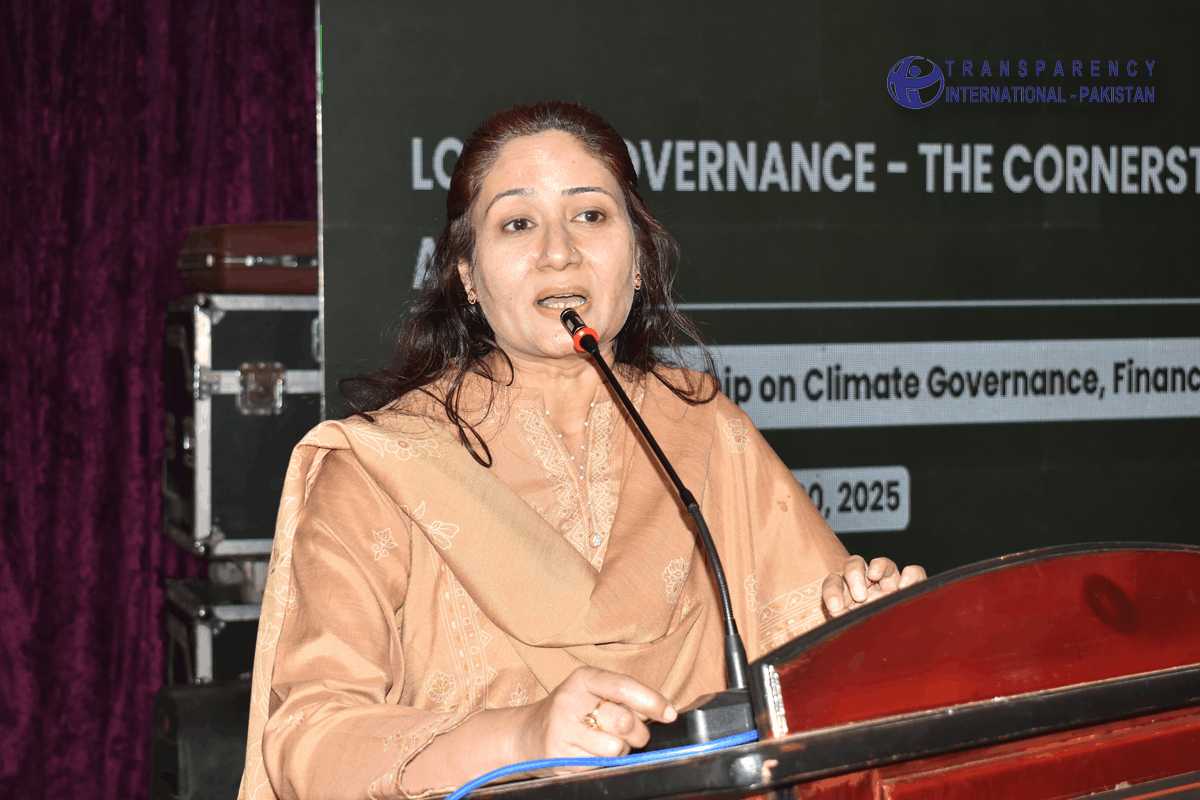
Next, Mr. Nusrat Amin, Head of the Geomentary Department at Geo News, delivered a session on “How Journalism Can Strengthen Climate Reporting in Pakistan.” He emphasized the critical role of journalists in enhancing climate transparency and accountability by reporting on policy implementation, climate finance, and local-level impacts. Mr. Amin highlighted the need for evidence-based reporting, investigative storytelling, and the use of data and multimedia tools to communicate complex climate issues effectively. He also stressed that media owners and editors must prioritize climate change coverage, ensuring it receives consistent attention and resources to inform public discourse and influence policy action.
Moving on, Ms. Sabin Agha, Independent Journalist and Documentary Filmmaker, spoke on how climate change stories can shape and influence policies. She shared impactful field stories highlighting the real-life experiences of communities in Sindh, particularly women and other vulnerable groups, who are disproportionately affected by climate change. Ms. Agha emphasized that well-documented, human-centered narratives can bring these local realities to policymakers’ attention, influence decision-making, and ensure that climate policies are inclusive, equitable, and responsive to the needs of those most affected.
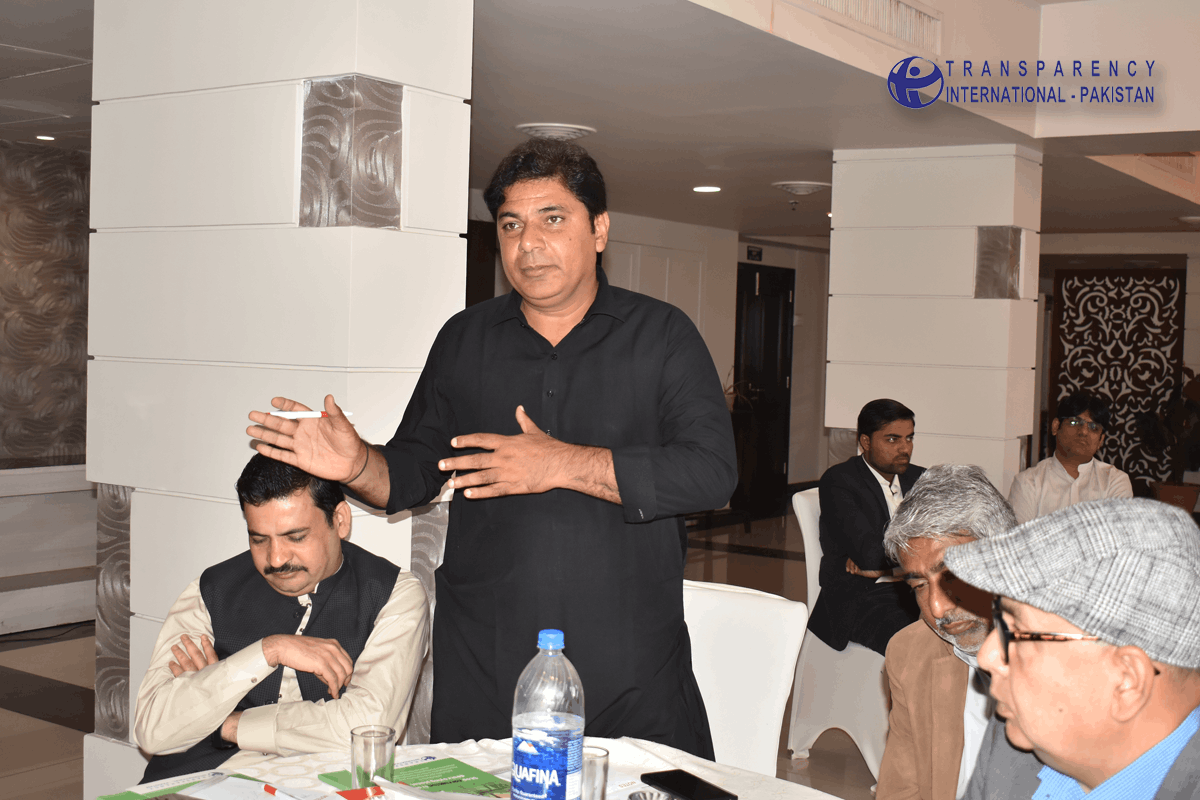
The session then progressed to the fellows’ presentations where they presented learnings and impact of their journey. They shared their experiences throughout the fellowship, highlighted key insights gained from the modules, and showcased the stories they developed, demonstrating the impact of their reporting on local communities and climate discourse.
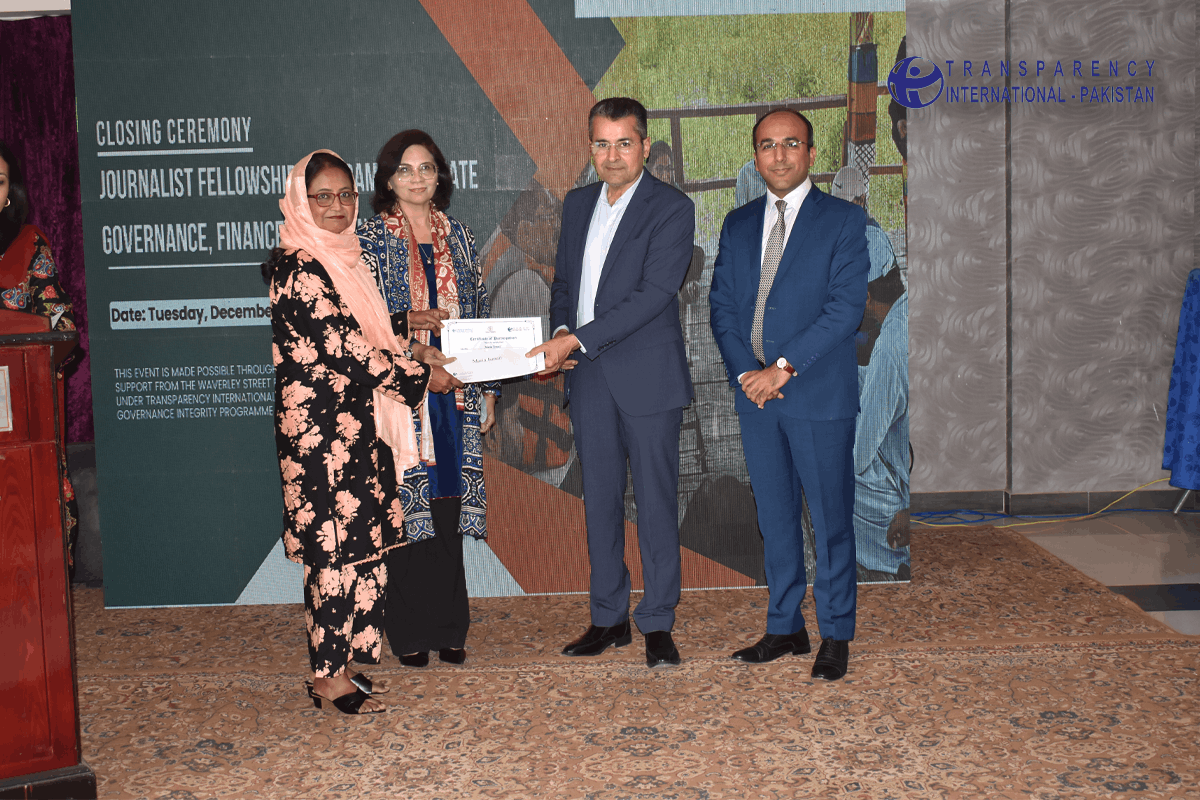
Moving on, an award ceremony was held. As part of the fellowship, TI Pakistan required all participating journalists to submit their stories for publication. The fellows produced outstanding reports that demonstrated creativity, rigorous reporting, and a strong focus on climate finance, governance, and transparency. During the closing ceremony, TI Pakistan recognized exemplary work through the awards distribution ceremony. Three outstanding stories were honored with cash prizes, selected based on relevance to climate finance and governance, originality, quality of research and reporting, storytelling impact, and overall contribution to raising awareness on climate issues.
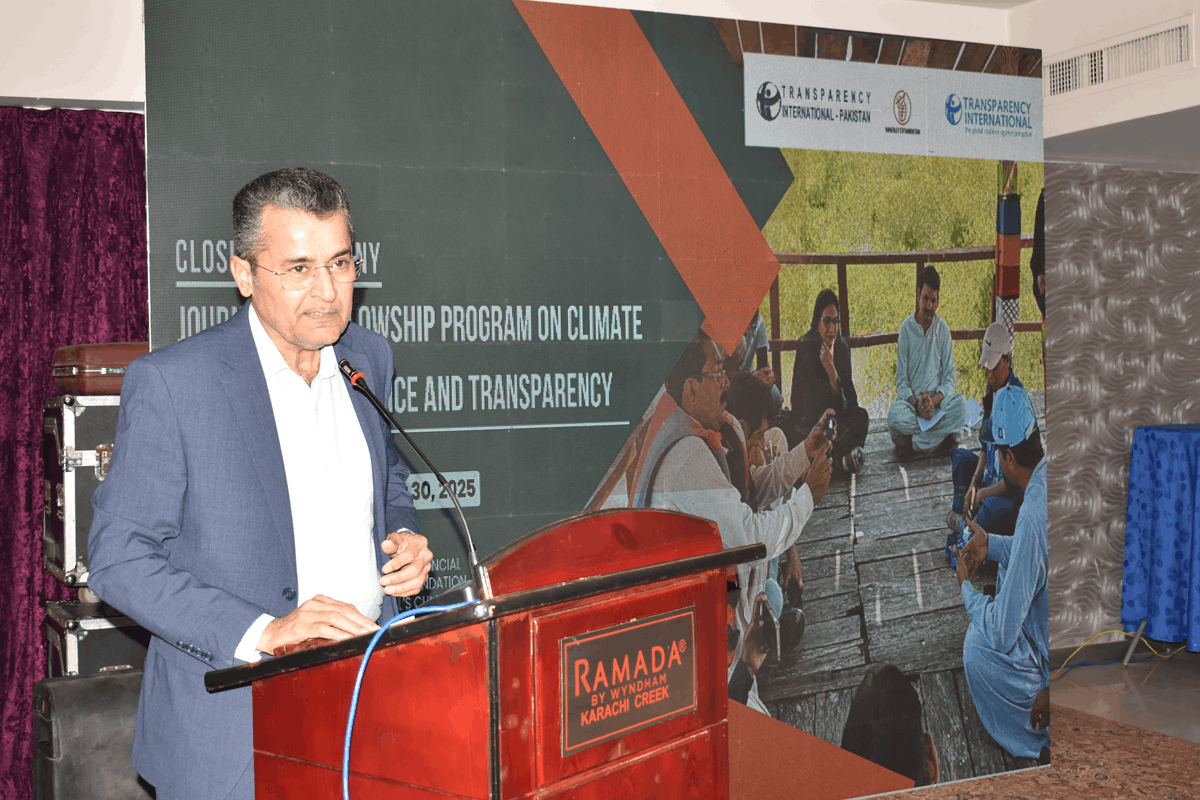
Towards the end, Mr. Ayhan Mustafa Bhutto, Special Secretary Environment, Climate Change and Coastal Development Department, Government of Sindh delivered the keynote address. Mr. Bhutto highlighted the province’s vulnerability to climate change, including floods, droughts, and coastal risks. He commended ongoing efforts such as NDC 3.0, renewable energy promotion, mangrove restoration, and urban resilience initiatives. He also emphasized the vital role of journalism in reporting local impacts, tracking policy implementation, and ensuring transparency and accountability in climate action.
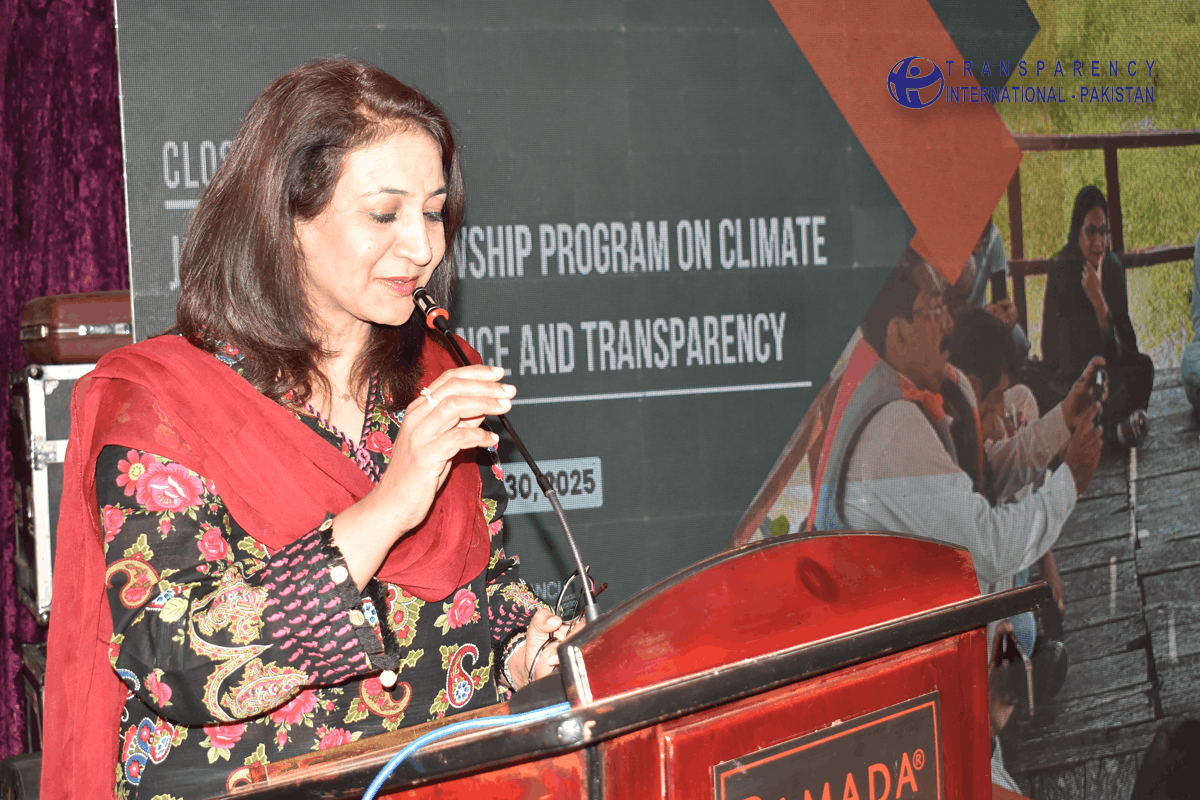
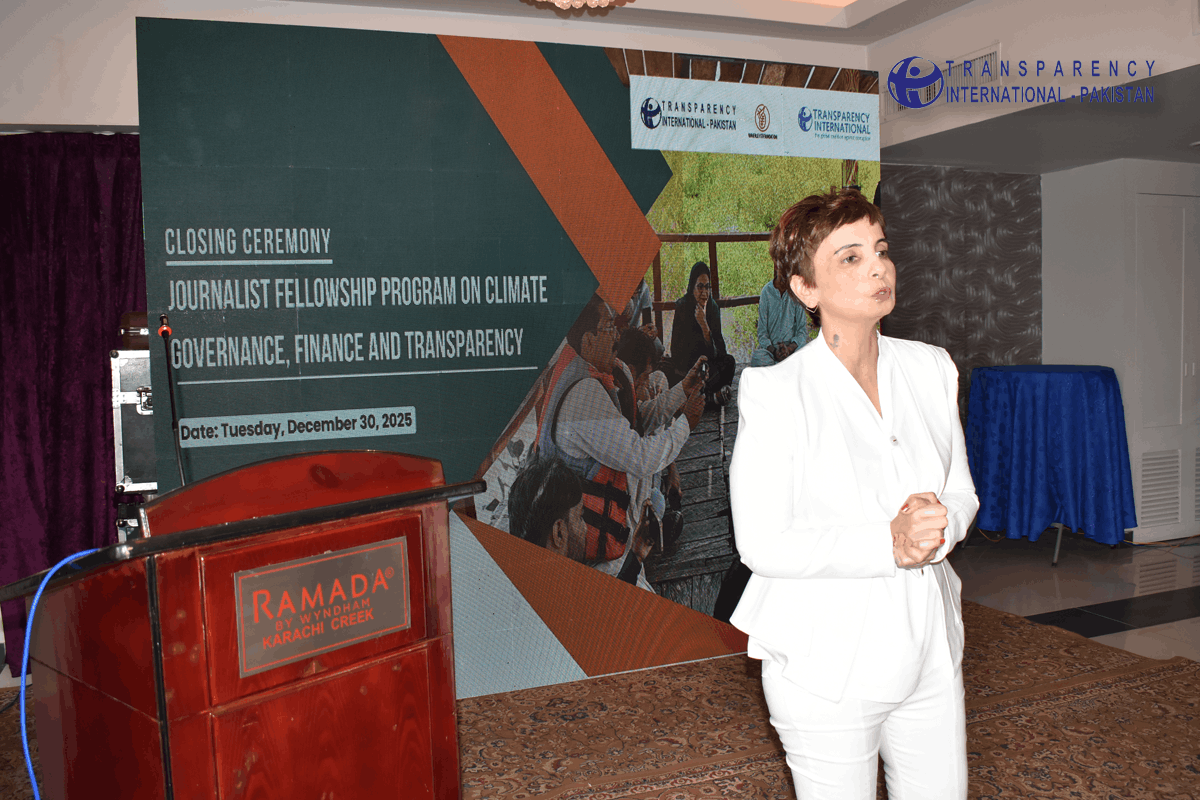
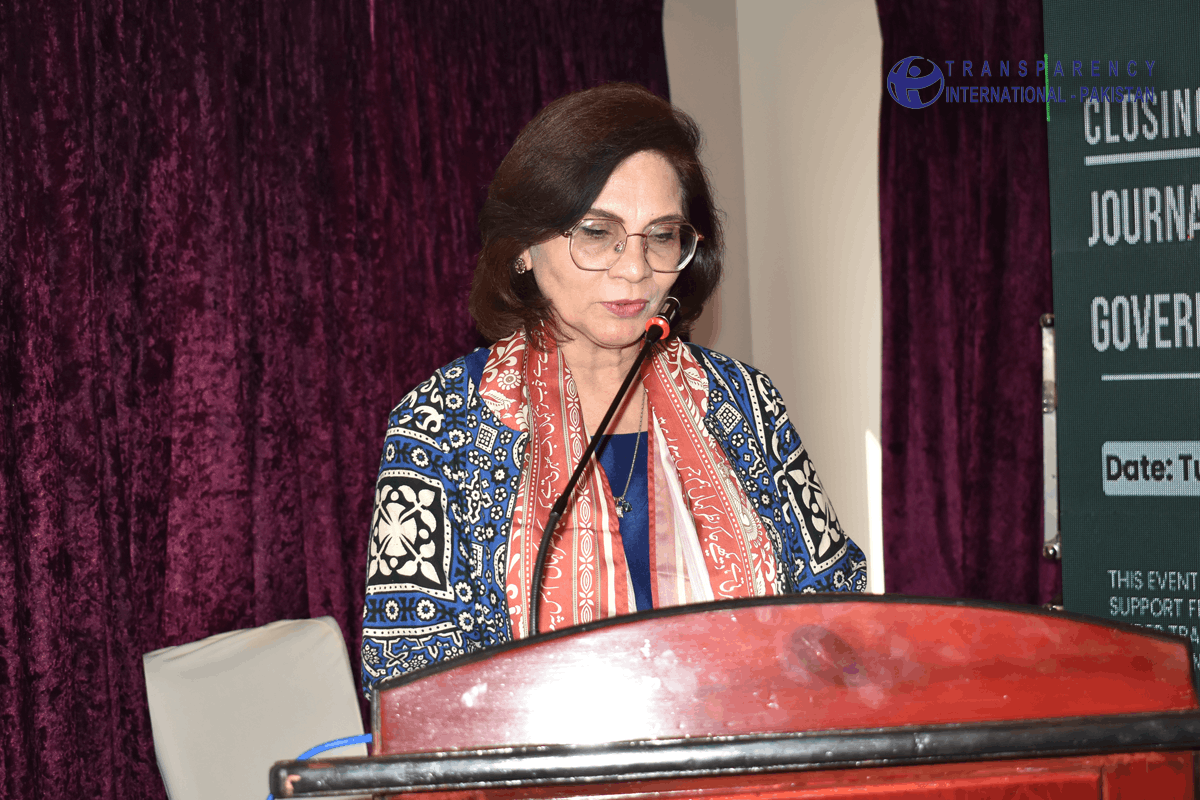
The ceremony concluded with closing remarks delivered by Prof. Dr. Uzma Shujaat, Board of Trustee, TI Pakistan. She commended the fellows’ achievements and the quality of reporting produced through the program. She emphasized the continued importance of journalism in promoting transparency, accountability, and informed public engagement in climate governance and action, marking a successful conclusion to the fellowship.