Journalist Fellowship on Climate Finance and Transparency
Exposure Visit & Module 04: Carbon Markets and Journalism – Tracking Integrity Risks and Opportunities
Journalist Fellowship on Climate Finance and Transparency
Exposure Visit & Module 04: Carbon Markets and Journalism – Tracking Integrity Risks and Opportunities
Date: Thursday, October 9, 2025
Venue: Keti Bunder, Sindh
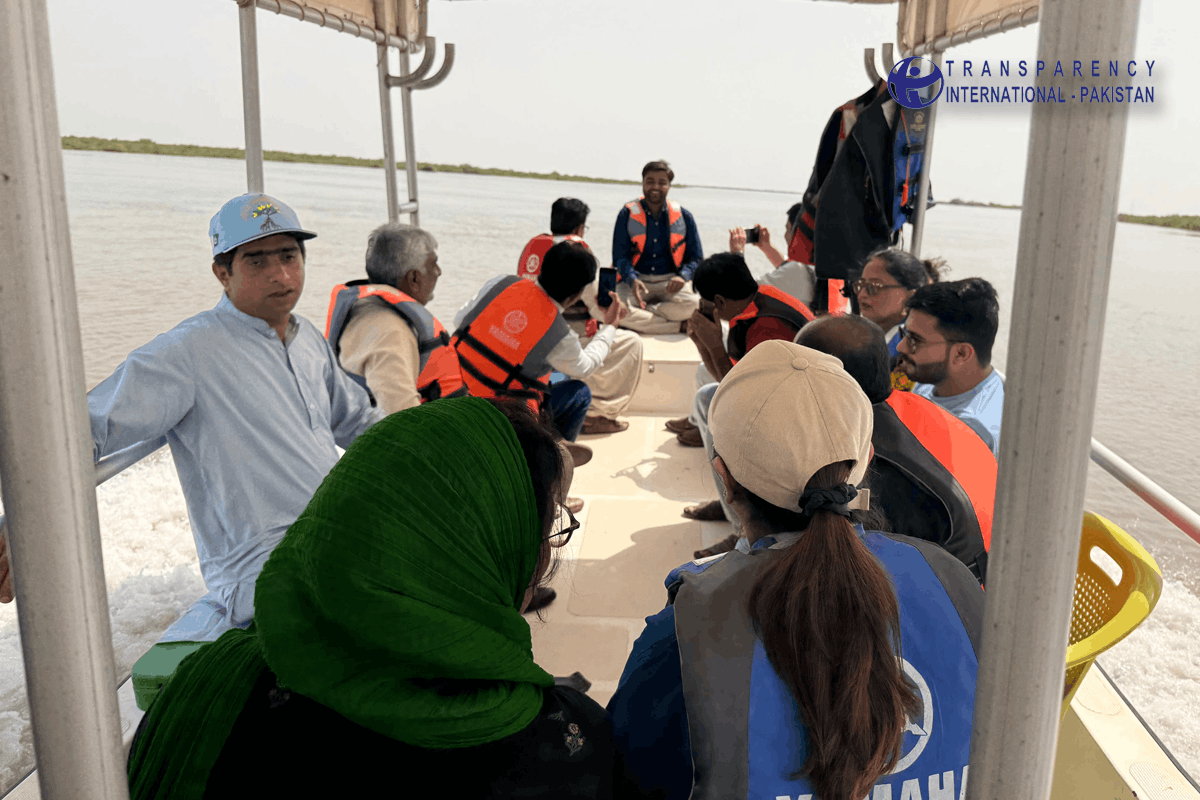
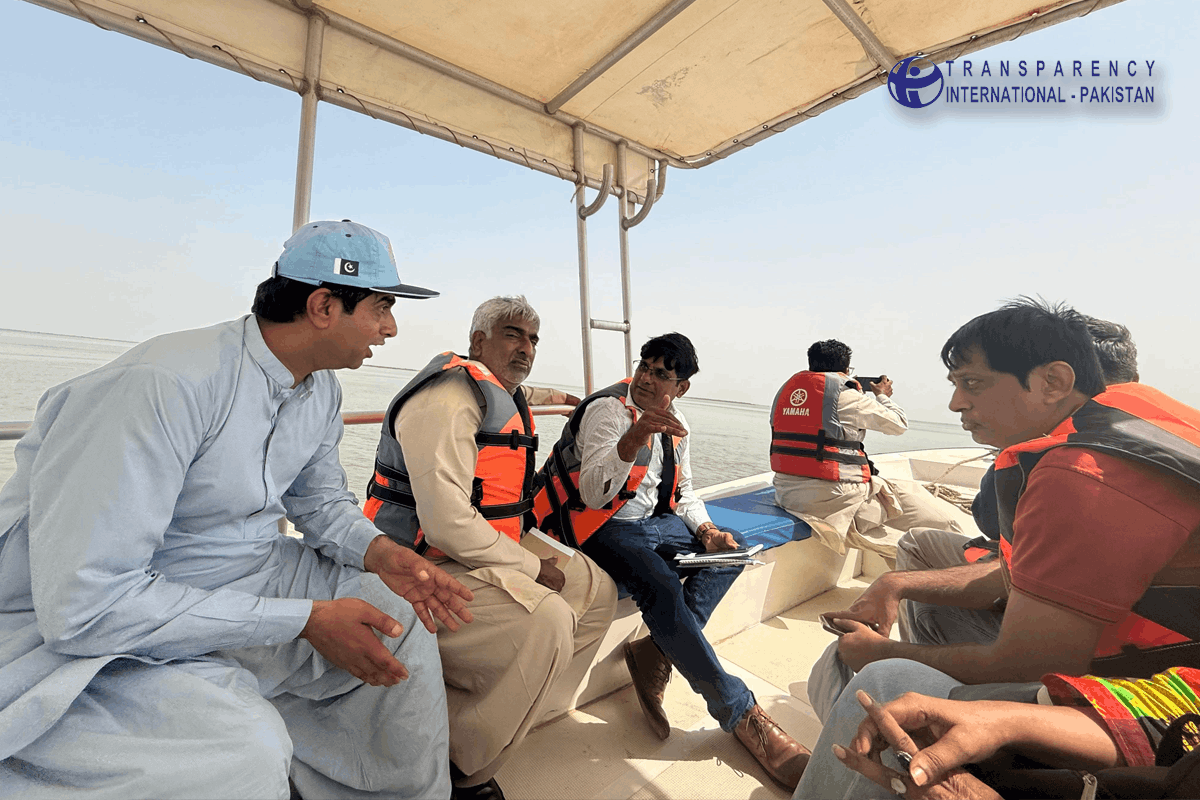
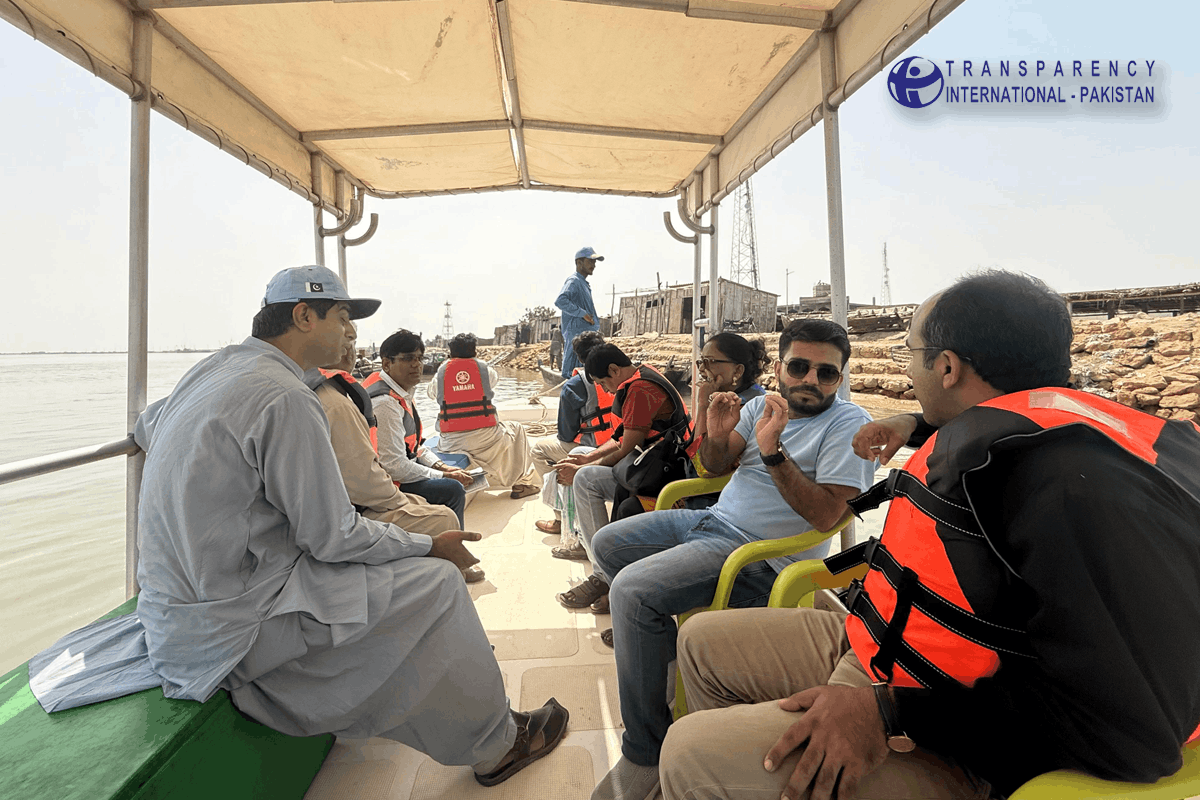
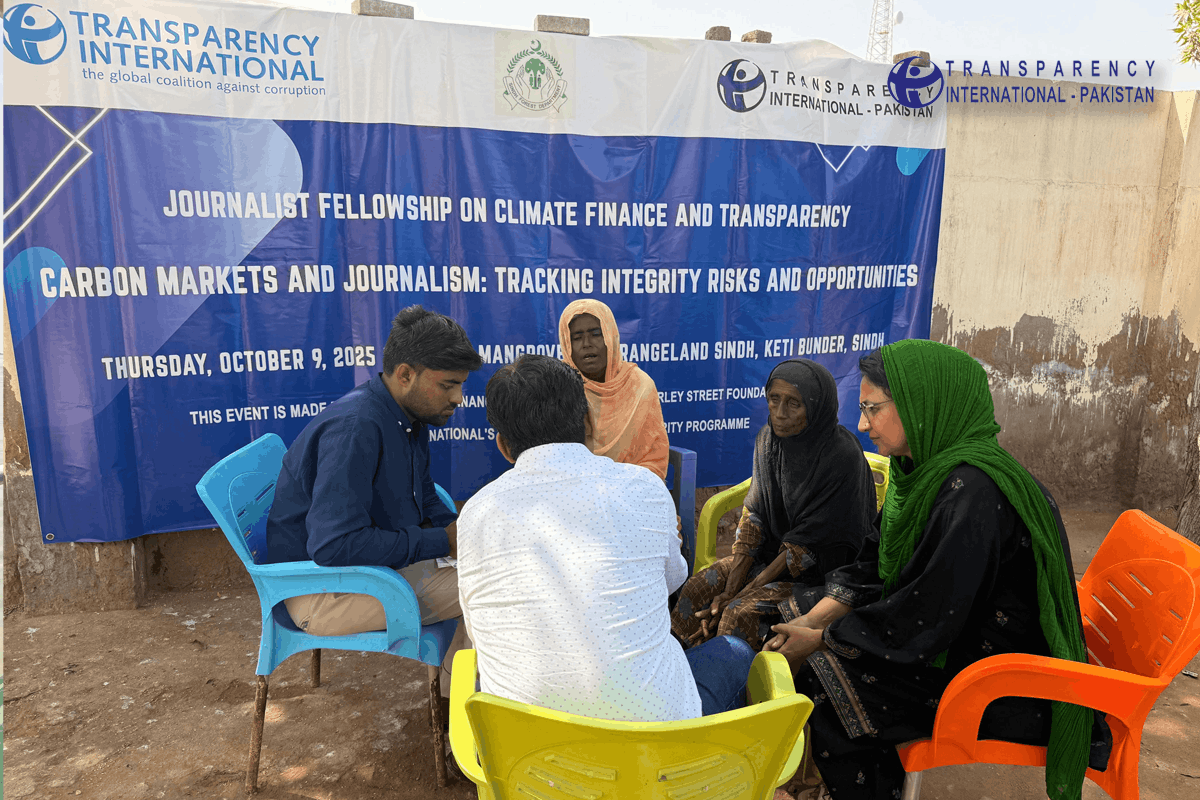
Transparency International Pakistan organized an exposure visit to the mangrove restoration and carbon project sites in Keti Bunder, Sindh, under the Journalist Fellowship on Climate Finance and Transparency. The visit aimed to provide journalists with practical exposure to how carbon market projects function on the ground, linking technical concepts of blue carbon, governance, and integrity with real-world implementation.
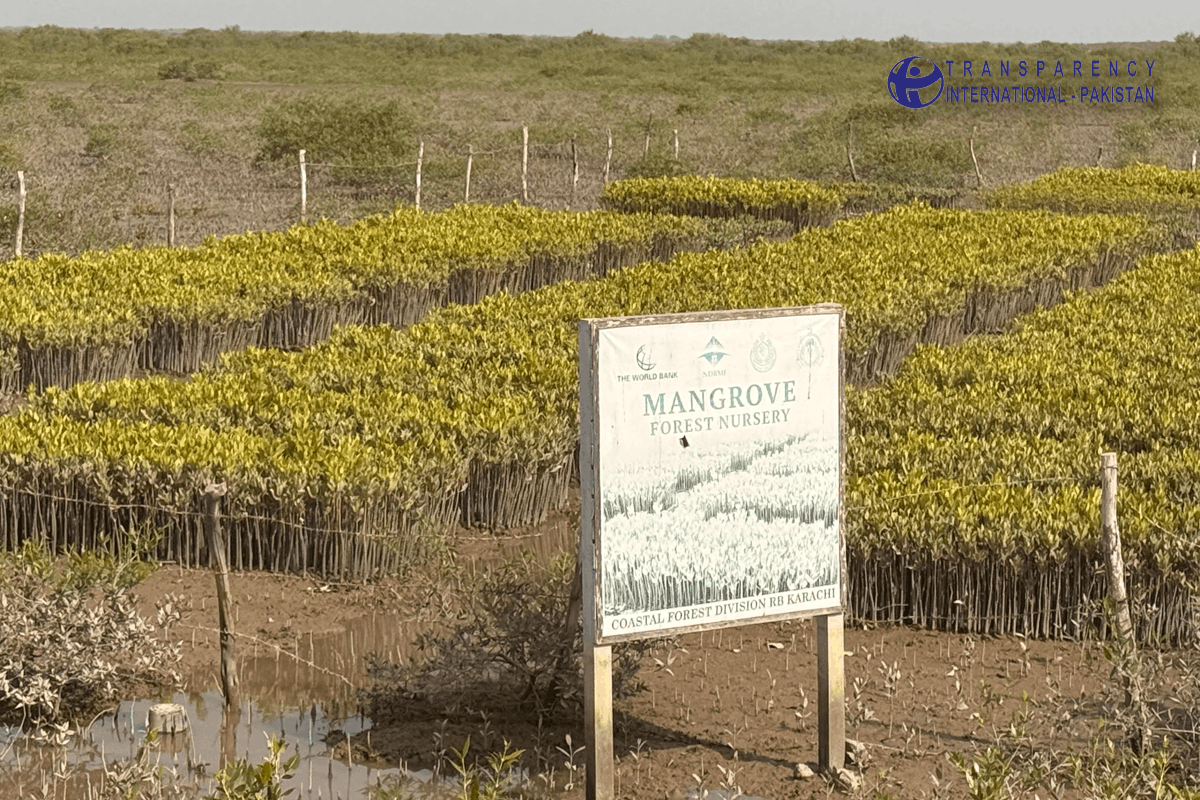
Fellows visited the Sindh Forest Department’s mangrove restoration site, where Mr. Khan Muhammad, Range Forest Officer, elaborated on how mangroves contribute to carbon sequestration, coastal protection, and community resilience and livelihoods. He explained how restoration activities are directly tied to blue carbon initiatives that can potentially be part of carbon credit mechanisms in Pakistan.
During the visit, participants observed ongoing conservation and plantation efforts, interacted with community members involved in mangrove management, and learned how local livelihoods are integrated within climate finance and carbon offset frameworks. The visit provided a first-hand understanding of how nature-based solutions like mangrove restoration play a vital role in Pakistan’s emerging carbon market landscape.
Earlier in the day, Ms. Nasreen Memon, Project Coordinator at TI Pakistan, introduced the purpose of the field exposure, followed by discussions led by Mr. Kashif Ali, Executive Director, and Ms. Raima Mehmood, Policy & Research Coordinator, on governance, transparency, and the role of journalism in strengthening accountability within carbon markets.
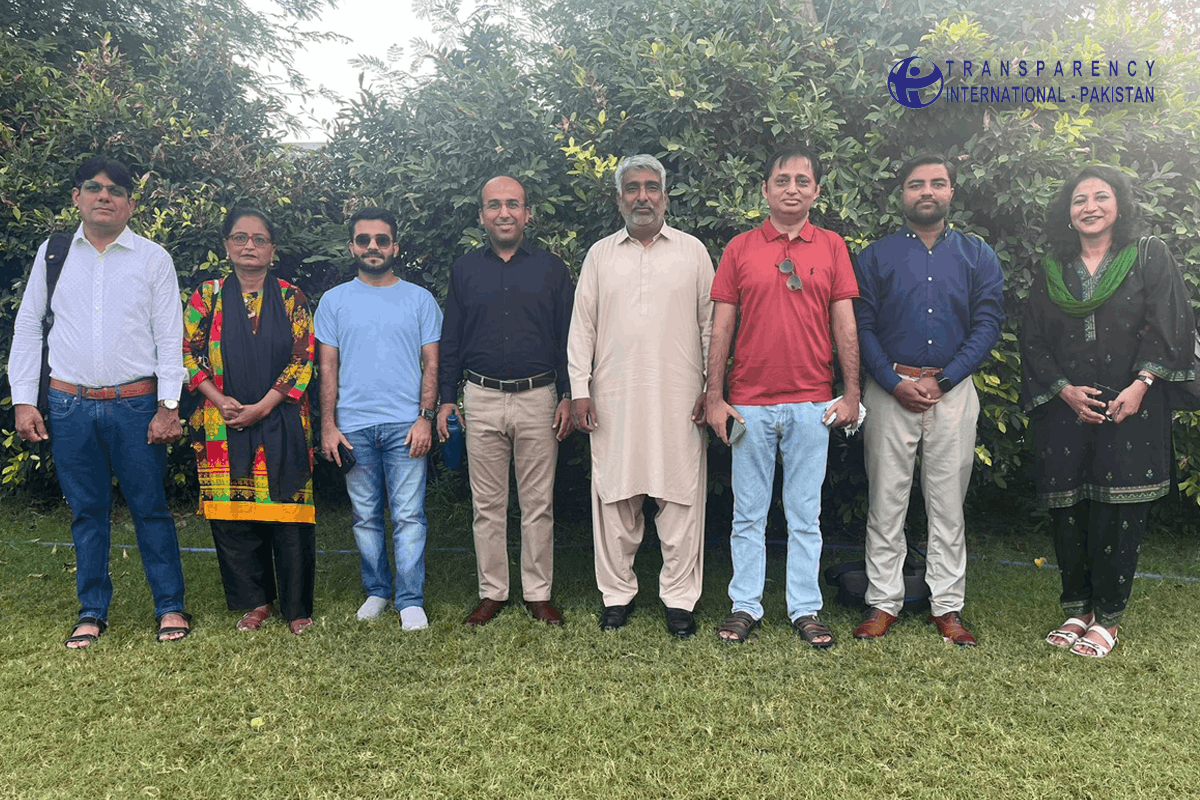
After the field visit, participants gathered for a lunch and reflection session, sharing insights on how field observations could be translated into evidence-based climate stories.
The exposure visit offered journalists an opportunity to connect climate finance and carbon market concepts with on-ground realities, fostering a deeper understanding of integrity risks, community engagement, and opportunities for transparent and sustainable carbon market development in Pakistan.